
Marrella Facts for Kids
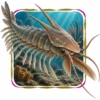
Marrella was a tiny marine arthropod that lived about 505 million years ago and is famous from Canada’s Burgess Shale. It was not a crab, shrimp, or trilobite. Its wedge-shaped head shield carried long backward-pointing spines, while slender antennae, paddle-like head appendages, many walking legs, and delicate gills helped it move and feed just above the seafloor.
Quick Marrella Facts
- Animal Type: Extinct marine arthropod
- Group: Marrellomorph arthropod
- Known For: Long head spines, segmented antennae, paddle-like appendages, many biramous limbs, tiny size, and abundant Burgess Shale fossils
- Lived During: Middle Cambrian, about 505 million years ago
- Diet: Tiny organic particles collected from water and seafloor sediment
What You’ll Learn
Learn 10 tiny marrella facts for kids about spiny bodies, many legs, swimming, seafloor life, and Cambrian oceans, plus a quiz, glossary, and activity
These simple facts are written for kids, parents, teachers, and curious young minds.
10 Fun Marrella Facts for Kids
1. Marrella Was a Tiny Arthropod
Marrella was an early arthropod relative with a segmented body, jointed appendages, and an outer covering that had to be moulted as it grew.
Kid Decode: It packed a busy arthropod toolkit into a body smaller than a paperclip.
2. It Was About 25 Millimetres Long
The largest known Marrella specimens reached only about 25 millimetres, and many individuals were smaller.
Kid Decode: This fossil celebrity could sit comfortably across a coin.
3. It Was Not a Crab or Trilobite
Charles Walcott called it a lace crab when he discovered it, but later studies showed that Marrella belonged to its own extinct arthropod branch.
Kid Decode: The nickname stayed charming even after the family-tree paperwork said no crab.
4. Its Head Carried Long Spines
A wedge-shaped head shield bore two pairs of prominent spines that swept backward over much of the body.
Kid Decode: Its headgear looked ready to win a Cambrian costume contest.
5. Its Antennae Had Many Segments
Two long slender antennae contained as many as about 30 segments and probably served as important sensory organs.
Kid Decode: Those antennae sampled the world one tiny joint at a time.
6. It Had Paddle-Like Head Appendages
A second pair of head appendages formed six-segmented paddles fringed with bushy setae and probably helped Marrella swim.
Kid Decode: It brought two feathery oars to every journey above the mud.
7. Its Body Had Twenty-Six Segments
Behind the head were 26 small body segments, each carrying a pair of two-branched appendages.
Kid Decode: Twenty-six segments turned one tiny animal into a parade of moving parts.
8. Its Limbs Combined Legs and Gills
Each biramous limb had a walking branch and a second branch bearing delicate gill filaments for breathing.
Kid Decode: One limb package handled both strolling and underwater breathing.
9. It Gathered Tiny Food Particles
Spines on the rear appendages may have formed a net that trapped organic particles and passed them forward toward the mouth.
Kid Decode: Its underside may have worked like a miniature grocery conveyor belt.
10. One Fossil Caught It Moulting
An extraordinary specimen preserves Marrella in the act of leaving its old outer covering, giving rare evidence of Cambrian moulting behaviour.
Kid Decode: One individual was fossilised halfway through changing its prehistoric outfit.
The Weirdest Marrella Fact
More than 25,000 Marrella fossils have been collected from the Burgess Shale, including one animal preserved while wriggling out of its old exoskeleton.
Try This Marrella Activity
Marrella Drawing Activity
Draw Marrella swimming just above the Cambrian seafloor. Add a wedge-shaped head shield, two pairs of long backward spines, many-segmented antennae, fuzzy paddle-like head appendages, 26 body segments, two-branched limbs with gills, tiny food particles, sponges, and a moulting exoskeleton nearby.
Quick Marrella Quiz
- Was Marrella a true crab? Answer: No, it was a marrellomorph arthropod.
- How large did it grow? Answer: About 25 millimetres.
- What projected backward from its head shield? Answer: Two pairs of long spines.
- How many body segments followed the head? Answer: Twenty-six.
- What rare behaviour is preserved in one fossil? Answer: Moulting out of its old exoskeleton.
Mini Glossary
- Arthropod: An animal with a segmented body, jointed appendages, and an exoskeleton.
- Marrellomorph: A member of an extinct branch of unusual Paleozoic arthropods.
- Biramous Limb: An appendage divided into two branches.
- Seta: A small bristle or hair-like structure.
- Moulting: Shedding an old outer covering so the animal can grow.
 Jackal Facts for Kids
 Flea Facts for Kids
 Bull Facts for Kids
 Thylacoleo Facts for Kids
More Animal Facts for Kids
Visit the full animal facts library or explore a focused animal group.
More Extinct Animal Facts for Kids
Discover dinosaurs, Ice Age giants, prehistoric sea creatures, recently extinct species, and other animals from the past.
Fact check note: Fact checked with García-Bellido and Collins’s 2004 moulting report and 2006 anatomical redescription, Whittington’s Marrella study, and the Royal Ontario Museum Burgess Shale fossil database.

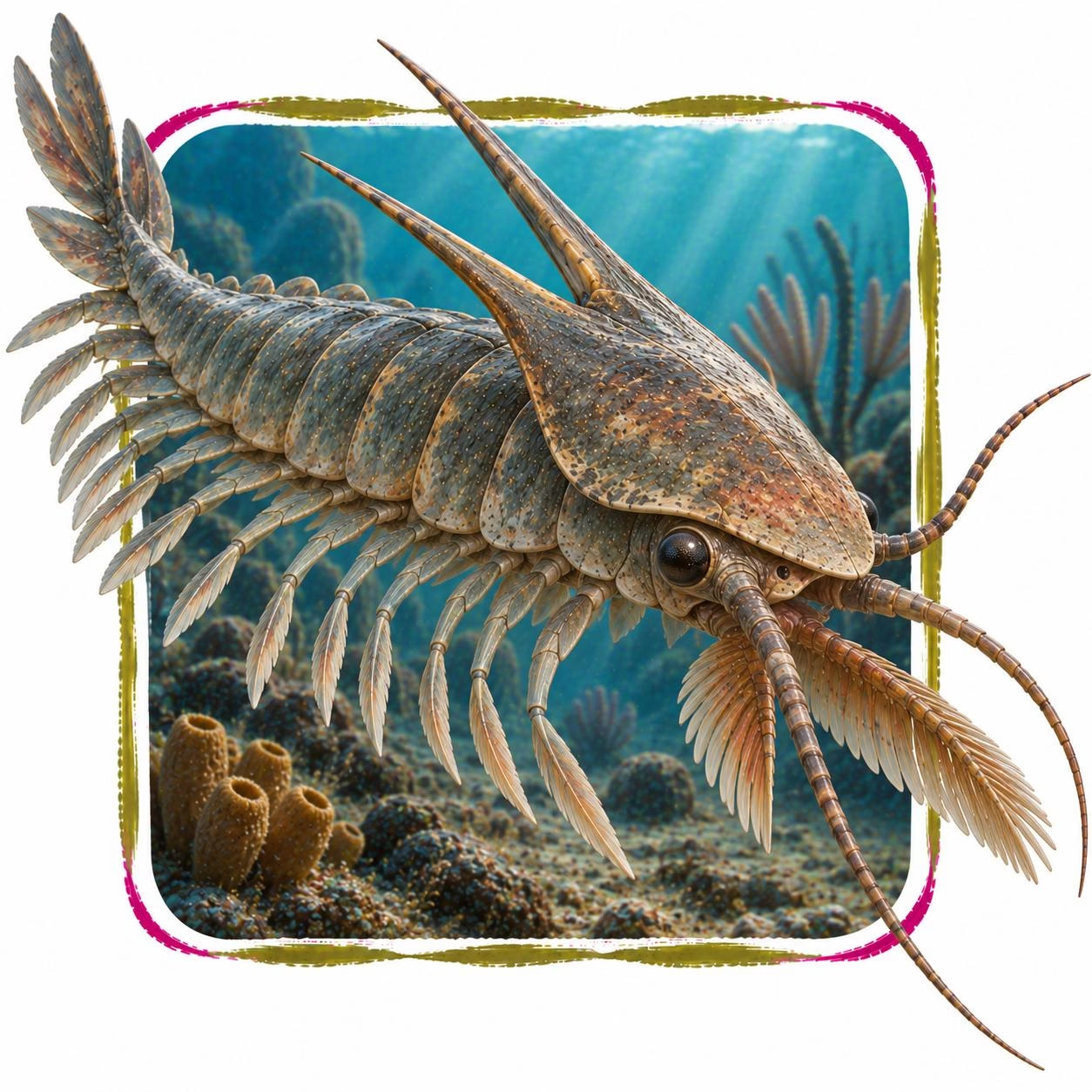
Marrella in its natural Middle Cambrian marine seafloors, soft muddy bottoms, low swimming zones above sediment, sponge communities, and offshore shelf habitats of the Burgess Shale habitat