
Moeritherium Facts for Kids
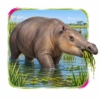
Moeritherium was an early proboscidean that lived in northern Africa during the Eocene Epoch. It was not a modern elephant and probably lacked a long elephant-style trunk. A long body, short limbs, high-set eyes and ears, and chemical clues from its teeth suggest that it spent substantial time in or near water while feeding on soft vegetation.
Quick Moeritherium Facts
- Animal Type: Extinct proboscidean mammal
- Group: Early-diverging proboscidean
- Known For: Tapir-sized body, semi-aquatic lifestyle, short limbs, small incisor tusks, and flexible upper lip
- Lived During: Eocene, roughly 37–33 million years ago
- Diet: Soft vegetation, probably including aquatic plants
What You’ll Learn
Explore 10 remarkable moeritherium facts for kids about its small elephant-like body, short trunk area, wetlands, and early elephant evolution, plus a quiz, glossary, and activity
Clear explanations make these facts great for children, families, teachers, and young explorers.
10 Fun Moeritherium Facts for Kids
1. Moeritherium Was a Proboscidean
Moeritherium belonged to Proboscidea, the mammal order containing elephants and many extinct relatives.
Kid Decode: It joined the elephant family story before trunks and tusks reached blockbuster proportions.
2. It Was Not a Tiny Modern Elephant
Moeritherium branched away early in proboscidean evolution and was not simply a miniature version of a living elephant.
Kid Decode: Evolution was still sketching the elephant blueprint rather than shrinking a finished model.
3. It Was About Tapir Size
Large species stood roughly 70 to 100 centimetres at the shoulder and weighed a few hundred kilograms.
Kid Decode: It carried early-elephant credentials in a body closer to a tapir than a giant bull elephant.
4. It Probably Lacked a Long Trunk
Its nasal opening was only slightly retracted, suggesting a flexible upper lip or short tapir-like proboscis rather than a long elephant trunk.
Kid Decode: The nose may have been a handy grabber, but not yet a full-length elephant hose.
5. It Had Small Incisor Tusks
Enlarged incisors in the upper and lower jaws formed modest tusk-like teeth, very different from the giant tusks of later proboscideans.
Kid Decode: The tusk department was open, but it was still working from a starter kit.
6. It Had a Long Body and Short Legs
Moeritherium had an elongated trunk and relatively short limbs, giving it a low, heavy appearance.
Kid Decode: Its body looked built for wading rather than towering over a savanna.
7. It Was Probably Semi-Aquatic
Oxygen-isotope evidence from tooth enamel matches patterns seen in aquatic or semi-aquatic mammals.
Kid Decode: Its teeth kept a chemical diary of a life spent close to water.
8. It Ate Soft Plants
Dental shape and recent microwear research support feeding on soft vegetation, possibly including aquatic plants.
Kid Decode: Its menu may have come from the Eocene salad bar growing beside and beneath the water.
9. Its Eyes and Ears Sat High
The eyes and ears were positioned relatively high on the skull, a feature useful for an animal moving through shallow water.
Kid Decode: It could keep watch while much of the body stayed lower in the wetland.
10. Its Name Refers to Lake Moeris
Moeritherium means Lake Moeris beast, referring to the ancient Egyptian region associated with its fossils.
Kid Decode: An old lake district gave this early elephant relative its scientific address.
The Weirdest Moeritherium Fact
Chemical evidence locked inside its teeth suggests that this early elephant relative spent substantial time in water, even though modern elephants are mainly land animals.
Try This Moeritherium Activity
Moeritherium Drawing Activity
Draw Moeritherium wading through an Eocene African wetland. Add a tapir-sized body, short legs, high-set eyes and ears, a flexible upper lip, small upper and lower incisor tusks, soft water plants, reeds, muddy banks, and a tooth-isotope clue icon.
Quick Moeritherium Quiz
- Was Moeritherium a modern elephant? Answer: No, it was an early-diverging proboscidean.
- How large was it? Answer: Roughly tapir-sized.
- Did it have a long elephant trunk? Answer: Probably not; it may have had a flexible upper lip or short proboscis.
- What lifestyle do tooth isotopes support? Answer: A semi-aquatic lifestyle.
- What did it probably eat? Answer: Soft vegetation, including possible aquatic plants.
Mini Glossary
- Proboscidean: A mammal belonging to the order that includes elephants and their extinct relatives.
- Semi-Aquatic: Spending substantial time both in water and on land.
- Isotope: A form of an element that can preserve clues about ancient diet or habitat.
- Incisor: A front tooth that can become enlarged into a tusk.
- Eocene: A geologic epoch lasting from about 56 to 34 million years ago.
 Scorpion Facts for Kids
 Sharp-Shinned Hawk Facts for Kids
 Addax Facts for Kids
 Bathornis Facts for Kids
More Animal Facts for Kids
Visit the full animal facts library or explore a focused animal group.
More Extinct Animal Facts for Kids
Discover dinosaurs, Ice Age giants, prehistoric sea creatures, recently extinct species, and other animals from the past.
Fact check note: Fact checked with Liu and colleagues’ 2008 stable-isotope study, recent Moeritherium dental-microwear research, early proboscidean phylogenetic studies, and Fayum fossil records.

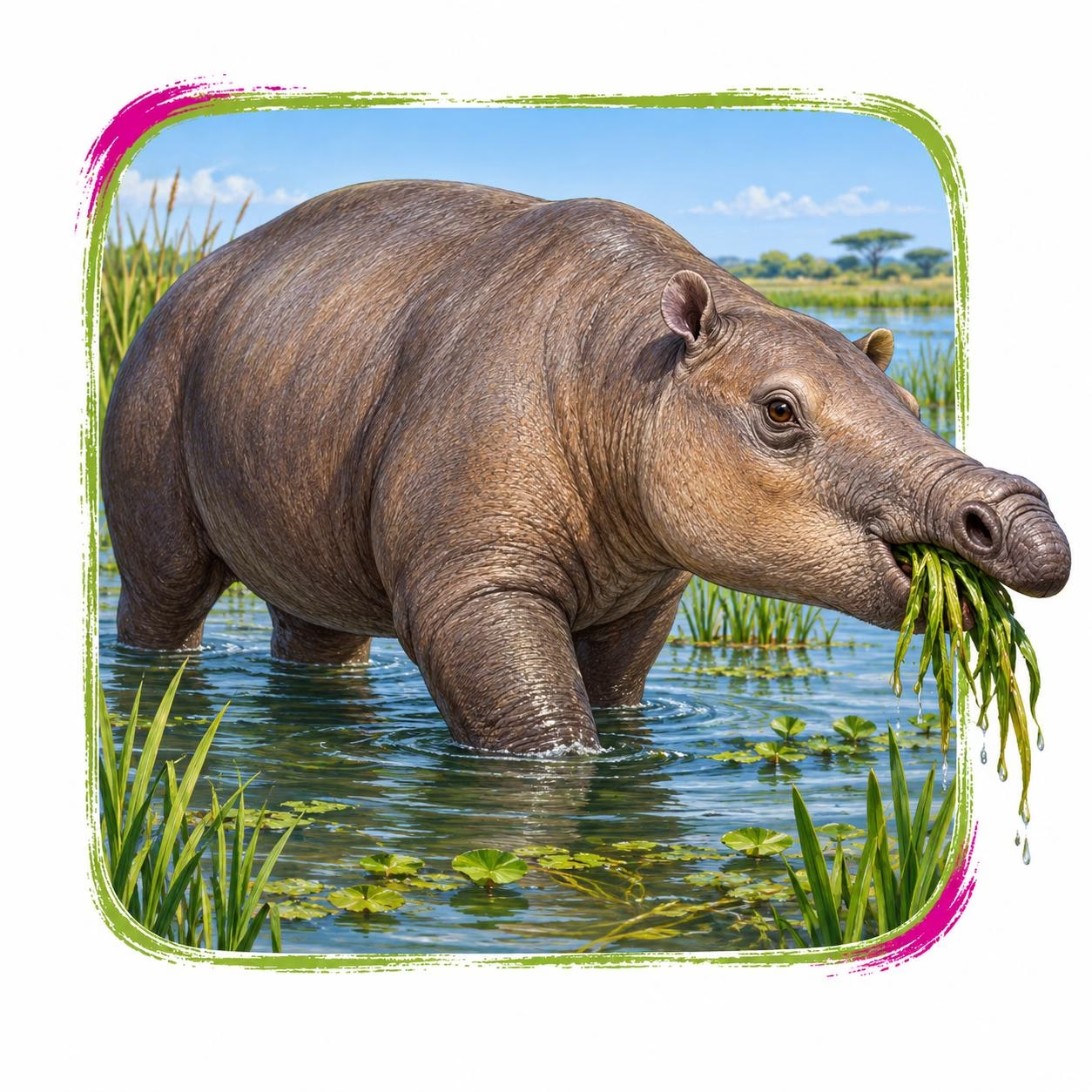
Moeritherium in its natural Eocene wetlands, shallow lakes, river margins, coastal plains, estuaries, marshes, and plant-rich waters of northern Africa habitat