
Ottoia Facts for Kids
Ottoia was a predatory priapulid worm that lived on and beneath the Cambrian seafloor about 505 million years ago. It could turn a muscular, tooth-lined proboscis inside out and push it from the front of its body. Rows of hooks and spines helped the worm grip prey, move through sediment, and feed on animals such as the small shelled creature Haplophrentis.
Quick Ottoia Facts
- Animal Type: Extinct marine worm
- Group: Stem-group priapulid
- Known For: Eversible proboscis, 28 rows of hooks, tooth-lined throat, burrowing, and preserved prey inside the gut
- Lived During: Middle Cambrian, about 505 million years ago
- Diet: Small marine animals and carrion
What You’ll Learn
Discover 10 unusual ottoia facts for kids about its worm-like body, hooked mouthparts, burrows, hunting, and Cambrian seafloors, plus a quiz, glossary, and activity
These facts are explained simply for kids, parents, teachers, and curious little fact-finders.
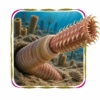
10 Fun Ottoia Facts for Kids
1. Ottoia Was a Priapulid Worm
Ottoia belonged near the priapulids, a group of unsegmented marine worms sometimes nicknamed penis worms because of their body shape.
Kid Decode: It was a worm with no legs, no shell, and a front end packed with equipment.
2. It Grew Up to About Fifteen Centimetres
The largest known Ottoia specimens reached around 15 centimetres long, while the smallest were only about 1 centimetre.
Kid Decode: A large one was about the length of an adult hand.
3. Its Proboscis Could Turn Inside Out
Ottoia could evert its muscular proboscis, pushing the front feeding structure outward from inside the trunk.
Kid Decode: Its mouth arrived by turning part of itself inside out, which is excellent fossil-weirdness.
4. It Had Twenty-Eight Rows of Hooks
The proboscis carried about 28 rows of hooks mixed with different kinds of spines.
Kid Decode: That was less a smile and more a rotating security system.
5. Its Throat Was Lined With Tiny Teeth
Small teeth inside the pharynx helped Ottoia grip and swallow prey after the proboscis pulled food toward the mouth.
Kid Decode: The throat continued the job after the hooks made the introduction.
6. It Probably Burrowed Through Mud
Its body shape and hooked front end suggest that Ottoia could dig or anchor itself in soft seafloor sediment.
Kid Decode: It may have lived with most of its body tucked safely beneath the Cambrian mud.
7. It Ate Haplophrentis
Fossils of the small shelled animal Haplophrentis have been found inside Ottoia guts, showing direct evidence of its diet.
Kid Decode: One meal was fossilised with the diner and the dinner still in the same package.
8. It Also Scavenged
A fossil slab preserves several Ottoia gathered around a dead Sidneyia arthropod, suggesting that they also ate carrion.
Kid Decode: When fresh prey was unavailable, a Cambrian leftover could still make lunch.
9. It Moulted Its Outer Covering
Like other ecdysozoans, Ottoia periodically shed its cuticle so that its body could grow.
Kid Decode: Even this mud-dwelling predator needed a larger outfit from time to time.
10. Thousands of Fossils Are Known
Ottoia is one of the most abundant worms in the Burgess Shale, with thousands of specimens collected.
Kid Decode: For a soft-bodied worm, it left an enormous fossil attendance record.
The Weirdest Ottoia Fact
Scientists have found whole Haplophrentis fossils preserved inside Ottoia guts, giving unusually direct evidence of what a Cambrian predator ate.
Try This Ottoia Activity
Ottoia Drawing Activity
Draw Ottoia emerging from a Cambrian mud burrow. Add an annulated worm body, an extended proboscis, 28 rows of hooks, tiny throat teeth in a cutaway bubble, a swallowed Haplophrentis fossil clue, a Sidneyia carcass nearby, soft sediment, sponges, and a 15-centimetre ruler.
Quick Ottoia Quiz
- Was Ottoia a dinosaur? Answer: No, it was a marine worm.
- What body part could it turn inside out? Answer: Its proboscis.
- How many rows of hooks covered the proboscis? Answer: About 28.
- Which shelled animal has been found inside its gut? Answer: Haplophrentis.
- What did Ottoia shed as it grew? Answer: Its outer cuticle.
Mini Glossary
- Priapulid: A marine worm with an introvertible or eversible front end.
- Proboscis: A muscular feeding structure projecting from the front of an animal.
- Eversible: Able to turn outward from inside the body.
- Cuticle: A flexible outer covering that can be shed during growth.
- Hyolith: A small extinct shelled marine animal, such as Haplophrentis.
 Sunbittern Facts for Kids
 Black-Backed Jackal Facts for Kids
 Tern Facts for Kids
 Broad-Faced Potoroo Facts for Kids
More Animal Facts for Kids
Visit the full animal facts library or explore a focused animal group.
More Extinct Animal Facts for Kids
Discover dinosaurs, Ice Age giants, prehistoric sea creatures, recently extinct species, and other animals from the past.
Fact check note: Fact checked with Banta and Rice’s 1970 redescription, Conway Morris’s 1977 priapulid monograph, Vannier and colleagues’ gut-content research, and Royal Ontario Museum Burgess Shale records.

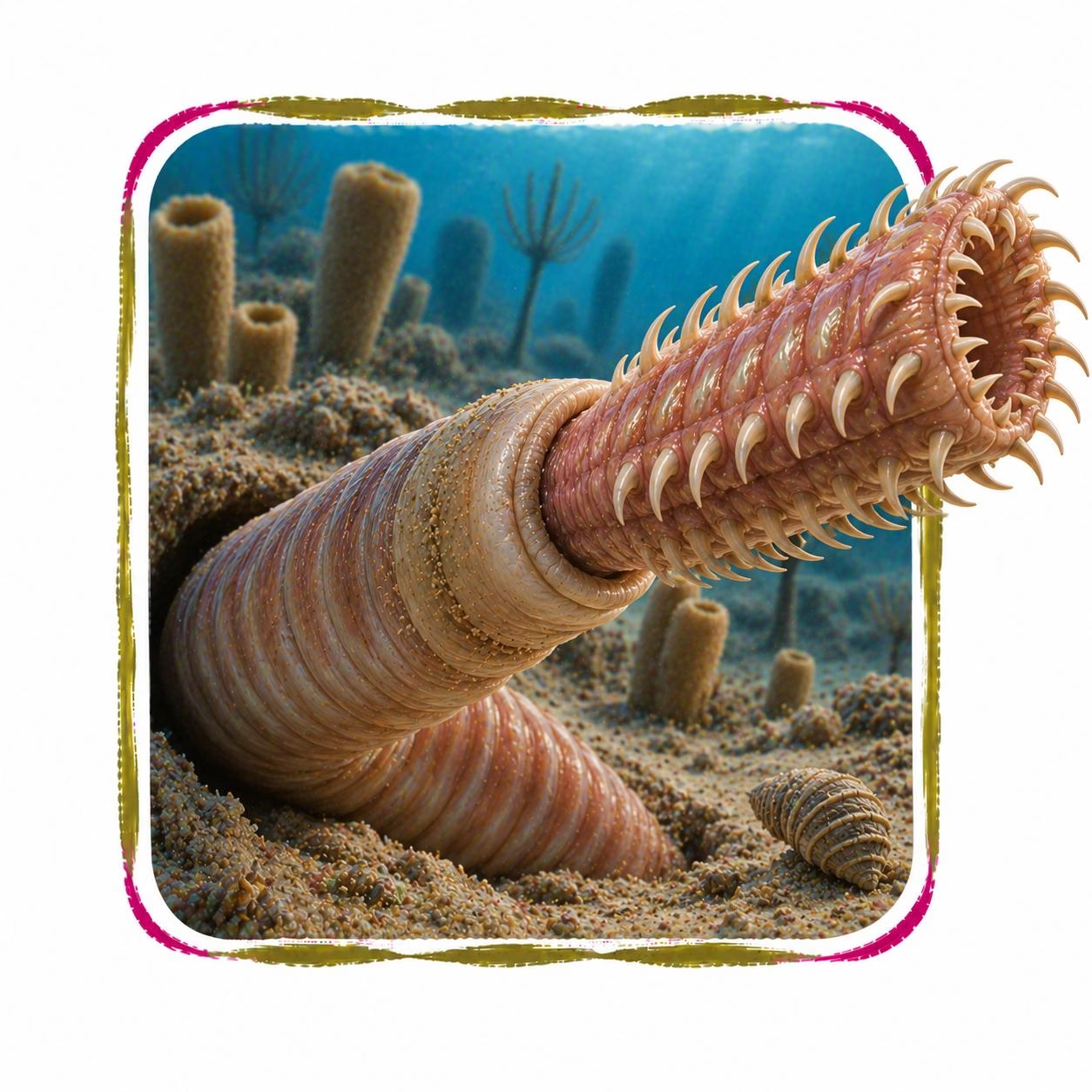
Ottoia in its natural Middle Cambrian muddy seafloors, soft sediment burrows, low oxygen bottom waters, sponge communities, and quiet offshore shelf habitats habitat