
Placerias Facts for Kids
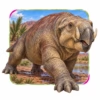
Placerias was a giant plant-eating dicynodont that lived in North America during the Late Triassic. It was not a dinosaur or a mammal, but it belonged to the therapsid branch that eventually produced mammals. A horny beak cropped vegetation, while large tusk-like projections on the upper jaw varied greatly between individuals and may have been used for display or competition.
Quick Placerias Facts
- Animal Type: Extinct herbivorous therapsid
- Group: Stahleckeriid dicynodont
- Known For: Giant barrel body, horny beak, long maxillary caniniforms, possible sexual dimorphism, and massed quarry fossils
- Lived During: Late Triassic, roughly 230–215 million years ago
- Diet: Tough terrestrial vegetation
What You’ll Learn
Learn 10 unusual placerias facts for kids about tusks, powerful bodies, plant-eating, herd life, and Triassic habitats, plus a quiz, glossary, and activity
Easy explanations make them fun for children, families, teachers, and budding animal experts.
10 Fun Placerias Facts for Kids
1. Placerias Was a Dicynodont
Placerias belonged to Dicynodontia, a successful group of beaked herbivorous therapsids that survived through most of the Triassic.
Kid Decode: It was one of the final giant chapters in the long dicynodont story.
2. It Was One of the Largest Triassic Herbivores
Large Placerias reached about 3 metres in length and may have weighed more than one tonne.
Kid Decode: It carried rhinoceros-scale bulk through a landscape shared with early dinosaurs.
3. It Had a Horny Beak
The front of the mouth was toothless and covered by keratin in life, forming a strong beak for cropping plant material.
Kid Decode: Its face brought garden shears to the Late Triassic salad bar.
4. It Had Tusk-Like Bony Projections
Long caniniform processes extended downward from the maxillary bones and looked like tusks, although they were projections of the skull rather than enlarged teeth.
Kid Decode: The giant side spikes were bone wearing a convincing tusk disguise.
5. Some Individuals Had Longer Caniniforms
A 2024 study found two clear caniniform forms, one longer and one shorter, possibly representing a sexually selected difference between individuals.
Kid Decode: The species may have worn two versions of the same dramatic face ornament.
6. True Tusks Were Variable
Small true tusks occurred in some maxillae, but many individuals lacked them, suggesting that the bony caniniforms were more important than the teeth.
Kid Decode: Placerias could lose the toothy tusk while keeping the skull-built replacement.
7. It Had a Massive Barrel Body
A deep rib cage and powerful limbs supported a huge digestive system suited to processing fibrous vegetation.
Kid Decode: Most of the body budget went into carrying and feeding one enormous plant-processing vat.
8. The Placerias Quarry Held Many Individuals
More than 1,700 bones representing at least 41 animals were collected from the famous Placerias Quarry near St. Johns, Arizona.
Kid Decode: One fossil site turned into a warehouse of giant dicynodont spare parts.
9. Drought May Have Killed the Quarry Animals
The quarry assemblage probably formed on a seasonal floodplain where drought weakened or killed many animals before rapid burial.
Kid Decode: A vanished water supply may have gathered the giants before mud sealed their bones away.
10. It Grew Quickly but Not Continuously
Bone tissues show intervals of rapid growth interrupted by slower periods, with some adults reaching very different body sizes.
Kid Decode: Its skeleton recorded growth in bursts rather than one smooth climb to giant size.
The Weirdest Placerias Fact
Placerias had two distinct lengths of tusk-like bony caniniforms, and recent evidence suggests the longer form may have been a display or competition trait.
Try This Placerias Activity
Placerias Drawing Activity
Draw Placerias crossing a Late Triassic Arizona floodplain. Add a broad beak, long tusk-like maxillary caniniforms, a massive barrel-shaped body, thick limbs, a short tail, tough plants, cracked drought mud, and two adults with different caniniform lengths beside a Placerias Quarry fossil map.
Quick Placerias Quiz
- Was Placerias a dinosaur? Answer: No, it was a dicynodont therapsid.
- How long could it grow? Answer: About 3 metres.
- What covered the front of its mouth? Answer: A horny beak.
- Were its large caniniforms true tusk teeth? Answer: No, they were projections of the maxillary bones.
- How many animals are represented at Placerias Quarry? Answer: At least 41.
Mini Glossary
- Dicynodont: A beaked therapsid, often equipped with tusks or tusk-like structures.
- Caniniform Process: A downward projection of the upper-jaw bone shaped somewhat like a canine tooth.
- Keratin: Tough material that forms beaks, claws, hair, and nails.
- Sexual Dimorphism: A consistent difference in form between members of different sexes.
- Chinle Formation: A fossil-rich group of Late Triassic rocks in the southwestern United States.
 Lobster Facts for Kids
 Neon Tetra Facts for Kids
 Cobra Facts for Kids
 Quagga Facts for Kids
More Animal Facts for Kids
Visit the full animal facts library or explore a focused animal group.
More Extinct Animal Facts for Kids
Discover dinosaurs, Ice Age giants, prehistoric sea creatures, recently extinct species, and other animals from the past.
Fact check note: Fact checked with Camp and Welles’ Placerias quarry monograph, Green and colleagues’ 2010 limb-bone growth study, Pinto and colleagues’ 2024 caniniform-dimorphism analysis, and recent Placerias Quarry dating and taphonomy research.

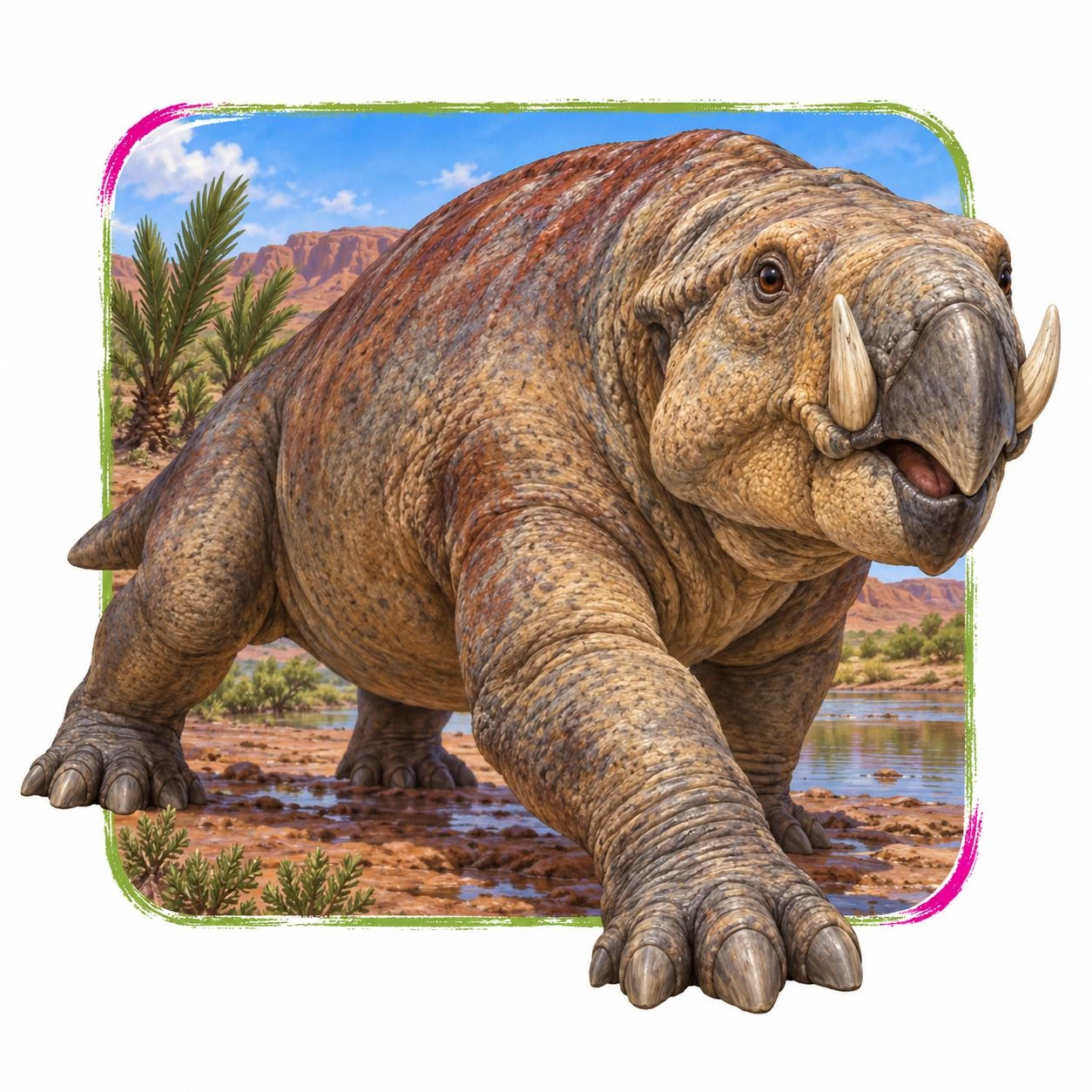
Placerias in its natural Late Triassic seasonal floodplains, river margins, dry lowlands, drought-prone basins, wooded plains, and terrestrial habitats of the Chinle region habitat