
Aegirocassis Facts for Kids
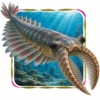
Aegirocassis was a giant suspension-feeding radiodont that swam through seas covering what is now Morocco during the Early Ordovician. It was an ancient relative of arthropods, not a shrimp, crab, or lobster. At more than 2 metres long, it was among the largest animals of its time, yet its comb-like frontal appendages probably gathered plankton and other tiny food from the water.
Quick Aegirocassis Facts
- Animal Type: Extinct marine arthropod relative
- Group: Hurdiid radiodont
- Known For: More than 2-metre size, comb-like filtering appendages, paired swimming flaps, elaborate head shield, and plankton feeding
- Lived During: Early Ordovician, about 480 million years ago
- Diet: Plankton and other small particles suspended in seawater
What You’ll Learn
Explore 10 enormous aegirocassis facts for kids about swimming flaps, filter feeding, giant size, strange appendages, and ancient oceans, with a quiz, glossary, and activity
Easy explanations make them fun for children, families, teachers, and young prehistoric explorers.
10 Fun Aegirocassis Facts for Kids
1. Aegirocassis Was a Radiodont
Aegirocassis belonged to Radiodonta, an extinct group near the base of the arthropod family tree that also included Anomalocaris.
Kid Decode: It was an arthropod relative from a time when evolution was still testing the blueprint.
2. It Was More Than Two Metres Long
Fossils indicate that Aegirocassis exceeded 2 metres in length, making it one of the largest known animals in Early Ordovician seas.
Kid Decode: It reached sofa length while many neighbours were still hand-sized.
3. It Was a Gentle Giant
Unlike predatory radiodonts with grasping claws, Aegirocassis used specialised appendages to collect small drifting food.
Kid Decode: The giant of the sea brought a plankton comb instead of prey-grabbing pincers.
4. Its Front Appendages Formed Filters
Long spines and finer branches on its paired frontal appendages created a mesh capable of trapping plankton from the water.
Kid Decode: Its face carried two enormous reusable sieves.
5. It Had Two Sets of Swimming Flaps
Each body segment bore an upper and lower flap, revealing that radiodont swimming structures were paired rather than single.
Kid Decode: It crossed the water with a double row of soft prehistoric paddles.
6. Its Gills Sat on the Upper Flaps
Blade-like gill structures were attached to the dorsal flaps, while the lower flaps were probably more important for swimming.
Kid Decode: One flap handled breathing equipment while its partner handled more of the rowing.
7. Its Fossils Changed Arthropod Science
The paired flaps helped scientists connect radiodont body parts with the two-branched limbs of later arthropods.
Kid Decode: This odd swimmer supplied a missing diagram page in the arthropod instruction manual.
8. It Had a Three-Part Head Shield
Aegirocassis carried an elaborate head covering made from one central and two side plates.
Kid Decode: Its helmet arrived as a three-piece prehistoric construction set.
9. It Lived in Morocco
Exceptionally preserved fossils came from the Fezouata Shale of southeastern Morocco, which records a diverse Early Ordovician marine ecosystem.
Kid Decode: A Moroccan fossil site kept its soft body from disappearing completely into deep time.
10. Its Name Honors a Sea Giant and a Discoverer
Aegirocassis refers to Ægir, a giant and sea figure from Norse mythology, and a helmet; its species name honors fossil discoverer Mohamed Ben Moula.
Kid Decode: Its name combines sea mythology, head armor, and the person who found it.
The Weirdest Aegirocassis Fact
Aegirocassis was a giant relative of predatory radiodonts, but it transformed their grasping front appendages into delicate plankton filters and became one of the earliest known giant suspension feeders.
Try This Aegirocassis Activity
Aegirocassis Drawing Activity
Draw Aegirocassis swimming through an Early Ordovician Moroccan sea. Add a body longer than a person, a three-part head shield, two comb-like frontal filters, paired upper and lower flaps along the body, feathery gills, clouds of plankton, trilobites below, and a Fezouata fossil slab.
Quick Aegirocassis Quiz
- Was Aegirocassis a dinosaur? Answer: No, it was a radiodont and ancient arthropod relative.
- How long did it grow? Answer: More than 2 metres.
- What did its frontal appendages do? Answer: Filtered plankton from seawater.
- Where were its fossils found? Answer: Morocco.
- How many sets of swimming flaps occurred on each body segment? Answer: An upper and a lower set.
Mini Glossary
- Radiodont: An extinct early arthropod relative with frontal appendages and swimming flaps.
- Suspension Feeder: An animal that gathers small food floating in water.
- Frontal Appendage: A paired structure at the front of a radiodont’s head.
- Dorsal: Located on or toward the upper side of an animal.
- Fezouata Shale: An Early Ordovician fossil deposit in Morocco famous for preserving soft-bodied animals.
 Catfish Facts for Kids
 Spider Monkey Facts for Kids
 Muskrat Facts for Kids
 Guadalupe Caracara Facts for Kids
More Animal Facts for Kids
Visit the full animal facts library or explore a focused animal group.
More Extinct Animal Facts for Kids
Discover dinosaurs, Ice Age giants, prehistoric sea creatures, recently extinct species, and other animals from the past.
Fact check note: Fact checked with Van Roy, Daley and Briggs’s 2015 Nature description of Aegirocassis, earlier Fezouata radiodont research, and later studies of radiodont appendages and suspension feeding.

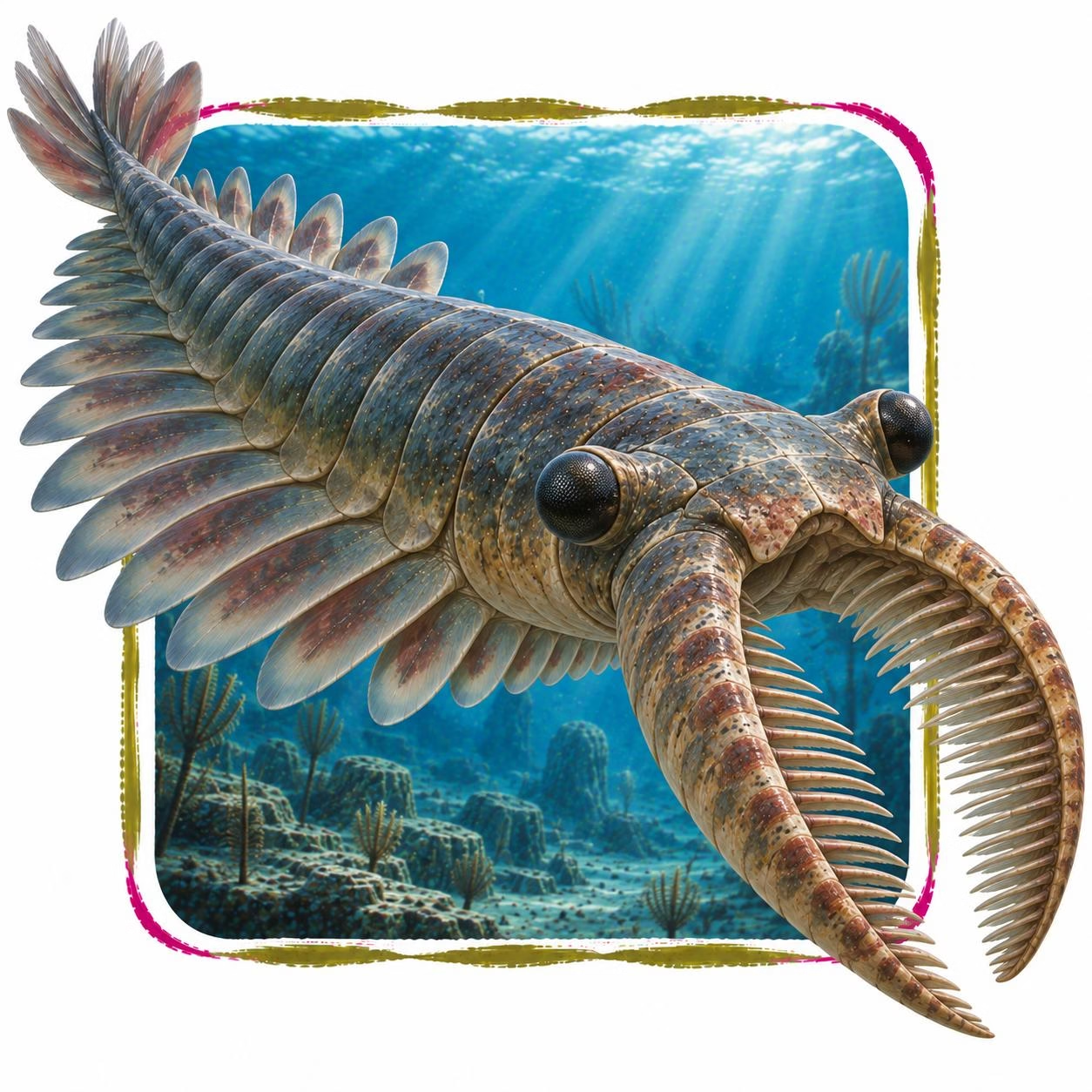
Aegirocassis in its natural Early Ordovician open seas, continental shelf waters, plankton-rich surface zones, offshore marine habitats, and soft-bottom environments of the Fezouata Biota habitat