
Pterodaustro Facts for Kids
Pterodaustro was a filter-feeding pterosaur that lived beside lakes in what is now central Argentina during the Early Cretaceous. Its long jaws curved upward, and its lower jaw held as many as about 1,000 extremely thin, bristle-like teeth. These formed a natural sieve for straining tiny food from water, making Pterodaustro one of the strangest known flying reptiles.
Quick Pterodaustro Facts
- Animal Type: Flying reptile
- Group: Ctenochasmatid pterosaur
- Known For: Up to about 1,000 bristle-like lower teeth, curved jaws, filter feeding, abundant fossils, eggs, embryos, and stomach stones
- Lived During: Early Cretaceous, about 105 million years ago
- Diet: Tiny crustaceans, plankton, algae, and other small waterborne food
What You’ll Learn
Explore 10 unusual pterodaustro facts for kids about its filter-feeding teeth, long beak, wings, shallow-water feeding, and Cretaceous life, with a quiz, glossary, and activity
Easy explanations make them great for children, families, teachers, and young nature explorers.
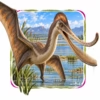
10 Fun Pterodaustro Facts for Kids
1. Pterodaustro Was Not a Dinosaur
Pterodaustro was a pterosaur, one of the flying reptiles that lived alongside dinosaurs.
Kid Decode: It shared the Cretaceous stage with dinosaurs but entered through the flying-reptile door.
2. It Lived Beside Argentine Lakes
Hundreds of specimens come from the Lagarcito Formation in San Luis Province, Argentina, where an ancient lake ecosystem once existed.
Kid Decode: One fossil site became a crowded yearbook of Pterodaustro lives.
3. It Had Up to About 1,000 Teeth
The lower jaw contained hundreds of extremely long, thin teeth, with estimates reaching roughly 1,000.
Kid Decode: Its mouth looked less like a bite machine and more like a living comb factory.
4. Its Teeth Formed a Filter
The delicate lower teeth stood closely together and could strain tiny organisms and food particles from water.
Kid Decode: Pterodaustro brought its own reusable food sieve everywhere it flew.
5. Its Upper Teeth Were Different
The upper jaw carried much smaller, shorter teeth that may have helped process food caught by the lower-jaw filter.
Kid Decode: One jaw gathered the snacks while the other helped with the finishing work.
6. Its Bill Curved Upward
Pterodaustro had a long, narrow skull with strongly upturned jaws, giving its head a highly unusual shape.
Kid Decode: Its beak curved upward as though the whole mouth had discovered a smile.
7. Scientists Found Eggs and an Embryo
Pterodaustro fossils include an embryo preserved inside an egg and a rare partly three-dimensional fossil egg.
Kid Decode: Scientists found this pterosaur’s story beginning before hatching.
8. Young Pterodaustros Grew Quickly
Bone studies suggest hatchlings grew rapidly for about two years, reached around half adult size, and then continued growing more slowly.
Kid Decode: It raced through its early growth before switching to a steadier pace.
9. Some Swallowed Stomach Stones
Small stones found inside several skeletons may have helped grind hard food such as shelled crustaceans.
Kid Decode: The filter feeder apparently carried a tiny rock-powered food processor.
10. It Is Known From Many Ages
The fossil collection includes embryos, hatchlings, juveniles, and adults, allowing scientists to study how its body changed while growing.
Kid Decode: This species left behind almost an entire fossil family album.
The Weirdest Pterodaustro Fact
Pterodaustro packed as many as about 1,000 bristle-like teeth into its lower jaw, creating one of the most extreme feeding tools known in any pterosaur.
Try This Pterodaustro Activity
Pterodaustro Drawing Activity
Draw Pterodaustro wading at the edge of an Early Cretaceous Argentine lake. Add long upcurved jaws, a dense comb of lower teeth, tiny water creatures, folded wings, large feet, an egg fossil, smooth stomach stones, distant flock members, reeds, and a “natural water filter” label.
Quick Pterodaustro Quiz
- Was Pterodaustro a dinosaur? Answer: No, it was a pterosaur.
- Where did it live? Answer: Near ancient lakes in central Argentina.
- How many lower-jaw teeth could it have? Answer: Up to about 1,000.
- How did it collect tiny food? Answer: By filtering water through its bristle-like teeth.
- What rare baby fossil has been found? Answer: An embryo preserved inside an egg.
Mini Glossary
- Filter Feeder: An animal that strains tiny food from water.
- Ctenochasmatid: A group of pterosaurs often known for long jaws and many slender teeth.
- Plankton: Tiny organisms that drift or swim weakly in water.
- Gastrolith: A swallowed stone that may help grind food.
- Embryo: A developing animal inside an egg or parent.
 Beluga Whale Facts for Kids
 Raccoon Facts for Kids
 Natterjack Toad Facts for Kids
 American Cheetah Facts for Kids
More Animal Facts for Kids
Visit the full animal facts library or explore a focused animal group.
More Extinct Animal Facts for Kids
Discover dinosaurs, Ice Age giants, prehistoric sea creatures, recently extinct species, and other animals from the past.
Fact check note: Fact checked with Chiappe, Kellner and Rivarola’s 2000 cranial study, Chinsamy and colleagues’ 2008 growth analysis, Codorniú and colleagues’ stomach-stone study, Grellet-Tinner and colleagues’ 2014 egg description, and Cerda and Codorniú’s 2023 tooth histology research.

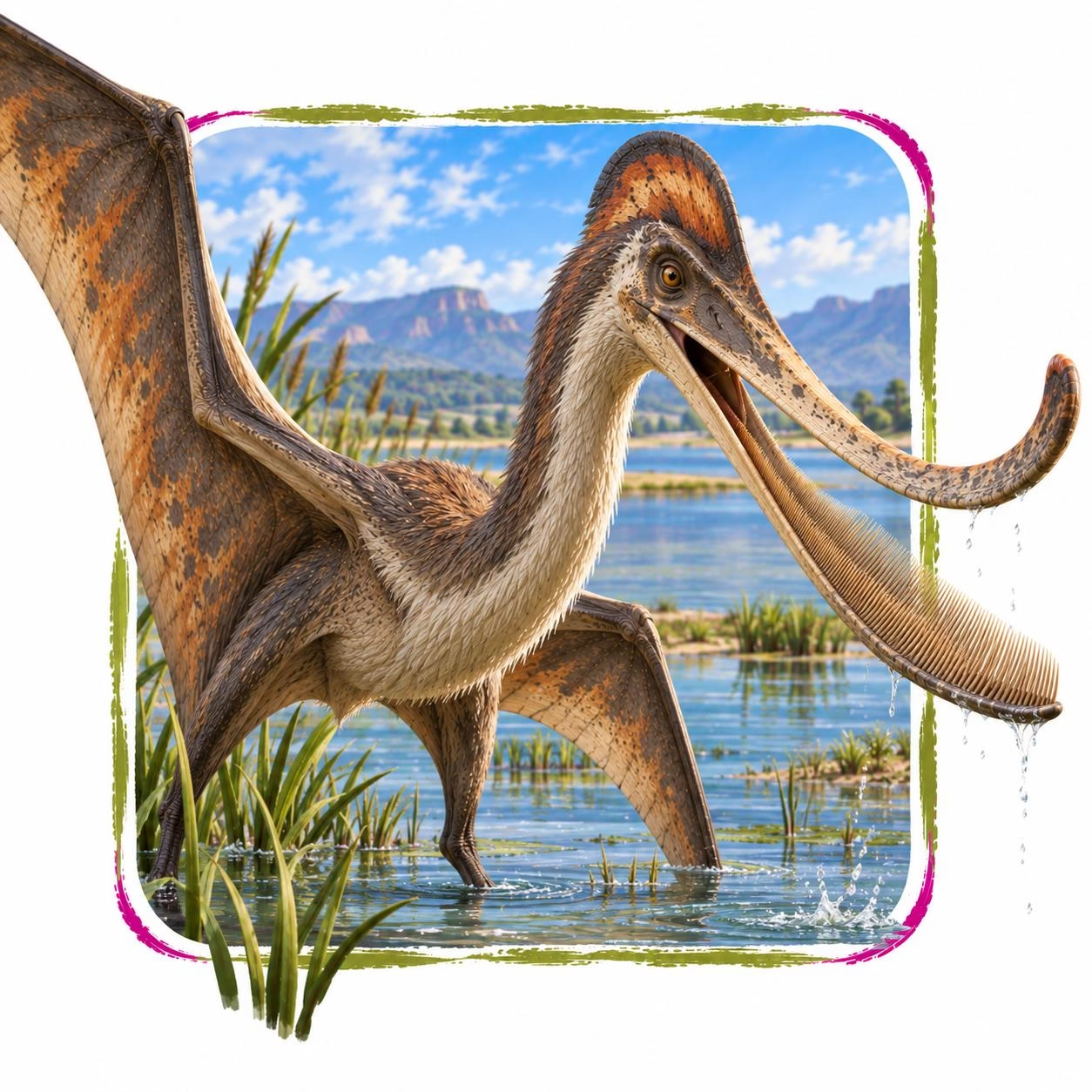
Pterodaustro in its natural Early Cretaceous freshwater lakes, shallow shorelines, mudflats, reed beds, seasonal wetlands, and dry lake-margin landscapes of central Argentina habitat