
Rhomaleosaurus Facts for Kids
Rhomaleosaurus was a large predatory plesiosaur that patrolled the seas around what is now Britain during the Early Jurassic. It was not a dinosaur. Unlike very long-necked plesiosaurs, it had a large head, a strong skull, a moderately short neck, and powerful conical teeth for gripping fish, cephalopods, and other marine reptiles.
Quick Rhomaleosaurus Facts
- Animal Type: Prehistoric marine reptile
- Group: Rhomaleosaurid plesiosaur
- Known For: Large head, reinforced skull, strong conical teeth, four flippers, top-predator lifestyle, and a famous seven-metre skeleton
- Lived During: Early Jurassic, about 183–175 million years ago
- Diet: Fish, cephalopods, ichthyosaurs, and other marine reptiles
What You’ll Learn
Learn 10 powerful rhomaleosaurus facts for kids about giant jaws, strong flippers, sharp teeth, hunting, and Jurassic oceans, plus a quiz, glossary, and activity
These simple facts are written for kids, parents, teachers, and curious young minds.
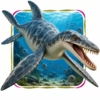
10 Fun Rhomaleosaurus Facts for Kids
1. Rhomaleosaurus Was a Plesiosaur
Rhomaleosaurus was a marine reptile in the plesiosaur group, not a dinosaur, crocodile, whale, or fish.
Kid Decode: It wore the sea-monster shape while keeping reptile credentials.
2. It Lived in the Early Jurassic
Rhomaleosaurus swam in European seas during the Toarcian Age of the Early Jurassic.
Kid Decode: It hunted in the ocean while early Jurassic dinosaurs travelled the nearby land.
3. Its Name Means Strong Lizard
The name Rhomaleosaurus comes from Greek words meaning strong or robust lizard, matching its powerful build.
Kid Decode: Its scientific name arrives with muscles already included.
4. It Had a Large Head
Compared with long-necked plesiosaurs, Rhomaleosaurus had a much larger skull attached to a shorter, stronger neck.
Kid Decode: This hunter placed more of the hardware at the biting end.
5. Its Skull Was Reinforced
Bones and braces in the skull helped it resist twisting forces while it seized and struggled with prey.
Kid Decode: The head was built to stay sturdy when dinner fought back.
6. It Had Powerful Conical Teeth
Large pointed teeth were well suited to piercing and holding slippery fish, cephalopods, and other marine animals.
Kid Decode: Its bite worked like a row of gripping spikes rather than chewing molars.
7. It Was a Top Marine Predator
Rhomaleosaurus was among the largest and most formidable predators in Early Jurassic British seas.
Kid Decode: Most animals in its ocean preferred to appear somewhere else on the menu.
8. It Swam With Four Flippers
Two front and two rear flippers provided thrust, steering, and stability as the animal moved through the water.
Kid Decode: Four underwater wings powered a very toothy vehicle.
9. It May Have Smelled Underwater
Passages in the skull may have directed water toward scent-sensitive areas, possibly helping Rhomaleosaurus detect prey while submerged.
Kid Decode: Its nose may have sampled the sea without needing to surface for a sniff.
10. A Famous Skeleton Travelled to Dublin
A nearly complete seven-metre Rhomaleosaurus cramptoni found near Whitby in 1848 was taken to Dublin, where the original fossil is held by the National Museum of Ireland.
Kid Decode: A Yorkshire sea monster ended up with a long-term Irish address.
The Weirdest Rhomaleosaurus Fact
The famous Rhomaleosaurus cramptoni skeleton is about 7 metres long, and casts of it became better known than the original fossil stored in Dublin.
Try This Rhomaleosaurus Activity
Rhomaleosaurus Drawing Activity
Draw Rhomaleosaurus hunting in an Early Jurassic sea. Add a large head, moderately short strong neck, reinforced skull, powerful conical teeth, four flippers, fish, ammonites, a smaller ichthyosaur, Whitby cliffs, and a museum map line travelling from Yorkshire to Dublin.
Quick Rhomaleosaurus Quiz
- Was Rhomaleosaurus a dinosaur? Answer: No, it was a plesiosaur and marine reptile.
- During which period did it live? Answer: The Early Jurassic.
- What does its name mean? Answer: Strong lizard.
- What did its reinforced skull help it do? Answer: Grip and struggle with large prey.
- Where is the famous original Rhomaleosaurus cramptoni fossil held? Answer: The National Museum of Ireland in Dublin.
Mini Glossary
- Rhomaleosaurid: A family of large-headed early plesiosaur predators.
- Toarcian: An age within the Early Jurassic Period.
- Cephalopod: A squid, ammonite, octopus, or related animal.
- Reinforced Skull: A skull strengthened to resist force and twisting.
- Holotype: The main specimen used when a species is formally named.
 Rhinoceros Beetle Facts for Kids
 Chicken Facts for Kids
 Howler Monkey Facts for Kids
 Herrerasaurus Facts for Kids
More Animal Facts for Kids
Visit the full animal facts library or explore a focused animal group.
More Extinct Animal Facts for Kids
Discover dinosaurs, Ice Age giants, prehistoric sea creatures, recently extinct species, and other animals from the past.
Fact check note: Fact checked with Taylor’s 1992 functional study of Rhomaleosaurus zetlandicus, Smith and Dyke’s 2008 skull description of R. cramptoni, Smith’s 2014 osteology of R. thorntoni, and National Museum of Ireland records for the seven-metre Dublin specimen.

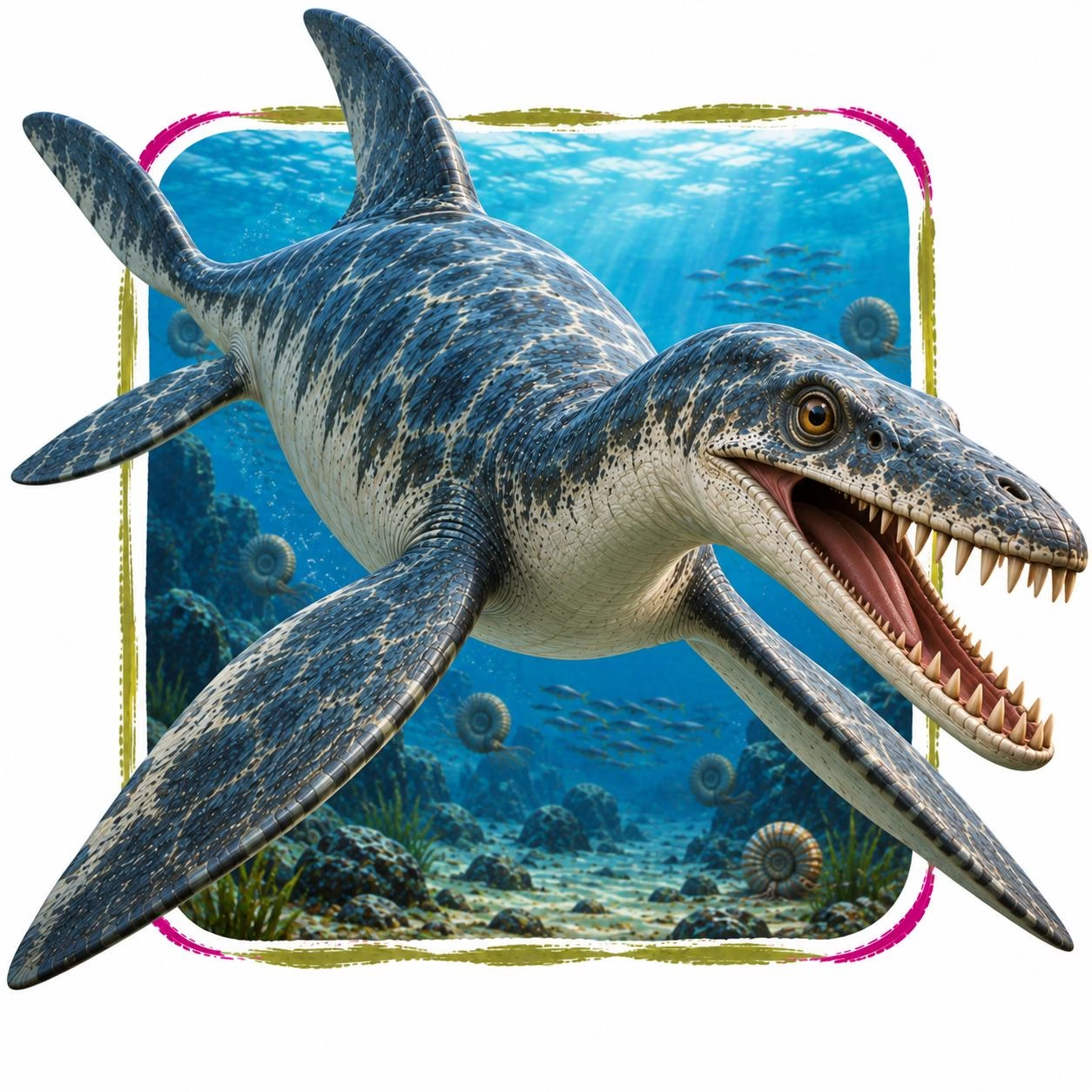
Rhomaleosaurus in its natural Early Jurassic open seas, coastal shelf waters, muddy marine basins, ammonite-rich offshore habitats, deep channels, and waters near ancient British islands habitat