
Synthetoceras Facts for Kids
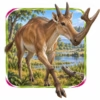
Synthetoceras was an extinct hoofed mammal from the Late Miocene of North America. It was not a dinosaur, deer, antelope, or giraffe, though it had strange horn-like structures. This protoceratid had two horns above the eyes and, in males, a long Y-shaped horn on the snout, making it one of the oddest-looking herbivores of its time.
Quick Synthetoceras Facts
- Animal Type: Prehistoric hoofed mammal
- Group: Protoceratid artiodactyl
- Known For: Forked Y-shaped nose horn, two eye horns, male display, deer-like body, calves, Late Miocene North America, browsing diet, and subtropical coastal plains
- Lived During: Late Miocene, about 10 million years ago
- Diet: Leaves, shrubs, grasses, aquatic plants, and other vegetation
What You’ll Learn
Learn 10 unusual synthetoceras facts for kids about its strange horns, long legs, grazing, herd life, and prehistoric North America, with a quiz, glossary, and activity
These facts are kept simple for kids, parents, teachers, and curious young minds.
10 Fun Synthetoceras Facts for Kids
1. Synthetoceras Was a Mammal
Synthetoceras was a prehistoric mammal, not a dinosaur or reptile.
Kid Decode: Forked horn, hoofed feet, mammal family oddball.
2. It Was a Protoceratid
Synthetoceras belonged to Protoceratidae, an extinct family of North American even-toed hoofed mammals.
Kid Decode: Think deer-like herbivore, but with a stranger skull budget.
3. It Was Not a Deer
Protoceratids looked a bit like deer or antelopes, but they were not true deer or antelopes.
Kid Decode: Fossil lookalike, different family tree.
4. Males Had a Forked Nose Horn
Male Synthetoceras had a long horn on the snout that split into a Y shape near the tip.
Kid Decode: Its face looked like it was carrying a tiny wishbone.
5. It Also Had Eye Horns
Synthetoceras had a pair of horn-like structures above the eyes as well as the snout horn.
Kid Decode: Three-horned mammal, zero dinosaur membership.
6. The Horns Were Probably for Display
The elaborate horns were probably used by males for display, competition, or sparring.
Kid Decode: Prehistoric dating profile: excellent antler-adjacent architecture.
7. It Lived in North America
AMNH notes Synthetoceras from Late Miocene North America, including Texas fossils.
Kid Decode: Ancient Texas had subtropical plains and fork-faced hoofbeasts.
8. It May Have Been a Browser
Protoceratids may have browsed in subtropical coastal plains, possibly in a moose-like way near wet habitats.
Kid Decode: Leaves and wetland plants were likely on the menu.
9. Baby Synthetoceras Were Calves
Baby Synthetoceras can be called calves because many hoofed mammals use that baby name.
Kid Decode: A calf with future Y-horn drama is a strong fossil start.
10. It Was Among the Last Protoceratids
Synthetoceras was one of the later and most spectacular protoceratids before the family disappeared.
Kid Decode: The protoceratid story ended with a very fancy face.
The Weirdest Synthetoceras Fact
Synthetoceras had a forked horn on its nose, giving it one of the strangest head displays of any hoofed mammal.
Try This Synthetoceras Activity
Synthetoceras Drawing Activity
Draw Synthetoceras on a Late Miocene coastal plain. Add two eye horns, a forked Y-shaped nose horn, short legs, calf, leafy shrubs, wetland plants, Texas fossil skull tag, and a “fork-horned protoceratid” label.
Quick Synthetoceras Quiz
- Was Synthetoceras a dinosaur? Answer: No, it was a prehistoric mammal.
- What extinct family did it belong to? Answer: Protoceratidae.
- What was unusual about the male snout horn? Answer: It split into a Y shape.
- Where did Synthetoceras live? Answer: North America.
- What did Synthetoceras eat? Answer: Plants such as leaves, shrubs, grasses, and aquatic vegetation.
Mini Glossary
- Protoceratid: A member of an extinct family of North American hoofed mammals with unusual horn-like structures.
- Artiodactyl: An even-toed hoofed mammal group.
- Browser: An animal that eats leaves, shoots, and shrubs.
- Calf: A baby hoofed mammal.
- Miocene: A time period after the dinosaurs when many modern-looking mammals lived.
 Warthog Facts for Kids
 Wasp Facts for Kids
 Worm Facts for Kids
 Fukuiraptor Facts for Kids
More Animal Facts for Kids
Visit the full animal facts library or explore a focused animal group.
More Extinct Animal Facts for Kids
Discover dinosaurs, Ice Age giants, prehistoric sea creatures, recently extinct species, and other animals from the past.
Fact check note: Fact checked with AMNH Synthetoceras tricornatus page, Protoceratidae summaries, Late Miocene North American fossil notes, and trusted prehistoric mammal education sources.

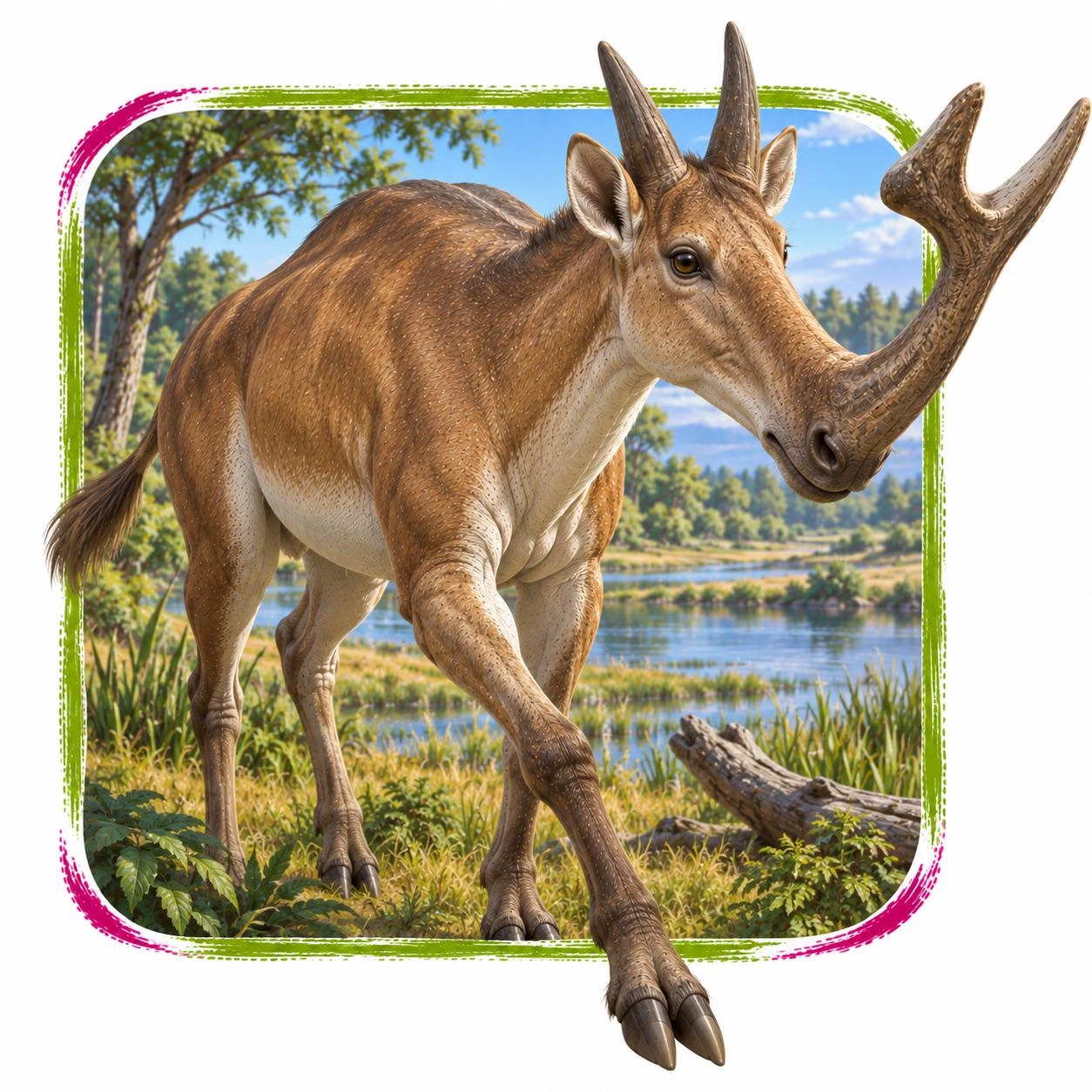
Synthetoceras in its natural Late Miocene North American subtropical coastal plains, wet meadows, river margins, open woodlands, brushy grasslands, Texas fossil habitats, Nebraska fossil areas, and browsing wetlands habitat