
Tanystropheus Facts for Kids
Tanystropheus was a bizarre long-necked reptile that lived around coastal waters during the Middle Triassic. It was not a dinosaur. Its neck could be longer than its body and tail combined, yet it contained only 13 extremely stretched vertebrae. Fossils show that large and small species lived together while hunting different kinds of prey.
Quick Tanystropheus Facts
- Animal Type: Prehistoric aquatic reptile
- Group: Tanystropheid archosauromorph
- Known For: Extremely long neck, 13 stretched neck vertebrae, stiff cervical ribs, aquatic hunting, and large and small species
- Lived During: Middle Triassic, about 242 million years ago
- Diet: Fish, squid-like animals, crustaceans, and other small prey, depending on the species
What You’ll Learn
Explore 10 extraordinary tanystropheus facts for kids about its extremely long neck, small head, swimming, hunting, and Triassic life, with a quiz, glossary, and activity
Easy explanations make them great for children, families, teachers, and young reptile fans.
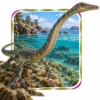
10 Fun Tanystropheus Facts for Kids
1. Tanystropheus Was Not a Dinosaur
Tanystropheus was an archosauromorph reptile, making it a distant relative of the broader group that later included crocodiles, birds, and dinosaurs.
Kid Decode: It lived near dinosaurs’ family neighbourhood without actually joining the dinosaur club.
2. Its Neck Was Longer Than Its Body
In large Tanystropheus species, the neck could exceed the combined length of the torso and tail.
Kid Decode: Most of the animal seemed to be neck with a reptile attached at each end.
3. The Neck Had Only Thirteen Bones
The enormous neck was built from just 13 cervical vertebrae, many of which were stretched into very long tube-like bones.
Kid Decode: Instead of adding lots of bones, evolution pulled a small set into broomstick mode.
4. Long Ribs Stiffened the Neck
Slender cervical ribs ran alongside the neck vertebrae and helped support a neck that was strong but not highly flexible.
Kid Decode: The neck was more controlled fishing crane than floppy sea noodle.
5. Large and Small Species Lived Together
Tanystropheus hydroides grew to roughly 5 metres or more, while adult Tanystropheus longobardicus was much smaller, usually around 1.5 to 2 metres.
Kid Decode: The same coastline hosted both the giant edition and the compact edition.
6. It Was Adapted for Life in Water
Reconstructed skulls, limb bones, and other features support an aquatic or strongly semi-aquatic lifestyle rather than a fully land-based one.
Kid Decode: The long-neck mystery finally found most of its answer underwater.
7. The Large Species Was an Ambush Hunter
The skull of Tanystropheus hydroides had large curved teeth suited to seizing fish and squid-like prey, probably with quick sideways strikes.
Kid Decode: Its small head could approach before the distant body announced that a predator had arrived.
8. The Small Species Ate Different Prey
The smaller Tanystropheus longobardicus had differently shaped teeth and likely focused more on small crustaceans and other modest prey.
Kid Decode: Sharing the habitat was easier when each species ordered from a different part of the menu.
9. Its Neck Bones Were Mistaken for Wing Bones
When scientists first found the extremely long vertebrae, some thought they were wing bones from a flying pterosaur.
Kid Decode: The neck was so strange that it spent years pretending to be part of a wing.
10. Predators Bit Through Some Necks
Two Tanystropheus fossils preserve damage showing that large predators attacked and severed their long necks.
Kid Decode: The feature that helped it hunt also gave bigger predators a very obvious target.
The Weirdest Tanystropheus Fact
Tanystropheus built a neck longer than its body and tail using only 13 greatly stretched vertebrae, and the first scientists mistook those bones for parts of a pterosaur wing.
Try This Tanystropheus Activity
Tanystropheus Drawing Activity
Draw Tanystropheus hunting in a Middle Triassic coastal lagoon. Add a neck longer than the body, 13 marked neck vertebrae, long supporting cervical ribs, a small head, four webbed feet, a long tail, fish and squid-like prey, a smaller Tanystropheus species nearby, and a fossil diagram showing neck bones once mistaken for wing bones.
Quick Tanystropheus Quiz
- Was Tanystropheus a dinosaur? Answer: No, it was an archosauromorph reptile.
- How many vertebrae formed its long neck? Answer: Thirteen.
- Was its neck extremely flexible? Answer: No, long cervical ribs helped make it fairly stiff.
- What did the large species probably hunt? Answer: Fish and squid-like animals.
- What were its long neck bones first mistaken for? Answer: Pterosaur wing bones.
Mini Glossary
- Archosauromorph: A reptile from the broad evolutionary branch that includes crocodiles, birds, dinosaurs, and their relatives.
- Cervical Vertebra: A bone forming part of the neck.
- Cervical Rib: A rib-like support attached to a neck vertebra.
- Ambush Predator: A hunter that waits or approaches quietly before making a sudden attack.
- Niche Partitioning: When species living together use different foods or resources.
 Grass Snake Facts for Kids
 Catfish Facts for Kids
 Emu Facts for Kids
 Rhamphosuchus Facts for Kids
More Animal Facts for Kids
Visit the full animal facts library or explore a focused animal group.
More Extinct Animal Facts for Kids
Discover dinosaurs, Ice Age giants, prehistoric sea creatures, recently extinct species, and other animals from the past.
Fact check note: Fact checked with Spiekman and colleagues’ 2020 Current Biology study of Tanystropheus hydroides and T. longobardicus, later neck-development research, and the 2023 report of predator damage to two Tanystropheus necks.

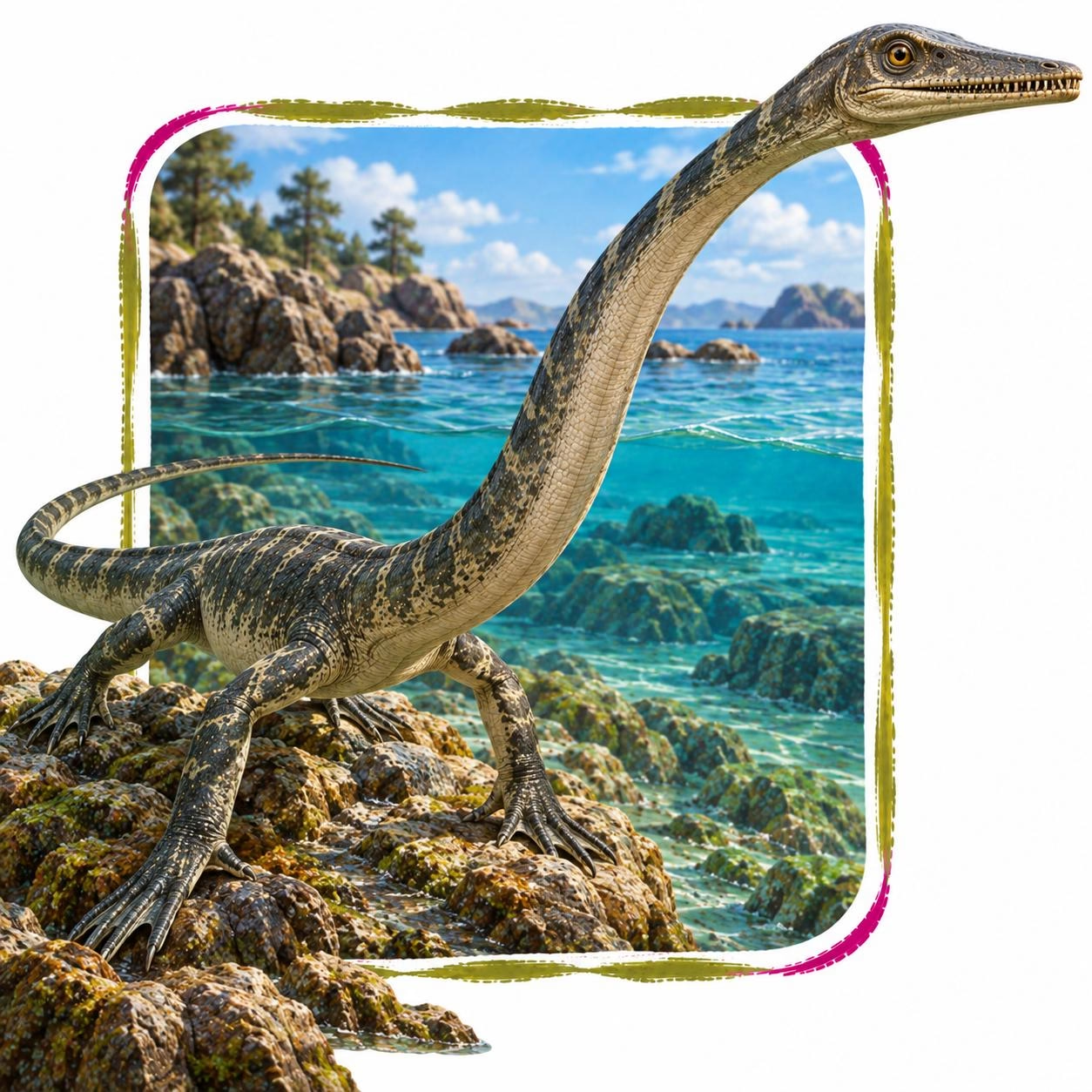
Tanystropheus in its natural Middle Triassic coastal lagoons, shallow marine waters, rocky shorelines, warm bays, reef margins, and nearshore habitats around ancient Europe and western Asia habitat