
Uintatherium Facts for Kids
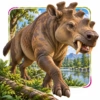
Uintatherium was a giant extinct mammal from the Eocene. It was not a dinosaur, rhinoceros, or elephant. This strange plant eater had a heavy body, three pairs of bony skull knobs, saber-like upper canine teeth, and lived in warm forests long before humans existed.
Quick Uintatherium Facts
- Animal Type: Prehistoric mammal
- Group: Dinoceratan mammal
- Known For: Six bony skull knobs, saber-like upper canines, giant body, Eocene forests, young, plant diet, Uinta Mountains name, and fossil rivalries
- Lived During: Eocene, about 50 to 37 million years ago
- Diet: Leaves, shoots, soft plants, and other forest vegetation
What You’ll Learn
Learn 10 unusual uintatherium facts for kids about skull knobs, tusk-like teeth, huge bodies, plant diets, and prehistoric North America, plus a quiz, glossary, and activity
Simple explanations make them fun for children, families, teachers, and young prehistoric-animal fans.
10 Fun Uintatherium Facts for Kids
1. Uintatherium Was a Mammal
Uintatherium was a prehistoric mammal, not a dinosaur or reptile.
Kid Decode: Big skull, warm-blooded body, no dinosaur paperwork.
2. It Was a Dinoceratan
Uintatherium belonged to Dinocerata, a strange extinct group of early large mammals.
Kid Decode: Dinoceratan sounds like dinosaur, but it means a very different mammal branch.
3. It Had Six Skull Knobs
Many Uintatherium skulls had three pairs of bony knobs on the head.
Kid Decode: Its skull looked like nature was testing a crown made of bumps.
4. It Had Saber-Like Canines
Uintatherium had long upper canine teeth that stuck downward, especially in larger individuals.
Kid Decode: Saber teeth on a plant eater? Fossils enjoy confusing everyone.
5. It Ate Plants
Despite the scary teeth, Uintatherium was a herbivore that browsed on leaves and soft vegetation.
Kid Decode: Those teeth were not a meat menu. They were probably display tools or defense tools.
6. It Lived in Eocene Forests
North American Uintatherium lived in warm forested landscapes with lakes, rivers, and lush plants.
Kid Decode: Think redwood-like forests, swampy edges, and a giant skull-beast munching leaves.
7. It Was Huge
Uintatherium was a large heavy-bodied animal, with some estimates placing big adults at several tonnes.
Kid Decode: This was not a delicate forest nibble. It was a walking furniture-sized browser.
8. It Was Named for the Uinta Mountains
The name Uintatherium means beast of the Uinta Mountains, after fossil areas in the western United States.
Kid Decode: Even its name sounds like a fossil hiking trip.
9. Its Relatives Are Debated
Scientists have debated where Uintatherium belongs on the mammal family tree, though it is clearly part of a vanished ancient mammal line.
Kid Decode: The family tree around this beast has more tangled branches than a jungle gym.
10. It Went Extinct in the Eocene
Uintatherium disappeared as Eocene climates and habitats changed and other mammal groups rose.
Kid Decode: The six-knobbed giant left the forest and stayed in the fossil record.
The Weirdest Uintatherium Fact
Uintatherium looked fierce with saber-like teeth, but it was a plant eater, proving that prehistoric mammals could look scary without being predators.
Try This Uintatherium Activity
Uintatherium Drawing Activity
Draw Uintatherium in an Eocene forest. Add a heavy body, three pairs of skull knobs, saber-like canines, leafy branches, young animal clue, lake edge, fossil skull tag, and a “six-knobbed plant eater” label.
Quick Uintatherium Quiz
- Was Uintatherium a dinosaur? Answer: No, it was a prehistoric mammal.
- What group did Uintatherium belong to? Answer: Dinocerata.
- What was unusual about its head? Answer: It had three pairs of bony skull knobs.
- What did Uintatherium eat? Answer: Plants such as leaves and soft vegetation.
- What does its name refer to? Answer: The Uinta Mountains.
Mini Glossary
- Dinoceratan: A member of an extinct group of early large mammals.
- Herbivore: An animal that eats plants.
- Canine Tooth: A pointed tooth that can be large in some mammals.
- Eocene: A time period after the dinosaurs when many early mammals evolved.
- Skull Knob: A bony bump on the skull, sometimes used for display or fighting.
 Jackrabbit Facts for Kids
 Mosquito Facts for Kids
 Wren Facts for Kids
 Compsognathus Facts for Kids
More Animal Facts for Kids
Visit the full animal facts library or explore a focused animal group.
More Extinct Animal Facts for Kids
Discover dinosaurs, Ice Age giants, prehistoric sea creatures, recently extinct species, and other animals from the past.
Fact check note: Fact checked with Smithsonian specimen records, Uintatherium taxonomy summaries, Eocene habitat notes, and trusted prehistoric mammal education sources.

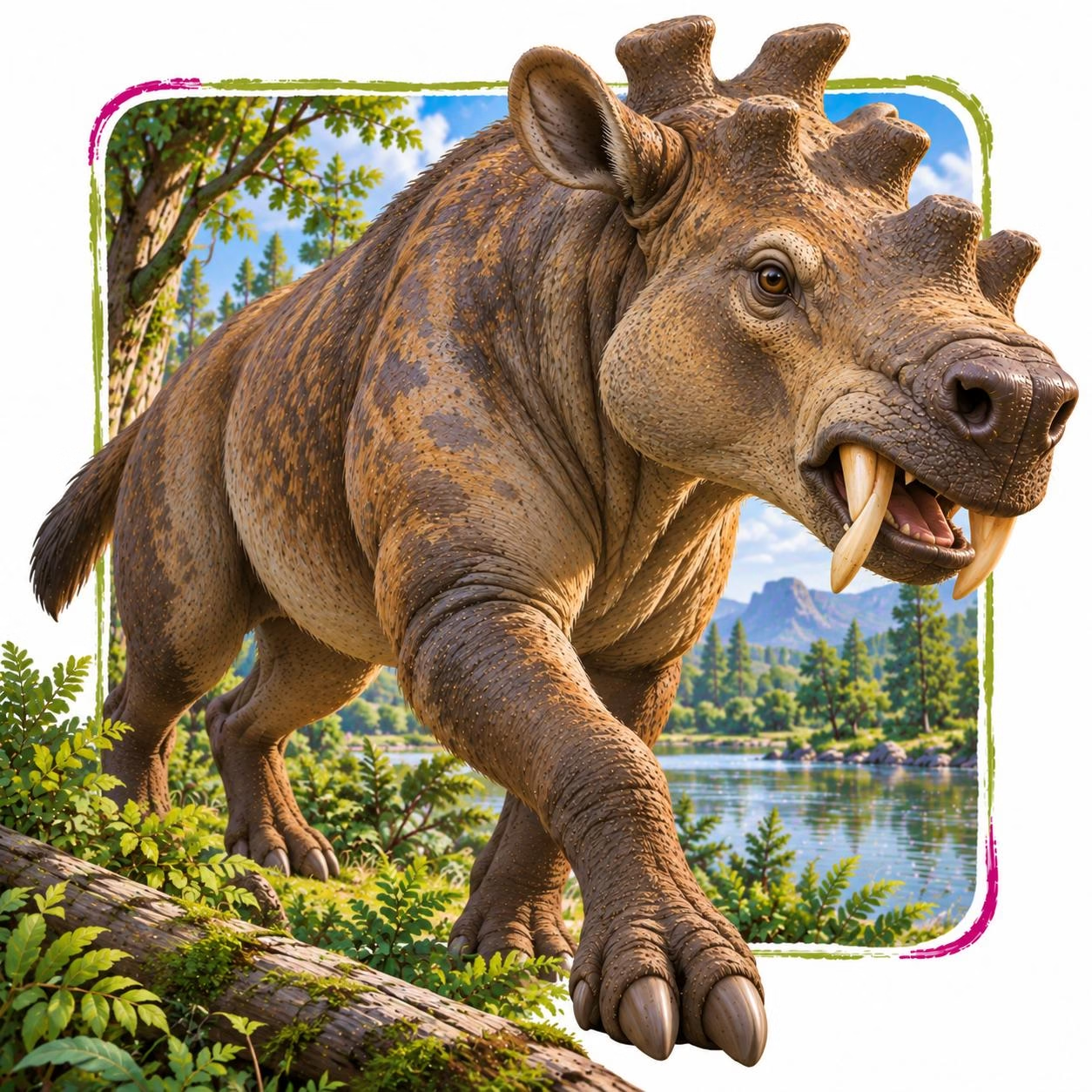
Uintatherium in its natural Eocene North American forests, lake margins, river floodplains, warm woodlands, Uinta Formation habitats, Bridger Basin habitats, marsh edges, and lush browsing areas habitat