
Utahraptor Facts for Kids
Utahraptor was a giant meat-eating dinosaur from Early Cretaceous Utah. It belonged to the dromaeosaurid family, the same sickle-clawed group as Velociraptor, but it was much larger. Fossils show a powerful predator with a huge curved claw on each second toe, strong legs, sharp teeth, and a long balancing tail.
Quick Utahraptor Facts
- Animal Type: Theropod dinosaur
- Group: Dromaeosaurid, or raptor dinosaur
- Known For: Giant size, large sickle claws, strong legs, sharp teeth, Utah fossils, and close bird relatives
- Lived During: Early Cretaceous, around 135 million years ago
- Diet: Meat, including dinosaurs and other animals it could catch or scavenge
What You’ll Learn
Discover 10 exciting utahraptor facts for kids about giant sickle claws, feathers, powerful legs, hunting, and Cretaceous life, plus a quiz, glossary, and activity
These facts are explained simply for kids, parents, teachers, and curious little fact-finders.
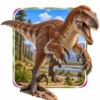
10 Fun Utahraptor Facts for Kids
1. Utahraptor Was a Giant Raptor
Utahraptor was one of the largest known dromaeosaurids. Adults may have reached about 6 metres long, far larger than Velociraptor.
Kid Decode: Velociraptor-sized trouble got upgraded to the giant Utah edition.
2. It Had Huge Sickle Claws
Each foot carried an enlarged curved claw on the second toe. One famous claw fossil is about 24 centimetres long, not counting the outer covering it had in life.
Kid Decode: That toe claw was almost ruler-length before adding its sharp outer sheath.
3. It Lived in Ancient Utah
Utahraptor fossils come from the Cedar Mountain Formation in eastern Utah, especially areas near Moab in Grand County.
Kid Decode: Its fossil address was Utah long before roads, towns, or souvenir shops.
4. It Was Older Than Once Thought
New dating work suggests some Utahraptor-bearing rocks are at least about 135 million years old, roughly 10 million years older than earlier estimates.
Kid Decode: Scientists moved its birthday deeper into the Cretaceous calendar.
5. It Was Related to Velociraptor
Utahraptor and Velociraptor were both dromaeosaurids, but they lived at different times and places and were very different in size.
Kid Decode: Same raptor family, wildly different clothing sizes.
6. It Probably Had Feathers
No complete Utahraptor skin covering is known, but close dromaeosaurid relatives had feathers, so scientists commonly reconstruct Utahraptor with a feathered body.
Kid Decode: The safest picture is less giant lizard and more extremely alarming bird cousin.
7. It Used Teeth, Claws, and Strong Legs
Utahraptor had sharp teeth, powerful hind limbs, grasping hands, and sickle claws that could help hold or injure prey.
Kid Decode: This predator arrived with a whole toolbox, and every tool was pointy.
8. A Bone Bed Holds Several Individuals
A fossil block from the Stikes Quarry contains remains of several Utahraptors mixed with other dinosaurs in a deposit sometimes described as a prehistoric quicksand trap.
Kid Decode: One rocky block became a crowded dinosaur mystery box.
9. Group Hunting Is Not Proven
Several Utahraptors found together have inspired pack-hunting ideas, but a shared fossil deposit does not prove they cooperated while alive.
Kid Decode: Fossils can show who ended up together, not who shared a hunting plan.
10. Baby Utahraptors Were Hatchlings
Like other dinosaurs, Utahraptor reproduced by laying eggs, and its newly hatched young can be called hatchlings.
Kid Decode: Even the giant raptor began life small enough to fit inside an egg.
The Weirdest Utahraptor Fact
A nine-ton fossil block contains several Utahraptors and other dinosaurs tangled together, giving scientists a slow-motion excavation puzzle that may take years to fully reveal.
Try This Utahraptor Activity
Utahraptor Drawing Activity
Draw Utahraptor crossing an Early Cretaceous Utah floodplain. Add a feathered body, long balancing tail, powerful legs, large sickle claws, sharp teeth, rocky hills, conifer-like plants, a Gastonia silhouette, a fossil bone block, and a “giant raptor” label.
Quick Utahraptor Quiz
- What kind of dinosaur was Utahraptor? Answer: A dromaeosaurid theropod.
- Where have Utahraptor fossils been found? Answer: Utah in the United States.
- What special weapon was on each foot? Answer: A large curved sickle claw.
- Was Utahraptor larger or smaller than Velociraptor? Answer: Much larger.
- Does finding several together prove pack hunting? Answer: No, it is an interesting clue but not proof.
Mini Glossary
- Dromaeosaurid: A family of bird-like theropod dinosaurs with enlarged claws on the second toes.
- Theropod: A mostly meat-eating dinosaur group that walked on two legs.
- Sickle Claw: A large curved claw shaped somewhat like a farming sickle.
- Formation: A named layer or group of rock layers studied by geologists.
- Hatchling: A young animal newly emerged from an egg.
 Insect Facts for Kids
 Gazelle Facts for Kids
 Water Strider Facts for Kids
 Dreadnoughtus Facts for Kids
More Animal Facts for Kids
Visit the full animal facts library or explore a focused animal group.
More Extinct Animal Facts for Kids
Discover dinosaurs, Ice Age giants, prehistoric sea creatures, recently extinct species, and other animals from the past.
Fact check note: Fact checked with the Natural History Museum of Utah Utahraptor profile, the original Kirkland, Burge and Gaston description, Utah Geological Survey material, and 2023 Yellow Cat Member geochronology research.

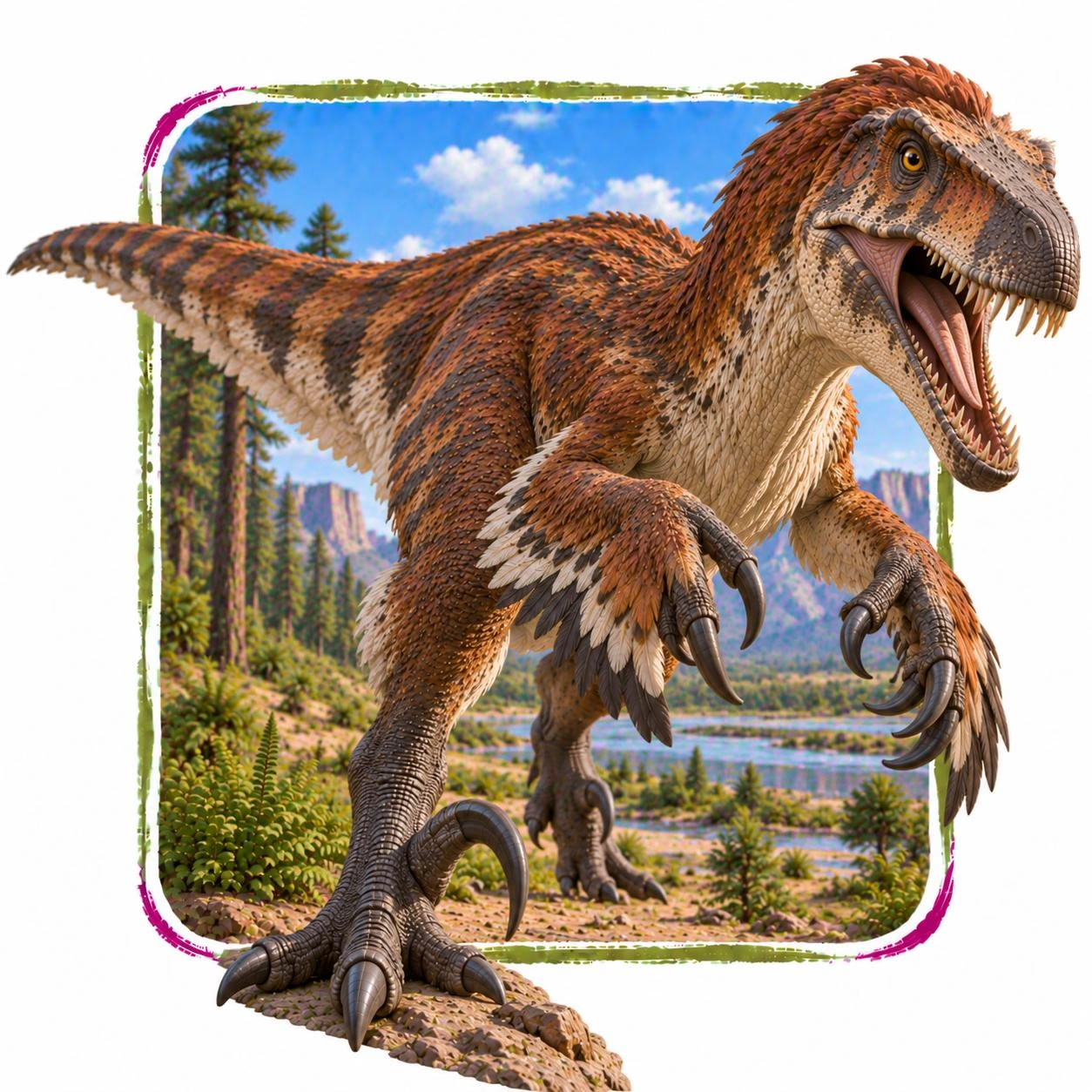
Utahraptor in its natural Early Cretaceous floodplains, seasonal wetlands, river channels, muddy flats, open woodlands, and rocky landscapes of ancient Utah habitat