
Zuniceratops Facts for Kids
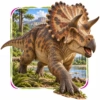
Zuniceratops was a small horned dinosaur that lived in what is now New Mexico during the Late Cretaceous, roughly 90 million years ago. It had two noticeable horns above its eyes, a beak for cropping plants, and a broad frill, but no large horn on its nose. Its mix of early and advanced features helps scientists study how famous horned dinosaurs evolved.
Quick Zuniceratops Facts
- Animal Type: Horned dinosaur
- Group: Neoceratopsian ceratopsian
- Known For: Two brow horns, broad frill, no large nose horn, New Mexico fossils, and discovery by a child
- Lived During: Late Cretaceous, about 94–89 million years ago
- Diet: Leaves, shoots, ferns, and other plants
What You’ll Learn
Discover 10 horned zuniceratops facts for kids about two brow horns, its frill, beak, plant diet, and Cretaceous North America, with a quiz, glossary, and activity
Clear explanations make them ideal for children, families, teachers, and little fact-hunters.
10 Fun Zuniceratops Facts for Kids
1. Zuniceratops Was a Horned Dinosaur
Zuniceratops belonged to the ceratopsian group, the plant-eating dinosaurs known for beaks, frills, and sometimes horns.
Kid Decode: It joined the horned-dinosaur club before Triceratops made the club enormous.
2. It Had Two Brow Horns
Zuniceratops had a pair of horns above its eyes. These horns became more developed as the animal grew.
Kid Decode: Two eyebrow horns gave this dinosaur a permanently serious look.
3. It Had No Large Nose Horn
Unlike Triceratops, Zuniceratops did not have a large horn rising from its nose.
Kid Decode: Its face used the two-horn setting instead of the full three-horn package.
4. Its Frill Was Broad and Thin
Fossils suggest that Zuniceratops had a relatively thin, broad frill with openings that helped keep the skull lighter.
Kid Decode: The frill looked impressive without being a solid slab of bone.
5. It Was Smaller Than Triceratops
Zuniceratops is often estimated at around 3 metres long, making it much smaller than the giant horned dinosaurs that appeared later.
Kid Decode: It was more compact horned dinosaur than walking fortress.
6. It Lived in New Mexico
Its fossils were found in the Moreno Hill Formation of west-central New Mexico in the United States.
Kid Decode: Its ancient home had a New Mexico address millions of years before maps existed.
7. A Child Helped Discover It
Eight-year-old Christopher Wolfe helped find the first known Zuniceratops fossils in 1996 while exploring with his paleontologist father.
Kid Decode: One sharp-eyed kid spotted a dinosaur that science had never named before.
8. Its Name Honors Zuni and Christopher
Zuniceratops means Zuni horned face, while the species name christopheri honors Christopher Wolfe.
Kid Decode: Its scientific name carries both a place connection and a young discoverer.
9. It Ate Plants With a Beak
Zuniceratops had a parrot-like beak for clipping vegetation and rows of cheek teeth for cutting plant food.
Kid Decode: Beak in front, plant-processing teeth behind: a tidy herbivore toolkit.
10. Bones Came From Several Individuals
Fossils from more than one Zuniceratops were found together, but this does not prove that the dinosaurs lived in permanent herds.
Kid Decode: A fossil gathering is a clue, not a signed herd membership card.
The Weirdest Zuniceratops Fact
Zuniceratops was discovered with help from an eight-year-old child, and the dinosaur was later named partly in his honor.
Try This Zuniceratops Activity
Zuniceratops Drawing Activity
Draw Zuniceratops walking through Late Cretaceous New Mexico. Add two brow horns, no large nose horn, a broad thin frill, parrot-like beak, sturdy legs, low plants, a riverbank, fossil tools, and a young fossil finder spotting a horn tip.
Quick Zuniceratops Quiz
- What kind of dinosaur was Zuniceratops? Answer: A horned ceratopsian dinosaur.
- Where were its fossils found? Answer: New Mexico in the United States.
- How many large brow horns did it have? Answer: Two.
- What did Zuniceratops eat? Answer: Plants.
- Who helped discover its first known fossils? Answer: Eight-year-old Christopher Wolfe.
Mini Glossary
- Ceratopsian: A member of the horned-dinosaur group.
- Brow Horn: A horn positioned above the eye.
- Frill: A bony shield extending from the back of a ceratopsian skull.
- Herbivore: An animal that eats plants.
- Formation: A named layer or group of rock layers studied by geologists.
 Hog Facts for Kids
 Tarsier Facts for Kids
 Guanaco Facts for Kids
 Ichthyornis Facts for Kids
More Animal Facts for Kids
Visit the full animal facts library or explore a focused animal group.
More Extinct Animal Facts for Kids
Discover dinosaurs, Ice Age giants, prehistoric sea creatures, recently extinct species, and other animals from the past.
Fact check note: Fact checked with the Natural History Museum Zuniceratops Dino Directory, Wolfe and Kirkland’s 1998 original description, Wolfe’s 2000 skull update, and trusted New Mexico dinosaur research summaries.

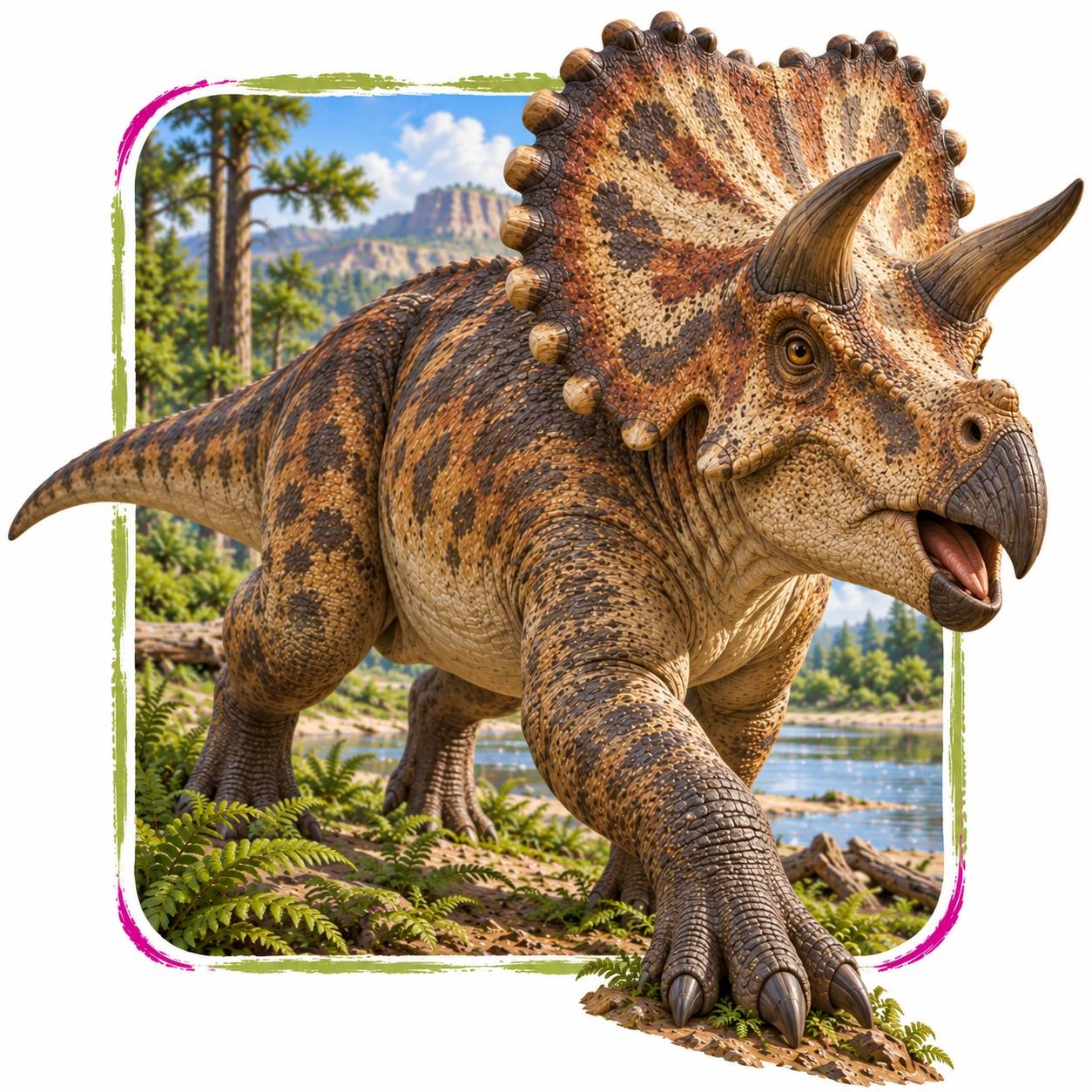
Zuniceratops in its natural Late Cretaceous floodplains, river channels, humid lowlands, forest edges, coastal plain habitats, and vegetated landscapes of ancient New Mexico habitat