
Bee vs Hornet: Bee and Wasp Comparison
Bees and hornets are related insects in the order Hymenoptera, but a hornet is a kind of social wasp, not a bee. Bees usually collect pollen and nectar to feed their young and have at least some branched body hairs. True hornets belong to the genus Vespa; workers hunt other insects for the colony’s larvae and build nests from chewed wood fibers.
About Bee
- Type Insect
- Diet Mostly herbivore
- Group Bee (Anthophila)
- Known for Branched hairs, pollen and nectar collecting, flower pollination, and an enormous variety of solitary and social lifestyles
- Special skill Collecting and carrying pollen and pollinating flowering plants
About Hornet
- Type Insect
- Diet Omnivore
- Group True Wasp (Genus Vespa)
- Known for Large social wasps, powerful jaws, paper nests, insect hunting, colony defense, and repeated stings
- Special skill Chewing wood into nest paper and carrying insect prey back to developing larvae
Bee vs Hornet: Quick Answer
Bees are flower-feeding insects whose females usually gather pollen for their young, while hornets are large social wasps that hunt insects for their larvae. Bees often look hairier and rounder; hornets usually look smoother, more strongly waisted, and more robust. A worker honey bee may leave its barbed stinger in mammal skin, but other bees and hornets do not follow that one-sting rule.
Where Do They Fit?
Follow the branches to see how Bee and Hornet are classified and related.
Bee vs Hornet: Quick Comparison
| Feature | Bee | Hornet |
|---|---|---|
| Animal type | Insect | Insect |
| Animal group | Bee clade Anthophila | True wasp genus Vespa |
| Known for | Pollen collecting and pollination | Social colonies, insect hunting, and paper nests |
| Body covering | Has branched hairs somewhere on the body; often visibly fuzzy | Usually smoother and shinier, with unbranched hairs |
| Body shape | Often compact or rounded, though shapes vary | Robust body with a clear narrow waist |
| Food for larvae | Usually pollen mixed with nectar or floral oils | Chewed insect or other animal prey |
| Adult food | Mainly nectar and pollen | Mainly sugary liquids such as nectar, sap, and fruit juice |
| Social life | Most species are solitary; some form colonies | All true hornets are social |
| Nest material | Soil, leaves, plant fibers, mud, wax, or existing holes depending on species | Layers of paper made from chewed wood fibers |
| Sting | Only females can sting; ability and behavior vary widely | Queens and workers can sting repeatedly when threatened |
How Are Bees and Hornets Alike?
- Both bees and hornets are six-legged insects in the order Hymenoptera.
- Both pass through egg, larva, pupa, and adult stages in complete metamorphosis.
- Both adults may visit flowers and drink sugary nectar.
- Both use antennae to smell and communicate, and both have two pairs of wings as adults.
- Only females have the egg-laying structure that evolved into a stinger, although many bee species rarely or never sting people.
How Are Bees and Hornets Different?
- Bees form the clade Anthophila, while true hornets are social wasps in the genus Vespa.
- Female bees usually gather pollen for their larvae, while hornet workers hunt insects and other animal prey for theirs.
- Bees have branched hairs somewhere on the body, while hornets usually look smoother and shinier.
- Most bee species are solitary, while every true hornet species lives in a social colony.
- Bee nests may use soil, leaves, plant fibers, mud, wax, or cavities, while hornet nests contain paper made from chewed wood.
Bee vs Hornet Showdown
Insect showdown: The hornet wins typical size, body strength, and social life because true hornets are large, powerful, colony-forming wasps. Speed, stealth, and swimming are ties because thousands of bee species and many hornet species use different movement and hiding strategies, while neither group is aquatic. The bee wins our weirdest-fact prize for its microscopic branched hairs and specialized pollen-carrying equipment.
Fun Bee vs Hornet Facts
A Hornet Is a Wasp, Not a Bee
Bees and hornets share the insect order Hymenoptera, but they sit on different branches of the family tree. Bees form a flower-feeding lineage called Anthophila, while true hornets are the large social wasps placed in genus Vespa.
Pollen Lunches vs Insect Lunches
Most female bees stock each nursery cell with pollen and nectar for a larva. Hornet workers catch caterpillars, flies, bees, and other animal prey, chew it into manageable food, and carry it to the colony’s larvae; adult hornets mainly fuel themselves with sugary liquids.
Branched Hairs vs Smoother Armor
Bees have at least some microscopic branched hairs that trap pollen, and many species look noticeably fuzzy. Hornets have shorter, simpler hairs and a harder, smoother-looking outer skeleton with a strongly pinched waist.
Many Bee Homes vs One Paper Plan
Different bees may dig in soil, occupy hollow stems, cut leaves, use mud, bore into wood, or build wax comb. Hornets scrape weathered wood, mix the fibers with saliva, and shape the pulp into layered paper combs surrounded by an envelope.
The One-Sting Rule Is Not for Every Bee
A worker western honey bee often leaves its barbed stinger in the stretchy skin of a mammal and dies afterward. Bumble bees and many other stinging bees can sting more than once, and hornet queens and workers have smoother stingers that can be used repeatedly.
Bee vs Hornet Quiz
- Is a hornet a bee or a wasp? Answer: A wasp.
- What food do most female bees collect for their larvae? Answer: Pollen mixed with nectar or other floral food.
- What do hornets chew to make nest paper? Answer: Wood fibers.
- Are most bee species social? Answer: No; most are solitary.
- Can every bee sting only once? Answer: No; that rule mainly describes worker honey bees stinging mammals.
Bee vs Hornet FAQ
What is the main difference between a bee and a hornet?
A bee usually gathers pollen and nectar to feed its young and has branched pollen-catching hairs. A hornet is a large social wasp that hunts animal prey for its larvae and builds a paper nest.
Are hornets a type of bee?
No. Hornets and bees are related members of the order Hymenoptera, but true hornets belong to the wasp genus Vespa.
Which is bigger, a bee or a hornet?
True hornets are usually larger than the familiar bees around gardens, but both groups contain species of different sizes.
Do bees and hornets both pollinate flowers?
Both may carry pollen while visiting flowers, but bees are specially adapted to gather pollen for their young and are generally more important and efficient pollinators.
Do all bees and hornets sting?
No. Males cannot sting, many bees are very unlikely to sting, and some bee lineages lack a useful sting. Female hornets can sting, especially when their nest is threatened.
Animal Words to Know
- Anthophila: The scientific clade containing all bees.
- Hymenoptera: The insect order containing bees, wasps, ants, and sawflies.
- Larva: The feeding stage that hatches from an insect egg before the pupa.
- Branched hair: A tiny hair with side branches that helps a bee trap pollen.
- Colony: A social group that shares a nest and cooperates in raising young.
Bee and Hornet Drawing Activity
Bee and Hornet Drawing Activity
Draw a fuzzy bumblebee beside a larger European hornet. Give both six legs, two antennae, two pairs of wings, and three main body sections. Show pollen on the bee’s hind legs beside a flower and place the hornet near a paper nest. Label bee, hornet, body hair, narrow waist, pollen, and paper nest.
Meet Each Animal
Want the full fact file? Here are quick highlights from each animal’s own facts page.
Bee Fact Highlight
From the full animal facts page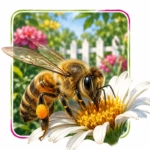
Hornet Fact Highlight
From the full animal facts page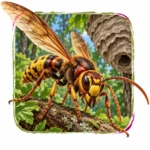
More Animal Comparisons
Pick another animal matchup and keep exploring. Compare appearances, habitats, diets, abilities, and surprising differences.




Make an Animal Story
Turn this bee vs hornet comparison into a buzzing garden adventure with our free Animal Story Generator.
Source notes: References used for this comparison. See more See less
Try Another Matchup
Explore this comparison →