
Bee vs Yellow Jacket: Bee-to-Social-Wasp Representative Comparison
A western honey bee and an eastern yellowjacket are related insects in the order Hymenoptera, and both may appear black-and-yellow around flowers. The honey bee is a bee adapted to gathering pollen and nectar, with branched hairs, hind-leg pollen baskets, wax comb, honey stores, and a colony that can survive for years. The yellowjacket is a social wasp adapted to hunting and scavenging, with a smoother compact body, narrow waist, paper nest, annual colony cycle in cool climates, and a female stinger that can be used repeatedly. Neither insect should be handled, and any busy nest entrance deserves plenty of space.
About Bee
- Type Insect
- Diet Adults obtain carbohydrate from nectar or honey and protein mainly from pollen; workers collect nectar, pollen, water, and plant resins, process stored food, and feed larvae glandular food followed by caste- and age-dependent diets
- Group Western honey bee (Apis mellifera), represented here by a nonreproductive female worker; bee is a much broader group containing thousands of other species
- Known for A compact flower-visiting insect about 12–15 millimeters long as a worker, with a golden-brown banded abdomen, visibly fuzzy thorax, microscopic branched hairs, elbowed antennae, two pairs of wings, and flattened pollen baskets on the hind legs; queens and drones differ in size and shape
- Special skill Branched pollen-trapping hairs, corbiculae or pollen baskets, wax glands, vertical comb, honey storage, ultraviolet-sensitive flower vision, odor learning, waggle-dance location signals, wing-fanning ventilation, and winter clustering in temperate climates
About Yellow Jacket
- Type Insect
- Diet Adults drink nectar, fruit juice, honeydew, and other sugary liquids; workers capture insects and spiders or collect carrion and other animal protein for larvae, and some species increasingly scavenge sweet drinks and human food late in the season
- Group Yellow jacket wasp, represented here by the eastern yellowjacket (Vespula maculifrons) of eastern North America; yellow jacket also covers other species of Vespula and Dolichovespula
- Known for A compact, hard-bodied social wasp with a sharply narrowed waist, very little visible hair, folded resting wings, bold black-and-yellow abdominal markings, strong jaws, and workers commonly about 9–13 millimeters long; queens are noticeably larger and color patterns vary by species and caste
- Special skill Smooth repeatable sting in females, strong prey-cutting jaws, rapid flight, alarm odors, coordinated nest defense, flexible hunting and scavenging, and multi-tiered enclosed paper comb made by chewing weathered wood fibers with saliva
Bee vs Yellow Jacket: Quick Answer
A familiar honey bee looks fuzzier and golden-brown, carries pollen on flattened hind-leg baskets, feeds its young mainly flower foods, and lives in a wax-comb colony that can survive winter. A yellowjacket is a smoother, brighter black-and-yellow social wasp with a narrow waist; workers hunt insects for larvae, build enclosed paper comb, and can sting repeatedly. Look from a safe distance—never test an identification by approaching a nest.
Where Do They Fit?
Follow the branches to see how Bee and Yellow Jacket are classified and related.
Bee vs Yellow Jacket: Quick Comparison
| Feature | Bee (Honey Bee Representative) | Yellow Jacket (Eastern Yellowjacket Representative) |
|---|---|---|
| Scientific name | Apis mellifera | Vespula maculifrons |
| Wider group | One species within the bee clade Anthophila | One species within the social-wasp family Vespidae |
| Typical worker body | Golden-brown, visibly fuzzy, and about 12–15 mm long | Hard, shiny, sharply black-and-yellow, and commonly about 9–13 mm long |
| Waist and legs | More softly outlined, with flattened pollen baskets on the hind legs | Clearly pinched waist, smooth legs, and no pollen baskets |
| Food for young | Mainly pollen, nectar, honey, and worker-produced glandular foods | Chewed insects, spiders, carrion, or other animal protein |
| Adult fuel | Nectar and honey, with pollen supplying important nutrients | Nectar, fruit juice, honeydew, and other sugary liquids |
| Nest material | Wax secreted by workers and shaped into vertical combs | Chewed wood fiber and saliva shaped into enclosed paper combs |
| Colony cycle | Perennial colony that can survive multiple years | Usually annual; a new queen starts over after winter |
| Sting clue | A worker usually leaves its barbed stinger in stretchy mammal skin | A female can normally withdraw her stinger and sting repeatedly |
| Main ecological work | Flower visitation, pollen transport, pollination, and honey storage | Insect predation, scavenging, flower visitation, and nutrient cycling |
How Are Bees and Yellow Jackets Alike?
- Honey bees and yellowjackets are six-legged insects in the order Hymenoptera, with antennae, an exoskeleton, and two pairs of wings as adults.
- Both pass through complete metamorphosis: egg, larva, pupa, and adult.
- Both representatives live in colonies with a reproductive queen, nonreproductive female workers, and seasonal males.
- Adults of both may visit flowers for sugary nectar and can move pollen, although the honey bee is far more specialized for pollen collection.
- Female workers of both can use a modified egg-laying structure as a defensive sting, especially near a threatened colony.
How Are Bees and Yellow Jackets Different?
- The honey bee is a bee in family Apidae, while the eastern yellowjacket is a wasp in family Vespidae.
- A honey bee has branched pollen-catching hairs and hind-leg pollen baskets; a yellowjacket is smoother, shinier, and more sharply waisted.
- Honey bee workers collect pollen and nectar to feed the colony; yellowjacket workers hunt or scavenge animal protein for larvae while adults mainly fuel themselves with sugars.
- Honey bees secrete wax and build vertical comb; yellowjackets scrape wood, chew it with saliva, and build stacked paper combs inside a protective envelope.
- A healthy honey bee colony can survive for years and stores honey for winter; a temperate yellowjacket colony normally lasts one season, with only new queens overwintering.
- A worker honey bee commonly loses its barbed sting after stinging a mammal, while a female yellowjacket normally keeps her smoother sting and can use it again.
Bee vs Yellow Jacket Adaptation Showdown
Pollinator-and-predator showdown: Size is a tie because worker lengths overlap and queens change the comparison. Speed is also a tie because reliable like-for-like flight maxima are unavailable. Yellowjacket wins typical individual hunting strength and stealth for strong jaws, compact armor, and a nest entrance that may be almost invisible in soil or a wall. Honey bee wins social complexity for a long-lived colony, stored winter food, age-based jobs, and dance communication. Swimming is a tie because neither is aquatic. Honey bee wins weirdest adaptation for encoding flower direction and distance in a waggle dance. These categories compare adaptations, not a fight.
Fun Bee vs Yellow Jacket Facts
A Yellow Jacket Is a Wasp, Not a Bee
Black-and-yellow stripes and loud buzzing create confusion, but yellowjackets belong to the wasp family Vespidae. Honey bees belong to family Apidae within the bee lineage. Both are hymenopterans, yet their nursery diets reveal an old evolutionary split: bees specialize in floral foods, while many wasps provide animal prey to their young.
Fuzzy Pollen Gear Meets Smooth Hunting Armor
A worker honey bee has branched hairs that trap loose pollen and a flattened basket on each hind leg for packed pollen pellets. A yellowjacket has much less visible hair, no pollen basket, a cleaner pinched waist, and powerful mandibles suited to cutting prey and wood fibers. Some bees are sleek, so no single visual clue identifies every species.
Wax City and Paper City Use Different Factories
Honey bee workers release wax scales from abdominal glands and shape them into vertical hexagonal combs for brood, pollen, and honey. Yellowjackets scrape weathered wood, chew the fibers with saliva, and spread the pulp into stacked combs wrapped by a paper envelope. Both achieve hexagons with very different raw materials.
One Colony Winters Together and One Usually Starts Over
Temperate honey bee workers and their queen cluster around stored honey and generate heat, allowing the colony to persist beyond one year. In a typical temperate yellowjacket cycle, the old queen, workers, and males die as cold arrives; newly mated queens shelter alone and each successful survivor founds a fresh spring colony. Climate and species can create exceptions.
The One-Sting Rule Needs the Words Worker Honey Bee
When a worker western honey bee stings stretchy mammal skin, barbs may hold the sting apparatus behind and the worker dies. Yellowjacket females can normally withdraw their smoother stinger and sting again. Male honey bees and male yellowjackets lack stingers, and many other bee species do not follow the honey bee pattern.
Bee vs Yellow Jacket Quiz
- Is a yellowjacket a bee or a wasp? Answer: A wasp.
- Which insect carries packed pollen in baskets on its hind legs? Answer: The worker honey bee.
- What does a yellowjacket chew to make nest paper? Answer: Weathered wood or other plant fibers mixed with saliva.
- Which representative colony can normally survive for several years? Answer: The honey bee colony.
- Should children approach a hidden nest entrance to identify it? Answer: No. Stay well back and tell an adult.
Bee vs Yellow Jacket FAQ
What is the easiest way to tell a honey bee from a yellowjacket?
A honey bee is usually fuzzier and golden-brown, with flattened hind-leg pollen baskets that may carry colored pollen. A yellowjacket is usually smoother, brighter black-and-yellow, more sharply waisted, and lacks pollen baskets. Observe only from a safe distance because color and size vary.
Are yellowjackets a type of bee?
No. Yellowjackets are social wasps, usually in genera Vespula or Dolichovespula. Bees form a different lineage specialized mainly for pollen and nectar.
Do bees and yellowjackets both pollinate?
Both can move pollen while visiting flowers, but bees have branched hairs and pollen-carrying structures specialized for that job. Yellowjackets are more important as predators and scavengers, though their flower visits can still pollinate some plants.
Which can sting more than once?
Female yellowjackets can usually sting repeatedly. A worker western honey bee often leaves its barbed stinger after stinging a mammal, but other bees may sting more than once. Any sting can be serious for someone with an allergy.
What should a child do around a busy nest entrance?
Do not touch, block, spray, or investigate it. Move away calmly, warn other people, and tell a responsible adult. A qualified beekeeper or pest professional can identify and manage a risky nest.
Animal Words to Know
- Anthophila: The scientific lineage containing all bees.
- Vespidae: The wasp family containing yellowjackets, paper wasps, and true hornets.
- Corbicula: A smooth-edged pollen basket on the hind leg of a honey bee or bumble bee.
- Perennial colony: A social colony that can remain alive for more than one year.
- Annual colony: A colony that normally begins and ends within one seasonal cycle.
Honey Bee and Yellowjacket Nest Activity
Honey Bee and Yellowjacket Nest Activity
Draw an enlarged worker honey bee and eastern yellowjacket. Give the bee a fuzzy body, pollen basket, and wax comb with honey stores. Give the yellowjacket a smoother body, narrow waist, strong jaws, and an enclosed paper nest. Label six legs, antennae, pollen, wax, paper, nectar, and insect hunting. Observe from a distance and never disturb a real nest.
Meet Each Animal
Want the full fact file? Here are quick highlights from each animal’s own facts page.
Bee Fact Highlight
From the full animal facts page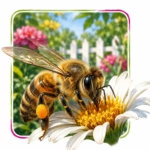
Yellow Jacket Fact Highlight
From the full animal facts page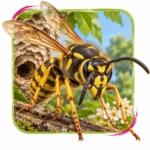
More Animal Comparisons
Pick another animal matchup and keep exploring. Compare appearances, habitats, diets, abilities, and surprising differences.





Make an Animal Story
Turn this bee vs yellow jacket comparison into a wax-and-paper garden mystery with our free Animal Story Generator.
Source notes: References used for this comparison. See more See less
Try Another Matchup
Explore this comparison →