
Blue Jay vs American Crow: North American Corvid Comparison
Blue Jays and American Crows are both intelligent North American songbirds in family Corvidae. That shared family explains their strong bills, varied voices, flexible diets, and skill at learning. Still, they are easy to tell apart. The Blue Jay is a smaller crested bird with blue, white, and black patterns. The American Crow is nearly twice its size, completely black, and famous for patient flapping and loud caws. They also differ in family teamwork, winter gatherings, and how they move food through their neighborhoods.
About Blue Jay
- Type Bird
- Diet Omnivore
- Group Jay; family Corvidae
- Known for A blue crest, black necklace, noisy calls, acorn caching, and hawk-call mimicry
- Special skill Carrying food in a throat pouch and hiding it in many caches
About American Crow
- Type Bird
- Diet Omnivore and scavenger
- Group Crow; family Corvidae
- Known for Glossy black plumage, cawing, problem-solving, cooperative families, and huge roosts
- Special skill Working with other crows to solve problems, raise chicks, and mob predators
Blue Jay vs American Crow: Quick Answer
The American Crow is much larger, heavier, and more strongly social, with cooperative families and communal winter roosts that may number from hundreds to far more. The Blue Jay is smaller and crested, with blue made by light scattering through feather structures. Both are clever omnivorous corvids that eat nuts and insects, cache food, build tree nests, and use loud calls. This comparison uses the American Crow as the exact species behind the broad word crow.
Where Do They Fit?
Follow the branches to see how Blue Jay and American Crow are classified and related.
Blue Jay vs American Crow: Quick Comparison
| Feature | Blue Jay | American Crow |
|---|---|---|
| Scientific identity | Cyanocitta cristata | Corvus brachyrhynchos |
| Bird family | Corvidae | Corvidae |
| Published adult length | About 25-30 cm | About 40-53 cm |
| Published adult mass | About 70-100 g | About 316-620 g |
| Published wingspan | About 34-43 cm | About 85-100 cm |
| Adult appearance | Blue, white, and black with a crest and black necklace | Entirely black, including bill and legs |
| Main habitat | Forest edges, oak woods, parks, towns, and yards | Open woods, fields, farms, shores, parks, and towns |
| Main foods | Mostly acorns, nuts, fruits, grains, and insects | Seeds, fruit, insects, small animals, carrion, and human food scraps |
| Social life | Pairs, close families, and sometimes loose flocks | Cooperative families, flocks, and enormous winter roosts |
| Memorable adaptation | Hawk-call mimicry and a food-carrying throat pouch | Family helpers and group problem-solving |
How Are Blue Jays and American Crows Alike?
- Both are passerine songbirds in family Corvidae, the crow, jay, and magpie family.
- Both are intelligent, curious birds that can learn from experience and react together to predators.
- Both have omnivorous diets that can include nuts, seeds, fruit, insects, and other animal foods.
- Both cache food for later and use strong bills to handle tough nuts or other foods.
- Both build twig nests in trees, form breeding pairs, lay eggs, and raise helpless chicks.
How Are Blue Jays and American Crows Different?
- An American Crow is about 40-53 centimetres long and 316-620 grams, far larger than a 25-30-centimetre, 70-100-gram Blue Jay.
- A Blue Jay has a crest and blue, white, and black patterns, while an American Crow is black from bill to tail and feet.
- Blue Jays are closely associated with forest edges and oaks, while crows use an even wider range of open natural and human-made places.
- Blue Jays have tight family bonds, but American Crow offspring may help their parents raise younger chicks for several years.
- Blue Jays may mimic hawk calls and carry food in a throat pouch, while crows are famous for cooperative families and giant communal roosts.
Blue Jay vs American Crow Showdown
Adaptation showdown: American Crow wins size because its published length, mass, and wingspan all greatly exceed the Blue Jay’s. Speed is a Tie because no same-condition race gives a fair overall result. American Crow wins whole-body strength as the much heavier bird with a larger bill and body; this is not a fight prediction. Stealth is a Tie because both can move quietly at times but neither has a matched concealment test. American Crow wins social behavior for cooperative family helpers and enormous communal winter roosts. Swimming is a Tie because neither is a specialized swimmer. Blue Jay wins weirdest for looking blue even though its feather pigment is brown and the color comes from scattered light.
Fun Blue Jay vs American Crow Facts
Blue Without Blue Pigment
The pigment inside a Blue Jay feather is brown melanin. Tiny structures in the feather scatter light so our eyes see brilliant blue. If the feather is crushed and those structures are damaged, the blue can disappear even though the pigment has not changed.
A Pocket in the Throat
A Blue Jay can stuff food into an expandable throat pouch before flying away to hide it. Jays cache acorns, nuts, and other foods one item or several at a time. Forgotten acorns can sprout, so generations of jays have helped oak trees spread.
A Jay Can Sound Like a Hawk
Blue Jays frequently imitate hawks, especially Red-shouldered Hawks. A copied call might warn other jays that a hawk is nearby, or it might make other birds think a predator has arrived. Scientists do not assign one purpose to every imitation.
Crow Families Have Helpers
Young American Crows often stay with their parents for years instead of nesting right away. Older offspring can help feed and protect the next brood. Some family groups contain birds born in several different years, turning chick care into a team project.
A Night Roost Can Fill the Sky
American Crows gather in communal winter roosts to sleep. A roost may contain a few hundred birds and exceptionally large ones can reach astonishing numbers. Some traditional roosting areas have been used for more than a century.
Blue Jay vs American Crow Quiz
- Which exact crow species is used in this comparison? Answer: The American Crow.
- Which bird is much larger in length, mass, and wingspan? Answer: The American Crow.
- Why does a Blue Jay look blue? Answer: Feather structures scatter light.
- What may young crows do for their parents? Answer: Help raise younger chicks.
- What food do both birds often hide for later? Answer: Nuts or seeds, including acorns.
Blue Jay vs American Crow FAQ
Is a Blue Jay a kind of crow?
A Blue Jay is not a crow species, but both birds belong to family Corvidae. That makes them relatives within the larger crow, jay, and magpie family.
Which is bigger, a Blue Jay or a crow?
The American Crow is much bigger. It measures about 40-53 centimetres and 316-620 grams, compared with about 25-30 centimetres and 70-100 grams for the Blue Jay.
Are Blue Jays really blue?
They look blue, but their feather pigment is brown melanin. Microscopic feather structures scatter light and create the blue color that reaches your eyes.
Do Blue Jays and crows eat baby birds?
Both can eat eggs or nestlings, but that is only part of flexible omnivorous diets. Cornell notes that eggs or birds appeared in just 1 percent of Blue Jays in one feeding study.
Why is swimming a tie?
Neither species is a specialized swimmer, and the cited sources do not provide a fair swimming comparison. A tie avoids inventing a skill neither bird is known for.
Animal Words to Know
- Corvid: A member of the bird family Corvidae, which includes crows, jays, magpies, and their relatives.
- Cache: A hidden store of food saved for later.
- Communal roost: A place where many birds gather to sleep.
- Mimic: To copy a sound made by another animal or source.
- Structural color: Color made when microscopic structures reflect or scatter light rather than by pigment alone.
Make a Corvid Clue Board
Make a Corvid Clue Board
Draw one adult Blue Jay and one adult American Crow at honest relative scale, using measurement bars for 25-30 centimetres and 40-53 centimetres. Add ten clue cards for crest, all-black feathers, oak edge, open field, cache, throat pouch, hawk mimic, family helper, caw, and winter roost. Sort each card under Jay, Crow, or Both. Finish by explaining why speed, stealth, and swimming stay ties.
Meet Each Animal
Want the full fact file? Here are quick highlights from each animal’s own facts page.
Blue Jay Fact Highlight
From the full animal facts page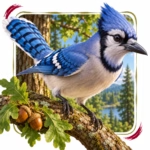
American Crow Fact Highlight
From the full animal facts page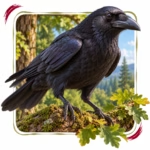
More Animal Comparisons
Pick another animal matchup and keep exploring. Compare appearances, habitats, diets, abilities, and surprising differences.




Make an Animal Story
Send a bright Blue Jay and a clever American Crow into a woodland mystery with our free Animal Story Generator.
Source notes: References used for this comparison. See more See less
Try Another Matchup
Explore this comparison →