
Caterpillar vs Worm: Invertebrate Body Comparison
A caterpillar may look wormlike, but it is an insect larva rather than a true scientific kind of worm. Caterpillars are the growing young stage of butterflies and moths and share a recognizable insect plan: a hardened head, three pairs of jointed true legs on the thorax, and usually several pairs of fleshy prolegs on the abdomen. Worm is a loose common name for many unrelated long, soft-bodied invertebrates, so worm anatomy, habitat, diet, and life cycle depend on which group is meant.
About Caterpillar
- Type Insect
- Diet Mostly plant material; a minority eat fungi, lichens, wool, other insects, or other foods
- Group Butterfly or Moth Larva (Order Lepidoptera)
- Known for A distinct head capsule, chewing mouthparts, three pairs of true legs, fleshy abdominal prolegs in most species, silk production, molting, camouflage, and complete metamorphosis
- Special skill Making silk and transforming inside a pupa into an adult butterfly or moth
About Worm
- Type Invertebrate
- Diet Varies widely: microbes, detritus, plants, animals, blood, or nutrients from a host depending on group
- Group Informal Body-Shape Category
- Known for A long soft body, no jointed legs, movement by muscles or tiny bristles in some groups, and enormous variety among unrelated flatworms, roundworms, segmented worms, ribbon worms, and others
- Special skill Thriving in almost every moist habitat through many different worm-shaped body plans
Caterpillar vs Worm: Quick Answer
A caterpillar is the larva of a butterfly or moth. It has a distinct head, six jointed true legs, and usually fleshy abdominal prolegs, and it will become a pupa before changing into a winged adult. A worm is any of many unrelated long, soft-bodied invertebrates, such as an earthworm, roundworm, or flatworm. Typical worms have no jointed legs and do not turn into butterflies or moths.
Where Do They Fit?
Follow the branches to see how Caterpillar and Worm are classified and related.
Caterpillar vs Worm: Quick Comparison
| Feature | Caterpillar | Worm |
|---|---|---|
| Animal type | Insect larva | Loose name for many invertebrate groups |
| Scientific group | Order Lepidoptera: butterflies and moths | No single scientific group |
| Head | Distinct hardened head capsule with chewing mouthparts | Varies; usually no hardened insect-style head capsule |
| Legs | Six jointed true legs plus fleshy prolegs in most species | No jointed legs or caterpillar prolegs |
| Body covering | Chitinous exoskeleton that must be molted | Usually soft skin; structure varies greatly among groups |
| Typical food | Mostly leaves or other plant parts | Anything from microbes and decay to prey or host nutrients |
| Movement | Walks and grips with true legs and prolegs | Wriggles, glides, burrows, crawls, or swims depending on group |
| Life cycle | Egg, caterpillar, pupa, adult butterfly or moth | Many different life cycles; no universal pattern |
| Adult form | Becomes a butterfly or moth | Usually remains worm-shaped, though some animals called worms are insect larvae |
| Where found | Usually on or near the correct host plant | Soil, freshwater, oceans, hosts, and many other places |
How Are Caterpillars and Worms Alike?
- Both are invertebrates, so neither has a backbone.
- Both usually have long, soft-looking bodies and move close to a surface.
- Both include species that live in soil, leaf litter, wood, or freshwater habitats.
- Both can be important recyclers, plant eaters, prey, or other links in food webs.
- Both need suitable moisture, food, and shelter, although the exact needs vary by species.
How Are Caterpillars and Worms Different?
- A caterpillar is always a butterfly or moth larva, while worm is a common name for many unrelated animal groups.
- A caterpillar has a distinct head capsule and chewing mouthparts, while worm heads and feeding structures vary widely.
- A caterpillar has three pairs of jointed true legs and usually fleshy prolegs, while typical worms lack both.
- A caterpillar wears a chitinous exoskeleton and grows by molting, while many worms have flexible skin without an insect exoskeleton.
- A caterpillar enters a pupal stage and becomes a winged adult, while no single adult form or life cycle applies to all worms.
Caterpillar vs Worm Showdown
Wriggler showdown: The worm category wins size because it includes giant segmented and ribbon worms far longer than any caterpillar, and it wins swimming because many worm groups are aquatic. Speed and strength are ties across such diverse animals. Caterpillars take stealth through remarkable leaf, twig, bark, and eyespot disguises. Social life is a tie because most are solitary but exceptions occur in both groups. The caterpillar wins our weirdest-fact prize for rebuilding much of its body inside a pupa before emerging as a butterfly or moth.
Fun Caterpillar vs Worm Facts
Worm Is a Shape Word, Not One Branch
Scientists do not place every animal called a worm in one group. Earthworms are annelids, roundworms are nematodes, flatworms are platyhelminths, and ribbon worms are nemerteans. They can resemble one another because a long flexible body works well for burrowing, squeezing, and gliding.
Six True Legs Hide Behind the Prolegs
A caterpillar has three pairs of jointed true legs on its thorax, just like an adult insect. Most also have several pairs of soft abdominal prolegs. Tiny hooks called crochets help those prolegs grip leaves, silk, and bark, but the prolegs disappear during metamorphosis.
A Caterpillar Must Molt to Grow
The caterpillar’s outer covering is an exoskeleton made largely of chitin. Because it cannot stretch forever, the larva sheds it several times. Each growing period between molts is called an instar, and color or shape can change from one instar to the next.
The Pupa Is a Busy Change Station
After its final larval molt, a caterpillar becomes a pupa, called a chrysalis in butterflies. Inside, tissues are reorganized into the wings, long legs, compound eyes, antennae, and reproductive organs of an adult butterfly or moth. The animal is alive and developing, not simply sleeping.
Some Worm Names Belong to Insects
Common names can be misleading. Silkworms and inchworms are caterpillars, mealworms are beetle larvae, and some glowworms are beetle larvae or adult female beetles. Their names say worm, but their jointed legs, exoskeletons, and metamorphosis reveal that they are insects.
Caterpillar vs Worm Quiz
- What adult does a caterpillar become? Answer: A butterfly or moth.
- How many jointed true legs does a caterpillar have? Answer: Six.
- Is worm the name of one scientific animal group? Answer: No; it is used for many unrelated groups.
- What are a caterpillar’s fleshy gripping limbs called? Answer: Prolegs.
- What stage comes between a caterpillar and an adult butterfly or moth? Answer: The pupa.
Caterpillar vs Worm FAQ
What is the main difference between a caterpillar and a worm?
A caterpillar is an insect larva with a head capsule, six true legs, and usually abdominal prolegs. Worm is a loose name for many long, soft-bodied invertebrates that generally lack jointed legs.
Is a caterpillar a worm?
No. It can look wormlike, but a caterpillar is the larval stage of a butterfly or moth in the insect order Lepidoptera.
Why does a caterpillar have more than six leg-like parts?
Only the three pairs near its head are jointed true legs. The soft abdominal pairs are temporary prolegs used for gripping and walking.
Do all worms become something else?
No. Earthworms and many other worms hatch as small versions of their adult body plan. Some creatures with worm in their common name are actually insect larvae and do metamorphose.
Can worms and caterpillars live in the same garden?
Yes. Caterpillars may feed on host plants while earthworms and other soil worms live below or among leaf litter, each filling different ecological roles.
Animal Words to Know
- Larva: A young stage that looks and lives differently from the adult.
- Proleg: A soft temporary gripping limb on a caterpillar’s abdomen.
- Crochet: One of the tiny hooks that helps a caterpillar’s proleg hold a surface.
- Instar: One growth stage between two molts.
- Pupa: The life stage in which a caterpillar transforms into an adult butterfly or moth.
Caterpillar and Worm Body Activity
Caterpillar and Worm Body Activity
Draw a caterpillar beside an earthworm. Give the caterpillar a clear head, three pairs of true legs, and several fleshy prolegs, then add a small butterfly or moth life cycle. Give the earthworm a segmented body with no legs and place it in soil. Add a note explaining that a caterpillar is an insect larva, while worm is a common name used for several unrelated animals. Label head, true legs, prolegs, segments, larva, and pupa.
Meet Each Animal
Want the full fact file? Here are quick highlights from each animal’s own facts page.
Caterpillar Fact Highlight
From the full animal facts page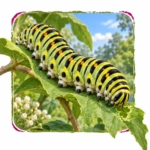
Worm Fact Highlight
From the full animal facts page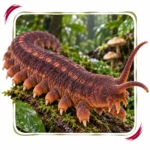
More Animal Comparisons
Pick another animal matchup and keep exploring. Compare appearances, habitats, diets, abilities, and surprising differences.





Make an Animal Story
Turn this caterpillar vs worm comparison into a tiny garden transformation tale with our free Animal Story Generator.
Source notes: References used for this comparison. See more See less
Try Another Matchup
Explore this comparison →