
Crocodile vs Caiman: Crocodilian Comparison
Crocodiles and caimans are both crocodilians, but they belong to different families. This page uses the American crocodile and spectacled caiman as representatives because their ranges overlap in parts of the tropical Americas. The crocodile is much larger, has a narrower tapered snout, exposes teeth from both jaws when its mouth closes, and tolerates salty water. The smaller caiman belongs to the alligator family, usually hides its lower fourth tooth, and carries especially heavy bony armor.
About Crocodile
- Type Reptile
- Diet Carnivore
- Group True Crocodile
- Known for Longer tapered snout, exposed upper and lower teeth, powerful swimming, salt tolerance, armored body, ambush hunting, and maternal care
- Special skill Using tongue salt glands to handle brackish or salt water, swimming with a muscular tail, ambushing prey, and communicating through sound and posture
About Caiman
- Type Reptile
- Diet Carnivore
- Group Alligatorid
- Known for Bony ridge between the eyes, armored skin, tropical freshwater habitats, hidden lower teeth, quick ambushes, and several species of different sizes
- Special skill Using a spectacle-like eye ridge and heavily ossified body armor, ambushing prey in shallow water, and surviving changing tropical water levels
Crocodile vs Caiman: Quick Answer
A true crocodile generally has a longer V-shaped or tapered snout, interlocking jaws that show upper and lower teeth, and working salt glands for brackish or marine habitats. A caiman usually has a broader head, an upper jaw that hides most lower teeth, a bony ridge between the eyes in the spectacled species, and more extensive skin ossification. Most caimans are smaller, though black caimans grow very large.
Where Do They Fit?
Follow the branches to see how Crocodile and Caiman are classified and related.
Crocodile vs Caiman: Quick Comparison
| Feature | American Crocodile | Spectacled Caiman |
|---|---|---|
| Animal type | Reptile | Reptile |
| Scientific name | Crocodylus acutus | Caiman crocodilus |
| Family | Crocodylidae | Alligatoridae |
| Typical adult size | Much larger and heavier | Usually smaller |
| Snout | Long and tapered, often resembling a narrow V | Shorter and broader with a spectacle ridge |
| Closed-mouth teeth | Upper and lower teeth interlock; fourth lower tooth remains visible | Upper jaw overlaps the lower; fourth lower tooth fits into a socket and is usually hidden |
| Salt tolerance | Functional tongue salt glands allow regular use of brackish and coastal habitats | Primarily freshwater and less specialized for salt removal |
| Body armor | Armored back with comparatively less bony belly reinforcement | More extensive osteoderms, including heavily ossified belly scales |
| Main habitat | Rivers, lagoons, mangroves, estuaries, and coastal wetlands | Freshwater rivers, marshes, ponds, swamps, and flooded forests |
| Young animal | Hatchling | Hatchling |
| Special ability | Moving between fresh, brackish, and saltwater habitats | Tropical freshwater adaptability and reinforced armor |
How Are Crocodiles and Caimans Alike?
- Both crocodiles and caimans are reptiles in the order Crocodylia.
- Both have armored scales, muscular tails, webbed hind feet, closable nostrils, protective clear eyelids, and teeth replaced throughout life.
- Both are carnivorous ambush hunters that regulate temperature using sun, shade, land, and water.
- Both lay eggs in guarded nests, and females may help hatchlings reach water and protect them afterward.
- Both can communicate using calls, vibrations, splashes, posture, scent, and touch.
How Are Crocodiles and Caimans Different?
- True crocodiles belong to Crocodylidae, while caimans belong to the alligator family Alligatoridae.
- Crocodiles generally have narrower tapered snouts, while spectacled caimans have broader heads and a ridge between the eyes.
- A crocodile’s fourth lower tooth remains visible when the jaws close, while a caiman’s fits into a socket and is usually hidden.
- Crocodiles have effective tongue salt glands, while caimans are less specialized for saltwater life.
- American crocodiles are much larger than spectacled caimans, although the black caiman is a large exception within the caiman group.
Crocodile vs Caiman Showdown
Crocodilian showdown: The American crocodile wins size and strength because it grows much larger than a spectacled caiman. Speed, stealth, and social behavior are ties because both are swift ambush reptiles with comparable lifestyles. The crocodile wins swimming for its stronger saltwater specialization and ability to move through coastal environments. The caiman takes the weirdest-fact prize for its spectacle ridge and bone-filled belly armor. Species choice matters: a black caiman is far larger than the representative spectacled caiman.
Fun Crocodile vs Caiman Facts
Different Crocodilian Families
True crocodiles form Crocodylidae. Caimans join alligators in Alligatoridae, making a caiman more closely related to an alligator than to a true crocodile. Both families belong to Crocodylia alongside gharials.
Look at the Fourth Lower Tooth
When a true crocodile closes its mouth, the enlarged fourth tooth of the lower jaw fits into a notch and remains visible outside the upper jaw. In alligatorids such as caimans, that tooth enters a socket and is usually hidden.
Crocodiles Carry Salt-Removing Glands
True crocodiles have specialized glands on the tongue that excrete excess salt, allowing species such as the American crocodile to live regularly in mangroves, estuaries, coastal lagoons, and other brackish habitats. Caimans mainly depend on freshwater.
The Spectacled Caiman Has Bony Glasses
A raised bridge of bone between the spectacled caiman’s eyes creates an eyeglass-like outline. Together with heavy osteoderms in the back and belly, the ridge gives the caiman one of the most armored appearances among living crocodilians.
Most Caimans Are Smaller—but Not All
Spectacled caimans are considerably smaller than American crocodiles. The caiman group also includes the black caiman, a massive Amazonian predator capable of reaching sizes that overlap with large true crocodiles.
Crocodile vs Caiman Quiz
- Which family contains caimans? Answer: Alligatoridae.
- Which animal usually shows the fourth lower tooth when its mouth is closed? Answer: The crocodile.
- Which representative has a spectacle-like ridge between the eyes? Answer: The spectacled caiman.
- Which animal has more effective salt-removing tongue glands? Answer: The crocodile.
- What are newly hatched crocodilians called? Answer: Hatchlings.
Crocodile vs Caiman FAQ
What is the main difference between a crocodile and a caiman?
A true crocodile has a more tapered snout, visible interlocking teeth, effective tongue salt glands, and membership in Crocodylidae. A caiman is an alligatorid with a broader head, mostly hidden lower teeth, and heavier skin ossification.
Is a caiman a crocodile?
A caiman is a crocodilian, but it is not a true crocodile. It belongs to Alligatoridae rather than Crocodylidae.
Which is bigger, a crocodile or a caiman?
Most true crocodile species are larger than most caimans, and an American crocodile is much larger than a spectacled caiman. The black caiman is a major large-bodied exception.
Can caimans live in salt water?
Caimans are primarily freshwater animals. They may enter brackish settings, but they lack the highly effective salt-removing tongue glands that let true crocodiles use salty coastal habitats more regularly.
Do crocodiles and caimans care for their babies?
Yes. Females guard nests, respond to hatchling calls, and may carry or guide young to water and protect them for a time.
Animal Words to Know
- Crocodylidae: The reptile family containing true crocodiles.
- Alligatoridae: The reptile family containing alligators and caimans.
- Salt gland: A specialized organ that removes excess salt from an animal’s body.
- Osteoderm: A bony plate embedded within the skin.
- Estuary: A coastal place where river fresh water mixes with seawater.
Crocodile and Caiman Drawing Activity
Crocodile and Caiman Drawing Activity
Draw an American crocodile beside a smaller spectacled caiman. Give the crocodile a long tapered snout and show the large fourth lower tooth fitting outside the upper jaw. Give the caiman a shorter broader head, a ridge between the eyes, and the fourth lower tooth hidden inside the upper jaw. Add a mangrove edge for the crocodile and a freshwater marsh for the caiman. Label snout, tooth, eye ridge, habitat, and hatchling.
Meet Each Animal
Want the full fact file? Here are quick highlights from each animal’s own facts page.
Crocodile Fact Highlight
From the full animal facts page
Caiman Fact Highlight
From the full animal facts page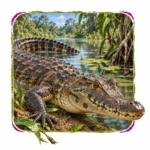
More Animal Comparisons
Pick another animal matchup and keep exploring. Compare appearances, habitats, diets, abilities, and surprising differences.




Make an Animal Story
Turn this crocodile vs caiman comparison into a mangrove-and-rainforest adventure with our free Animal Story Generator.
Source notes: References used for this comparison. See more See less
Try Another Matchup
Explore this comparison →