
Crocodile vs Gharial: Crocodilian Comparison
Crocodiles and gharials are both crocodilians with armored bodies, powerful tails, and eyes and nostrils high on their heads. True crocodiles form a diverse family adapted to many tropical freshwater and coastal habitats. The gharial is a separate, highly aquatic species with an extraordinarily long narrow snout built mainly for catching fish.
About Crocodile
- Type Reptile
- Diet Carnivore
- Group True Crocodile
- Known for Powerful jaws, muscular bodies, ambush hunting, armored skin, and life in many tropical waterways
- Special skill Ambushing varied prey with powerful jaws and using a spinning death roll
About Gharial
- Type Reptile
- Diet Carnivore
- Group Gavialid
- Known for Extremely long narrow jaws, many interlocking teeth, fish catching, and the adult male’s bulbous ghara
- Special skill Sweeping a slim snout rapidly through water to seize slippery fish
Crocodile vs Gharial: Quick Answer
Crocodiles usually have broader, stronger snouts for catching many kinds of prey and can move more effectively on land. Gharials have extremely long, narrow jaws lined with interlocking teeth, live in large freshwater rivers, and specialize mainly in catching fish. A mature male gharial also grows a rounded nose bump called a ghara.
Where Do They Fit?
Follow the branches to see how Crocodile and Gharial are classified and related.
Crocodile vs Gharial: Quick Comparison
| Feature | Crocodile | Gharial |
|---|---|---|
| Animal type | Reptile | Reptile |
| Animal group | True crocodile in family Crocodylidae | Gavialid in family Gavialidae |
| Known for | Powerful jaws, ambush hunting, and broad habitat use | Long narrow jaws, fish catching, and the male’s ghara |
| Main habitat | Rivers, lakes, wetlands, estuaries, mangroves, and some coasts | Large freshwater rivers with deep pools and sandy banks |
| Where found | Tropical regions of Africa, Asia, the Americas, and Australia | Wild populations mainly in India and Nepal |
| Snout | Usually broader and more robust, though shape varies by species | Extremely long, slim, and specialized for fish |
| Diet | Fish, reptiles, birds, mammals, crustaceans, and other prey depending on size and species | Mainly fish as an adult; younger animals also eat insects, frogs, and other small prey |
| Land movement | Can walk with the body raised and may gallop in some species | Poor walker that usually belly-slides on land |
| Baby name | Hatchling | Hatchling |
| Special skill | Powerful ambush attacks and death rolls | Fast, low-drag snout sweeps and excellent river swimming |
How Are Crocodiles and Gharials Alike?
- Both crocodiles and gharials are reptiles in the order Crocodylia.
- Both have armored scales, strong tails, webbed hind feet, and eyes and nostrils near the top of the head.
- Both are carnivores that seize food with conical teeth rather than chewing it.
- Both lay eggs in nests on land and show parental care around nests or hatchlings.
- Both warm themselves by basking and cool down by resting in water or shade.
How Are Crocodiles and Gharials Different?
- True crocodiles belong to the family Crocodylidae, while the gharial belongs to the family Gavialidae.
- Crocodiles usually have robust jaws for varied prey, while gharials have extremely narrow jaws specialized mainly for fish.
- Crocodiles occupy many freshwater, brackish, and sometimes marine habitats, while gharials depend on large freshwater rivers.
- Crocodiles can walk effectively on land, while adult gharials usually push and slide on their bellies.
- Mature male gharials grow a bulbous ghara at the snout tip, while crocodiles do not.
Crocodile vs Gharial Showdown
Crocodilian showdown: The crocodile wins for bulk, land speed, and strength because the largest true crocodiles are heavier, have robust jaws, and travel on land more effectively. Stealth is a tie because both can hide almost entirely below the surface. The gharial takes social life for its nesting gatherings and guarded hatchling groups, plus swimming for its highly aquatic body and low-drag snout. It also wins our weirdest-fact prize because a mature male’s ghara can help amplify a buzzing call.
Fun Crocodile vs Gharial Facts
Robust Jaws vs Fishing Forceps
A crocodile’s snout varies by species but is generally strong enough to grip fish, turtles, birds, mammals, and other prey. A gharial’s extremely slim jaws meet quickly with little water resistance, and numerous sharp teeth help hold slippery fish.
Waterway Generalist vs River Specialist
Different crocodile species use lakes, marshes, rivers, estuaries, mangroves, and even coastal seas. Gharials are specialized for broad river systems with deep channels for swimming and sandy banks for basking and nesting.
High Walk vs Belly Slide
Crocodiles can lift their bodies off the ground in a high walk, and some species can make short galloping bursts. An adult gharial has relatively weak legs for supporting its long heavy body and usually slides across land on its belly.
Many Prey Types vs Mostly Fish
Crocodile diets change with species, age, habitat, and body size, ranging from insects and crustaceans to fish, reptiles, birds, and mammals. Adult gharials mainly catch fish, while youngsters also take smaller animals.
A Male Gharial Grows a Ghara
A mature male gharial develops a hollow bulbous growth around the nostrils at the tip of his snout. Called a ghara after a round Indian pot, it acts as a visual signal and helps make a loud buzzing sound during communication.
Crocodile vs Gharial Quiz
- Which animal usually has the broader, more powerful snout? Answer: Crocodile.
- Which animal has extremely long narrow jaws for catching fish? Answer: Gharial.
- What is the bulbous growth on an adult male gharial’s snout called? Answer: A ghara.
- What are baby crocodiles and gharials called? Answer: Hatchlings.
- Which animal is more specialized for life in large freshwater rivers? Answer: Gharial.
Crocodile vs Gharial FAQ
What is the main difference between a crocodile and a gharial?
A true crocodile usually has a more robust snout and a varied diet. A gharial is a separate kind of crocodilian with extremely long narrow jaws adapted mainly for catching fish.
Is a gharial a crocodile?
A gharial is a crocodilian, so it is related to crocodiles, alligators, and caimans. However, it is not a true crocodile in the family Crocodylidae; it belongs to the family Gavialidae.
Which is bigger, a crocodile or a gharial?
Gharials can grow very long, but the largest true crocodiles, especially saltwater crocodiles, are usually heavier and more powerfully built. Size varies greatly among crocodile species and individuals.
Can a gharial walk on land?
A gharial can move across a bank, but adults are poorly suited to walking with the body raised. They usually push themselves forward while the belly remains on the ground.
What does a gharial eat?
Adult gharials mainly eat fish. Young gharials also catch insects, frogs, crustaceans, and other small animals.
Animal Words to Know
- Crocodilian: A reptile in the group containing true crocodiles, alligators, caimans, gharials, and the tomistoma.
- Ghara: A bulbous growth on the snout tip of a mature male gharial that helps with display and sound.
- Scute: A hard plate in the skin that forms part of a crocodilian’s protective armor.
- Semiaquatic: Adapted to spending time both in water and on land.
- Crèche: A guarded group of young animals gathered together.
Crocodile and Gharial Drawing Activity
Crocodile and Gharial Drawing Activity
Draw a broad-snouted crocodile beside a gharial at a riverbank. Give the crocodile a sturdy head and body. Give the gharial extremely long narrow jaws with many slender teeth and add a fish nearby. If you draw an adult male gharial, include the rounded growth called a ghara at the tip of its snout. Label crocodilian, snout, teeth, fish, ghara, and river.
Meet Each Animal
Want the full fact file? Here are quick highlights from each animal’s own facts page.
Crocodile Fact Highlight
From the full animal facts page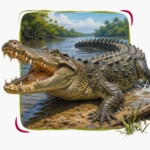
Gharial Fact Highlight
From the full animal facts page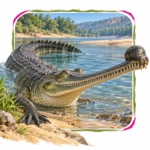
More Animal Comparisons
Pick another animal matchup and keep exploring. Compare appearances, habitats, diets, abilities, and surprising differences.




Make an Animal Story
Turn this crocodile vs gharial comparison into a thrilling river adventure with our free Animal Story Generator.
Source notes: References used for this comparison. See more See less
Try Another Matchup
Explore this comparison →