
Gecko vs Lizard: Lizard Group Comparison
A gecko is not separate from lizards—it is one specialized branch of the lizard family tree. Geckos are usually small and are famous for calls, excellent low-light vision, and remarkable climbing feet in many species. The broader lizard group also includes skinks, iguanas, chameleons, monitors, and thousands of other species with a much wider range of sizes and lifestyles.
About Gecko
- Type Reptile
- Diet Insectivore or Omnivore
- Group Gecko Lizard
- Known for Sticky toe pads in many species, night vision, chirps and clicks, tail shedding, and wall climbing
- Special skill Climbing smooth surfaces in many species and seeing well in dim light
About Lizard
- Type Reptile
- Diet Varies by species
- Group Squamate Reptile
- Known for Extraordinary diversity in size, shape, diet, habitat, movement, defense, and color
- Special skill Running, digging, climbing, gliding, swimming, changing color, or using venom depending on species
Gecko vs Lizard: Quick Answer
Every gecko is a lizard, but most lizards are not geckos. Many geckos have microscopic toe hairs that help them climb smooth surfaces, and most lack movable eyelids, so they clean their clear eye covering with the tongue. Other lizards vary enormously and may have claws, movable eyelids, armor, crests, venom, or very different movement skills.
Where Do They Fit?
Follow the branches to see how Gecko and Lizard are classified and related.
Gecko vs Lizard: Quick Comparison
| Feature | Gecko | Other Lizards |
|---|---|---|
| Animal type | Reptile | Reptile |
| Animal group | A specialized lizard lineage called Gekkota | Many lizard lineages within Squamata |
| Known for | Climbing toes, calls, night vision, and eye licking in many species | Enormous variety in size, shape, diet, defense, and movement |
| Main habitat | Forests, deserts, rocks, caves, gardens, and buildings | Nearly every land habitat and some aquatic environments |
| Typical size | Usually small, though size varies | From tiny species to the giant Komodo dragon |
| Feet | Many have wide adhesive toe pads; some have ordinary clawed toes | May have claws, digging feet, reduced limbs, or other designs |
| Eyelids | Most lack movable eyelids and have a clear protective covering | Many have movable eyelids, although exceptions occur |
| Sounds | Many chirp, click, bark, squeak, or hiss | Usually quieter, though some species vocalize |
| Baby name | Hatchling | Hatchling |
| Special skill | Smooth-surface climbing and low-light vision in many species | Running, burrowing, gliding, swimming, camouflage, or other specializations |
How Are Geckos and Other Lizards Alike?
- Geckos are lizards, so both belong to the reptile order Squamata.
- Both have scales, breathe air with lungs, and depend on outside heat to regulate body temperature.
- Most lay eggs, although some geckos and other lizards give birth to live young.
- Both use tongue-flicking, vision, scent, and body movements to explore or communicate.
- Many geckos and other lizards can shed part of the tail to escape a predator.
How Are Geckos and Other Lizards Different?
- Gecko describes one specialized lizard lineage, while lizard is the much broader group.
- Many geckos have adhesive toe pads, while most other lizards rely on claws or differently shaped feet.
- Most geckos lack movable eyelids, while many other lizards can blink.
- Geckos are unusually vocal for lizards and often communicate with chirps, clicks, or barks.
- Geckos are usually small, while the wider lizard group includes species ranging from tiny miniatures to the Komodo dragon.
Gecko vs Lizard Showdown
Reptile showdown: The broader lizard group wins size, speed, and strength because it includes giant monitors, rapid runners, and many powerful body designs. Stealth is a tie because geckos and other lizards include excellent camouflage experts. The gecko takes social communication because many species use surprisingly varied calls. Other lizards win swimming through specialized swimmers such as marine iguanas and water monitors. The gecko wins our weirdest-fact prize because millions of microscopic toe structures can help it cross a ceiling without glue.
Fun Gecko vs Lizard Facts
A Gecko Is Already a Lizard
Geckos form a specialized evolutionary branch within the lizard part of the reptile order Squamata. Comparing a gecko with a lizard is therefore like comparing an owl with a bird: the first animal belongs inside the larger group.
Microscopic Climbing Toes
Many climbing geckos have broad toe pads covered with rows of plates called lamellae. These carry millions of microscopic hairlike setae whose tiny tips make close contact with a surface, creating weak attractions that add up to a strong grip.
Most Geckos Cannot Blink
Most geckos have a transparent protective scale called a brille covering each eye instead of a movable eyelid. They use the tongue to wipe dust and moisture from this clear window, although eyelid geckos are an important exception.
Geckos Are Talkative Lizards
Many geckos chirp, click, bark, squeak, or hiss when defending territory, attracting a mate, or warning another animal. Most other lizards communicate more heavily through posture, movement, color, or scent, though they are not completely silent.
A Tail Can Become an Escape Trick
Many geckos and other lizards can release part of the tail when grabbed. The detached tail may continue wriggling and distract a predator while the lizard escapes, and a replacement tail may grow later but is rarely identical to the original.
Gecko vs Lizard Quiz
- Is a gecko a type of lizard? Answer: Yes.
- What microscopic structures help many geckos grip surfaces? Answer: Setae on their toe pads.
- Why do most geckos lick their eyes? Answer: To clean the clear protective covering because they cannot blink.
- Are all geckos active only at night? Answer: No; many are nocturnal, but some are active during the day.
- What can many lizards release to escape a predator? Answer: Part of the tail.
Gecko vs Lizard FAQ
What is the main difference between a gecko and a lizard?
A gecko is one type of lizard. Geckos belong to a specialized lineage and commonly have features such as vocal calls, strong night vision, clear eye coverings, and adhesive toes, although not every species has every feature.
Can every gecko climb walls?
No. Many geckos have adhesive toe pads that grip walls or ceilings, but ground-dwelling species such as leopard geckos have ordinary clawed toes instead.
Why do geckos lick their eyes?
Most geckos cannot blink because a clear scale covers each eye. Licking removes dust and helps keep that surface clean.
Do geckos make sounds?
Yes. Many species use chirps, clicks, squeaks, barks, or hisses for courtship, territory defense, alarm, or other communication.
Can geckos regrow their tails?
Many can regrow a tail after releasing it, but the replacement often differs in shape, color, scales, or internal structure. Some species cannot drop the tail easily.
Animal Words to Know
- Gekkota: The specialized lizard lineage containing geckos and their closest relatives.
- Seta: One microscopic hairlike structure that helps many gecko toes grip a surface.
- Lamella: One of the plate-like rows beneath an adhesive gecko toe.
- Brille: A clear protective scale covering the eye of many geckos and snakes.
- Autotomy: The ability to release a body part, such as a tail, as an escape defense.
Gecko and Lizard Family Activity
Gecko and Lizard Family Activity
Draw a tokay gecko climbing a smooth wall beside another lizard, such as a skink, running on the ground. Give the gecko large eyes and wide toe pads, and give the skink movable eyelids, small legs, and smooth scales. Add a bracket around both animals labeled “lizards” to show that a gecko is one kind of lizard. Label gecko, lizard, toe pad, eyelid, scale, and tail.
Meet Each Animal
Want the full fact file? Here are quick highlights from each animal’s own facts page.
Gecko Fact Highlight
From the full animal facts page
Lizard Fact Highlight
From the full animal facts page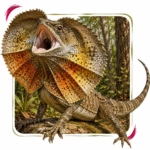
More Animal Comparisons
Pick another animal matchup and keep exploring. Compare appearances, habitats, diets, abilities, and surprising differences.





Make an Animal Story
Turn this gecko vs lizard comparison into a wall-climbing reptile adventure with our free Animal Story Generator.
Source notes: References used for this comparison. See more See less
Try Another Matchup
Explore this comparison →