
Mastodon vs Woolly Mammoth: Ice Age Proboscidean Comparison
Mastodons and woolly mammoths were both trunked, tusked proboscideans, but they were not the same animal and did not belong to the same family. The American mastodon came from the older mammutid branch and lived mainly in North American woodlands, where its cone-cusped teeth crushed twigs and leaves. The woolly mammoth belonged to the elephant family and roamed colder open steppe-tundra, grinding grasses with washboard-like molars made from many enamel plates.
About Mastodon
- Type Extinct Mammal
- Diet Herbivore and mainly a browser; twigs, leaves, bark, cones, shrubs, herbs, and some grasses depending on place and season
- Group American Mastodon (Mammut americanum; Family Mammutidae)
- Known for A stocky long body, sturdy legs, a relatively low skull, slightly curved upper tusks, cone-cusped molars, a trunk, woodland browsing, probable cold-weather hair, and a distant relationship to mammoths and elephants
- Special skill Crushing woody browse with rows of blunt cone-shaped tooth cusps
About Woolly Mammoth
- Type Extinct Mammal
- Diet Herbivore and mainly a grazer; grasses, sedges, herbs, flowers, and some shrubs or twigs depending on region and season
- Group Mammoth (Mammuthus primigenius; Family Elephantidae)
- Known for A domed head, high shoulder profile, long strongly curved tusks, flat ridged molars, small furry ears, a short tail, long guard hairs, dense underwool, thick fat, a trunk, and strong cold-steppe adaptations
- Special skill Surviving extreme cold with layered hair, body fat, small ears, and a compact cold-adapted body
Mastodon vs Woolly Mammoth: Quick Answer
A mastodon was a shorter, stockier woodland browser with relatively straight tusks and bumpy cone-cusped molars. A woolly mammoth was generally taller, had more strongly curved tusks, a domed head, thick cold-weather insulation, and flat ridged molars for grinding grasses. Both were extinct elephant-like mammals with trunks, but woolly mammoths were more closely related to living elephants.
Where Do They Fit?
Follow the branches to see how Mastodon and Woolly Mammoth are classified and related.
Mastodon vs Woolly Mammoth: Quick Comparison
| Feature | Mastodon | Woolly Mammoth |
|---|---|---|
| Scientific name | Mammut americanum | Mammuthus primigenius |
| Family | Mammutidae | Elephantidae |
| Typical shoulder height | About 2.5–3 m | About 3–3.5 m, with males generally larger |
| Build | Shorter, stockier, and longer-bodied | Taller, with a domed head and high shoulder profile |
| Molars | Rows of blunt cone-shaped cusps | Flat surface formed by many narrow enamel ridges |
| Main diet | Browsed twigs, leaves, bark, shrubs, and other woodland plants | Grazed mainly on grasses, sedges, and steppe herbs |
| Tusks | Usually less strongly curved | Usually long and strongly curved, sometimes crossing |
| Habitat | Forests, woodlands, wetlands, and shrub-rich landscapes | Cold, dry, open steppe-tundra and northern grasslands |
| Range | North and Central America | Northern Eurasia and North America |
| Last survivors | Mainland populations disappeared roughly 10,000–11,000 years ago | Most disappeared near the Ice Age’s end, but island populations survived until about 4,000 years ago |
How Were Mastodons and Woolly Mammoths Alike?
- Both were large plant-eating mammals in the order Proboscidea.
- Both had muscular trunks, pillar-like legs, padded feet, tusks made from enlarged upper incisor teeth, and horizontally replacing molars.
- Both lived during the Pleistocene and shared parts of northern North America for periods of time.
- Both probably had elephant-like family relationships, with females and calves forming groups and mature males often ranging more independently.
- Both disappeared as climates, habitats, and human pressures changed near or after the Ice Age’s end.
How Were Mastodons and Woolly Mammoths Different?
- Mastodons belonged to Mammutidae, while woolly mammoths belonged to Elephantidae with living elephants.
- Mastodons were generally shorter and stockier, while woolly mammoths were taller with domed heads and high shoulders.
- Mastodon molars had blunt cone-shaped cusps for crushing woody browse, while mammoth molars had many ridges for grinding abrasive grasses.
- Mastodons favored forests and wetlands in North and Central America, while woolly mammoths favored cold open landscapes across northern Eurasia and North America.
- Mastodon tusks were usually less curved, while woolly mammoth tusks often swept strongly outward and inward.
Mastodon vs Woolly Mammoth Showdown
Ice Age showdown: The woolly mammoth wins typical height and social evidence, although body-size ranges overlapped and mastodons were powerfully built. Speed and strength are ties because fossils do not record fair contests. The mastodon takes stealth because its wooded habitat offered more visual cover than open mammoth steppe, not because such a giant was truly sneaky. Swimming is a tie because neither species’ performance can be measured directly. The woolly mammoth wins our weirdest-fact prize because frozen bodies preserve hair, skin, muscles, stomach contents, dung, and even ancient DNA—details rarely available for extinct mammals.
Fun Mastodon vs Woolly Mammoth Facts
The Fastest Identification Test Is a Tooth
A mastodon molar looks bumpy, with paired rows of blunt cone-shaped cusps and valleys that crushed twigs and leaves. A woolly mammoth molar resembles a washboard, with many thin enamel plates forming ridges that resisted wear from dusty, gritty grasses. Tooth shape reveals both identity and menu.
They Occupied Different Family Branches
Mastodons split from the lineage leading to mammoths and living elephants more than 20 million years ago. Woolly mammoths belonged to Elephantidae and were close relatives of Asian elephants. A mastodon was therefore not an early mammoth or a stage on the way to becoming one.
Woolly Mammoth Insulation Is Better Documented
Frozen woolly mammoths preserve long outer guard hairs, dense underwool, small hairy ears, a short tail, and thick skin over stored fat. Mastodons are also reconstructed with hair and rare finds support a coat, but their complete hair length, density, and color are much less securely known.
Tusks Were Ever-Growing Teeth
The tusks of both animals were enlarged upper incisors that grew in layers throughout life. Wear, scratches, breakage, and chemical patterns can preserve clues about age, seasons, movement, diet, and stressful events. Woolly mammoth tusks were usually more dramatically curved than mastodon tusks.
The Last Mammoths Outlived the Mainland Herds
Most mainland woolly mammoths vanished around the end of the Pleistocene, near the time mastodons disappeared from North America. Isolated mammoth populations survived longer on Bering Sea islands, and the final known Wrangel Island population lasted until roughly 4,000 years ago.
Mastodon vs Woolly Mammoth Quiz
- Which animal had bumpy cone-cusped molars? Answer: The mastodon.
- Which animal had flat ridged grass-grinding molars? Answer: The woolly mammoth.
- Did mastodons and mammoths belong to the same family? Answer: No; both were proboscideans but belonged to different families.
- Which animal preferred woodland browse? Answer: The mastodon.
- Where did the last known woolly mammoths survive until about 4,000 years ago? Answer: Wrangel Island.
Mastodon vs Woolly Mammoth FAQ
What is the main difference between a mastodon and a woolly mammoth?
The clearest difference is the molars. Mastodons had bumpy cone-cusped teeth for woody browse, while woolly mammoths had flat ridged teeth for grinding grasses.
Was a mastodon a type of mammoth?
No. Mastodons belonged to Mammutidae, while mammoths belonged to Elephantidae. Their family branches separated more than 20 million years ago.
Which was bigger, a mastodon or a woolly mammoth?
Woolly mammoths were generally taller at the shoulder, but their size ranges overlapped. Mastodons were shorter and stockier, and large individuals of either species could be extremely heavy.
Were both animals covered in wool?
Woolly mammoths definitely had long guard hair and dense underwool preserved in frozen bodies. Mastodons probably had cold-weather hair, but far less soft tissue survives, so their exact coat is less certain.
Did mastodons and woolly mammoths live together?
They overlapped in parts of northern North America at some times, but they usually favored different food and habitat: mastodons browsed wooded landscapes and woolly mammoths grazed open cold steppe.
Animal Words to Know
- Proboscidean: A member of the trunked-mammal order containing elephants, mammoths, mastodons, and many extinct relatives.
- Browser: An herbivore that mainly eats leaves, twigs, shrubs, bark, and other higher-growing plants.
- Grazer: An herbivore that mainly feeds on grasses and other low vegetation.
- Cusp: A raised point or bump on the chewing surface of a tooth.
- Steppe-tundra: A cold, dry Ice Age landscape dominated by grasses, sedges, herbs, and low shrubs.
Mastodon and Woolly Mammoth Tooth Activity
Mastodon and Woolly Mammoth Tooth Activity
Draw an American mastodon beside a woolly mammoth at the same scale. Give the mastodon a lower head, stocky body, and less-curved tusks in woodland. Give the mammoth a high shoulder hump, domed head, small ears, shaggy coat, and strongly curved tusks on open tundra. Enlarge one molar from each: rounded cone-like cusps for browsing leaves and parallel ridges for grinding grass. Label mastodon, mammoth, molar, tusk, browser, and grazer.
Meet Each Animal
Want the full fact file? Here are quick highlights from each animal’s own facts page.
Mastodon Fact Highlight
From the full animal facts page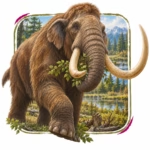
Woolly Mammoth Fact Highlight
From the full animal facts page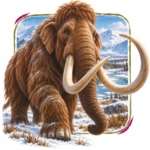
More Animal Comparisons
Pick another animal matchup and keep exploring. Compare appearances, habitats, diets, abilities, and surprising differences.



Make an Animal Story
Turn this mastodon vs woolly mammoth comparison into a tooth-solving Ice Age adventure with our free Animal Story Generator.
Source notes: References used for this comparison. See more See less
Try Another Matchup
Explore this comparison →