
Matamata vs Alligator Snapping Turtle for Kids
These turtles are both patient freshwater ambush hunters with prehistoric-looking shells, but their equipment is very different. The Amazon Matamata, Chelus fimbriata, looks like soggy bark and leaves. It has a flat fringed head, a snorkel-like snout and a mouth that vacuums prey inward. The Alligator Snapping Turtle, Macrochelys temminckii, is a far heavier North American turtle with a giant hooked head, three shell ridges and a worm-like lure on its tongue.
About Matamata Turtle
- Type Living
- Diet Carnivore; ambushes small fish and aquatic invertebrates and swallows them whole using powerful suction
- Group Amazonian side-necked freshwater turtle in family Chelidae (Chelus fimbriata)
- Known for Bark-like knobby shell, huge flat triangular head, fringed neck, snorkel-shaped nose and vacuum feeding
- Special skill Expands its broad mouth and throat in a flash to vacuum water and prey inward without chewing
About Alligator Snapping Turtle
- Type Living
- Diet Omnivore and predator; eats fish, crayfish, mollusks, other turtles, carrion, small vertebrates and some plant foods
- Group Giant North American freshwater snapping turtle in family Chelydridae (Macrochelys temminckii)
- Known for Huge hooked head, powerful jaws, long tail, three raised shell ridges and a worm-like lure on its tongue
- Special skill Wriggles a small pink worm-shaped tongue tip inside an open mouth to lure curious fish within snapping distance
Quick Answer
A Matamata Turtle reaches a shell length near 45 cm and may weigh about 17 kg. It is a poor open-water swimmer that walks along shallow muddy bottoms and sucks small fish into a wide mouth. A male Alligator Snapping Turtle can reach about 74 cm in shell length and 113 kg. It waits in deeper water, waves a worm-like tongue lure and closes extremely powerful jaws when prey comes close.
Matamata Turtle vs Alligator Snapping Turtle: Quick Comparison
| Feature | Matamata Turtle | Alligator Snapping Turtle |
|---|---|---|
| Scientific name | Chelus fimbriata | Macrochelys temminckii |
| Turtle family | Chelidae; a side-necked turtle | Chelydridae; a snapping turtle |
| Maximum shell length | Nearly 45 cm | Adult males up to about 74 cm |
| Maximum reported weight | About 17 kg | Adult males up to about 113 kg |
| Head | Very flat and triangular with skin fringes and a narrow snorkel snout | Enormous triangular head with a strong hooked beak and fleshy eye projections |
| Shell | Broad, rough and bark-like with three knobby keels | Massive dark shell with three high lengthwise ridges |
| Main home | Shallow muddy swamps and slow Amazonian water | Deep rivers, lakes, canals and swamps in the central and southeastern United States |
| Ambush trick | Explosive suction pulls fish and water into the mouth | A worm-shaped tongue lure draws prey between the jaws |
| Swimming style | Poor open-water swimmer; usually walks on the bottom | Strong aquatic turtle that spends nearly all its time submerged |
| Conservation | Not Evaluated globally since the 2020 split; pet trade remains a concern | Endangered in the 2025 IUCN assessment; U.S. federal listing remained proposed in 2026 |
How Are Matamata and Alligator Snapping Turtles Alike?
- Both are large freshwater turtles that spend nearly all their lives underwater.
- Both have rough brown shells with three lengthwise ridges and often grow algae.
- Both rely on camouflage and long motionless waits rather than high-speed chases.
- Both catch fish and other aquatic animals with a sudden mouth movement.
- Both lay eggs on land, and the hatchlings receive no care after emerging.
How Are Matamata and Alligator Snapping Turtles Different?
- The Matamata is a South American side-necked turtle; the Alligator Snapper is a North American snapping turtle.
- A giant male Alligator Snapping Turtle may weigh more than six times as much as a Matamata.
- The Matamata has a flat fringed head and thin snorkel snout; the snapper has a huge beaked head and long tail.
- The Matamata vacuums prey inward, while the snapper attracts prey with a moving tongue lure and then bites.
- Matamatas favor shallow muddy water and walk on the bottom; adult snappers often occupy deeper river channels.
Matamata vs Alligator Snapping Turtle Showdown
- Size – Alligator Snapping Turtle: A huge male can approach 113 kg, compared with roughly 17 kg for a large Matamata.
- Speed – Tie: Both save energy by waiting, and no reliable matched swimming race gives either a fair win.
- Strength – Alligator Snapping Turtle: Its far greater mass, muscular body and extremely powerful jaws make it the clear powerhouse.
- Stealth – Matamata Turtle: Its bark-like shell, leaf-shaped head fringes and still posture create an exceptionally complete debris disguise.
- Social – Tie: Both are mainly solitary turtles with little social life outside breeding.
- Swimming – Alligator Snapping Turtle: It moves through deep waterways, while adult Matamatas are poorly suited to open-water swimming.
- Weirdest – Matamata Turtle: A turtle shaped like wet leaves that breathes through a snorkel nose and vacuums fish whole wins the oddity prize.
Fun Amazon Matamata Turtle vs Alligator Snapping Turtle Facts
A Living Pile of Leaves
The Matamata’s ridged shell, ragged skin and broad head can resemble bark and dead leaves on a muddy bottom.
A Turtle Vacuum
The Matamata suddenly opens its enormous mouth and expands its throat, pulling in water and prey together.
A Worm on the Tongue
The Alligator Snapping Turtle waves a pink worm-shaped tongue tip while the rest of its body stays still.
The 249-Pound Maximum
U.S. Fish and Wildlife Service records show adult males can reach about 249 pounds, or 113 kg.
One Matamata Became Two
DNA and shell studies published in 2020 split the old Matamata into an Amazon species and an Orinoco species.
Matamata vs Alligator Snapping Turtle Quiz
Which turtle uses explosive suction? A) Matamata Turtle B) Alligator Snapping Turtle C) Both Answer: A) Matamata Turtle
Which turtle has a worm-like tongue lure? A) Matamata Turtle B) Alligator Snapping Turtle C) Neither Answer: B) Alligator Snapping Turtle
Which turtle can grow much heavier? A) Matamata Turtle B) Alligator Snapping Turtle C) They match Answer: B) Alligator Snapping Turtle
Where does the Matamata in this comparison live? A) Amazon basin B) Arctic Ocean C) Australian desert Answer: A) Amazon basin
What do both use while hunting? A) Camouflage and waiting B) Wings C) Pack chases Answer: A) Camouflage and waiting
Amazon Matamata Turtle vs Alligator Snapping Turtle FAQ
Is a Matamata Turtle a Snapping Turtle?
No. It is a South American side-necked turtle in family Chelidae. Alligator Snapping Turtles belong to Chelydridae.
Can a Matamata Turtle Chew?
No. Its mouth is specialized for suction, so it swallows suitably sized prey whole.
Do Alligator Snapping Turtles Hunt Alligators?
Their name comes from their ridged, reptilian appearance. They mainly eat fish and other aquatic food, though large adults can take varied prey.
Are Alligator Snapping Turtles Dangerous to People?
They normally avoid people and do not hunt humans, but their bite is powerful. Wild turtles should never be touched, cornered or handled.
Why Is the Matamata Called an Amazon Matamata?
Research in 2020 separated Orinoco populations as Chelus orinocensis. Chelus fimbriata is now the Amazon Matamata used on this page.
Animal Words to Know
- Ambush: A surprise attack made after waiting in hiding.
- Carapace: The hard upper part of a turtle’s shell.
- Keel: A raised ridge running along a shell.
- Side-necked: Bending the neck sideways under the shell edge instead of pulling it straight back.
- Suction feeding: Pulling water and prey into the mouth by rapidly lowering pressure inside it.
Build Two Underwater Ambush Models
Build Two Underwater Ambush Models
Draw a shallow Amazon mud pool and a deeper southeastern U.S. river. Add one 45 cm Matamata shell and one 74 cm Alligator Snapping Turtle shell at the same scale. Use arrows to show water rushing into the Matamata’s mouth and a fish path stopping near the snapper’s tongue lure, but do not draw an attack.
Meet Each Animal
Want the full fact file? Here are quick highlights from each animal’s own facts page.
Matamata Turtle Fact Highlight
From the full animal facts page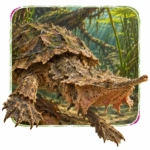
Alligator Snapping Turtle Fact Highlight
From the full animal facts page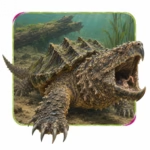
More Animal Comparisons
Pick another animal matchup and keep exploring. Compare appearances, habitats, diets, abilities, and surprising differences.





Make an Animal Story
Create a swamp mystery about a leaf-like Matamata and a giant turtle with a tongue lure!