
Mosquito vs Gnat: Tiny Fly Comparison
Mosquitoes and gnats are both true flies, but mosquito is a precise scientific group and gnat is a loose common name. Every mosquito belongs to the family Culicidae. The word gnat can describe several families of tiny flies, including fungus gnats, gall gnats, biting midges, black flies, and non-biting midges in different regions. That means there is no single body plan or life cycle shared by every animal called a gnat.
About Mosquito
- Type Insect
- Diet Varies: nectar and plant sugars; many females also take blood meals
- Group True Fly (Family Culicidae)
- Known for Long proboscises, scaled wings, aquatic larvae and pupae, nectar feeding, blood meals by females of many species, and sensitive odor detection
- Special skill Detecting carbon dioxide and body odors and completing larval and pupal development in water
About Gnat
- Type Insect
- Diet Varies: fungi, decaying material, plant tissue, nectar, microorganisms, or blood depending on the fly
- Group Small True Fly (Informal Name)
- Known for Tiny delicate bodies, long legs or antennae in many forms, moist breeding sites, dancing swarms, and widely varied larval diets
- Special skill Using tiny damp habitats in soil, fungi, plants, streams, ponds, or decaying material for larval development
Mosquito vs Gnat: Quick Answer
A mosquito is a true fly in the family Culicidae, usually recognized by a long proboscis, narrow scaled wings, and aquatic larvae and pupae. Gnat is an informal name for several kinds of tiny flies. Many gnats are smaller and more delicate than mosquitoes, and most do not bite, although some insects called biting gnats do. Gnat usage varies by country and region.
Where Do They Fit?
Follow the branches to see how Mosquito and Gnat are classified and related.
Mosquito vs Gnat: Quick Comparison
| Feature | Mosquito | Gnat |
|---|---|---|
| Animal type | True fly | True fly |
| Scientific group | Family Culicidae | No single family; an informal name for several small-fly groups |
| Typical size | Small, but often larger and longer-legged than familiar fungus gnats | Usually extremely small and delicate |
| Mouthparts | Long proboscis; males drink plant sugars and many females can pierce skin | Highly variable; many adults do not bite, while some groups have biting females |
| Wings | One functional pair with scales along the veins and margins | One functional pair, usually without the mosquito’s distinctive scale pattern |
| Young habitat | Larvae and pupae develop in water | Larvae may live in moist soil, fungi, rotting matter, plants, or water |
| Young stage | Aquatic larva often called a wiggler | Larva with form and food depending on the fly family |
| Pupa | Aquatic, active pupa often called a tumbler | Usually less active; may be in soil, plants, debris, or water |
| Swarming | Males of many species form mating swarms | Many kinds form mating or mass-emergence swarms |
| Ecological roles | Pollinator, aquatic food-web member, prey, and sometimes disease carrier | Decomposer, fungus eater, pollinator, plant feeder, predator, or prey depending on group |
How Are Mosquitoes and Gnats Alike?
- Both mosquitoes and gnats are insects in the true-fly order Diptera.
- Both adults use one functional pair of wings and balance with tiny organs called halteres.
- Both undergo complete metamorphosis through egg, larva, pupa, and adult stages.
- Both include adults that gather in dancing mating swarms.
- Both are important food for fish, amphibians, spiders, birds, bats, and other animals.
How Are Mosquitoes and Gnats Different?
- Mosquito is a precise name for family Culicidae, while gnat is an informal label applied to several small-fly families.
- Mosquitoes have a long proboscis and scaled wings, while gnat mouthparts and wing details vary among groups.
- Every mosquito larva and pupa develops in water, while gnat larvae may live in water, damp soil, fungi, plants, or decaying material.
- Females of many mosquito species take blood meals for egg production, while most animals commonly called gnats do not bite.
- Mosquitoes have a recognizable aquatic wiggler and tumbler life cycle, while no single life-cycle pattern describes every gnat group.
Mosquito vs Gnat Showdown
Tiny-fly showdown: The mosquito wins typical size and swimming because its entire larval and pupal development happens in water. The gnat takes stealth because many forms are almost speck-sized. Speed, strength, and social behavior are ties because both names cover many species, and their swarms are mating gatherings rather than cooperative colonies. The mosquito wins our weirdest-fact prize because its comma-shaped aquatic pupa can tumble through water before an airborne adult emerges.
Fun Mosquito vs Gnat Facts
Mosquito Is Precise; Gnat Is Flexible
All mosquitoes belong to one true-fly family, Culicidae. Gnat has no single taxonomic definition and may describe fungus gnats, gall gnats, non-biting midges, biting midges, black flies, eye gnats, or other tiny flies depending on place and speaker.
One Pair of Wings Plus Two Halteres
Like all true flies, mosquitoes and gnats fly with one functional pair of wings. Their former hindwings became small club-shaped halteres that vibrate and sense turning, helping the insect balance in the air.
Not Every Tiny Fly Takes Blood
Male mosquitoes feed on nectar and fruit or plant sugars and cannot pierce skin. Females of many mosquito species use blood protein to develop eggs, while also feeding on sugar. Most common fungus gnats and non-biting midges do not bite, but some flies called biting gnats have blood-feeding females.
Water Nursery vs Many Nursery Types
Mosquito larvae and pupae must develop in water, whether in a marsh, pond, tree hole, bromeliad, hoofprint, or rain-filled container. Depending on the group, gnat larvae may grow in streams, damp soil, fungi, compost, rotting wood, plant tissue, or other moist places.
A Swarm Is Usually a Meeting, Not a Society
Male mosquitoes and many gnats gather in visible swarms near landmarks where females can find them for mating. The individuals do not share a nest, raise young together, or divide jobs like bees and ants.
Mosquito vs Gnat Quiz
- What fly family contains every mosquito? Answer: Culicidae.
- Is gnat one scientific insect family? Answer: No; it is an informal name for several small-fly groups.
- Where do mosquito larvae and pupae live? Answer: In water.
- Do male mosquitoes drink blood? Answer: No; they feed on nectar and other plant sugars.
- What balancing organs replace a true fly’s hindwings? Answer: Halteres.
Mosquito vs Gnat FAQ
What is the main difference between a mosquito and a gnat?
A mosquito belongs to the clearly defined family Culicidae and has aquatic larvae, aquatic pupae, a long proboscis, and scaled wings. Gnat is a flexible name for several groups of tiny flies with different bodies and life cycles.
Is a mosquito a type of gnat?
Scientifically, mosquito is the clearer name and gnat has no fixed boundary. Some regional or older usage calls mosquitoes gnats, but many modern guides use gnat for other small flies.
Do gnats bite like mosquitoes?
Most familiar fungus gnats and non-biting midges do not bite. Some groups called biting gnats, no-see-ums, or black flies have females that take blood meals.
Do all mosquitoes bite?
No. Male mosquitoes do not bite, and females of some mosquito species do not take blood. In many familiar species, only females pierce skin because blood nutrients help them produce eggs.
Why do mosquitoes and gnats swarm?
Many swarms help males and females find mates. Large numbers can also appear when many adults emerge from the same larval habitat at once.
Animal Words to Know
- Culicidae: The true-fly family containing every mosquito.
- Diptera: The insect order containing true flies, including mosquitoes and gnats.
- Proboscis: An elongated feeding structure used to drink liquids.
- Halter: One small balancing organ formed from a true fly’s reduced hindwing; the plural is halteres.
- Informal name: A common label that does not identify one exact scientific group.
Mosquito and Gnat Drawing Activity
Mosquito and Gnat Drawing Activity
Draw a mosquito beside a fungus gnat in magnified circles. Give the mosquito a long proboscis, narrow scaled wings, and long legs. Give the fungus gnat delicate legs, long antennae, and no piercing proboscis. Below them, place mosquito larvae in water and fungus-gnat larvae in damp soil or fungi. Add a note that gnat is an informal name used for several kinds of tiny fly. Label proboscis, antennae, larva, water, and soil.
Meet Each Animal
Want the full fact file? Here are quick highlights from each animal’s own facts page.
Mosquito Fact Highlight
From the full animal facts page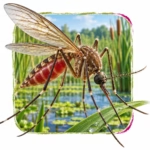
Gnat Fact Highlight
From the full animal facts page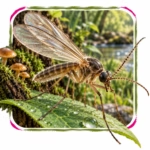
More Animal Comparisons
Pick another animal matchup and keep exploring. Compare appearances, habitats, diets, abilities, and surprising differences.






Make an Animal Story
Turn this mosquito vs gnat comparison into a tiny wetland mystery with our free Animal Story Generator.
Source notes: References used for this comparison. See more See less
Try Another Matchup
Explore this comparison →