
Pig vs Hog: Terminology Comparison
Pig and hog usually refer to the same domestic swine rather than separate species. “Pig” is the broad everyday term and can describe the animal at any age. In some North American farming contexts, “hog” often suggests a larger, older pig or one raised to market size, but regional speech, dictionaries, shows, laws, and agricultural systems use the words differently. This page uses a young growing pig and a mature hog of the same breed as the clearest visual comparison.
About Pig
- Type Mammal
- Diet Omnivore
- Group Domestic Pig
- Known for Curled tails in many breeds, sensitive snouts, rooting, intelligence, social behavior, piglets, mud wallowing, and farm life
- Special skill Using an extremely sensitive snout to smell and investigate, rooting soil, learning routines, solving problems, and remembering places
About Hog
- Type Mammal
- Diet Omnivore
- Group Mature Domestic Pig
- Known for Larger mature size, powerful rooting, broad body, strong shoulders, farm terminology, social behavior, and the same intelligence as other pigs
- Special skill Applying adult strength while rooting, walking long distances when space permits, learning routines, and using smell to locate food and recognize surroundings
Pig vs Hog: Quick Answer
A hog is a pig. People often use “pig” for the species generally or for a younger, smaller animal, while “hog” may mean a larger or mature domestic pig. There is no single worldwide age or weight line that changes every pig into a hog, so the terms frequently overlap and may be interchangeable.
Where Do They Fit?
Follow the branches to see how Pig and Hog are classified and related.
Pig vs Hog: Quick Comparison
| Feature | Growing Pig | Mature Hog |
|---|---|---|
| Animal type | Domestic pig | Domestic pig |
| Scientific name | Sus scrofa domesticus or Sus domesticus, depending on taxonomy | Sus scrofa domesticus or Sus domesticus, depending on taxonomy |
| Main meaning | Broad animal term, often used for younger swine in a direct comparison | Commonly a larger or mature pig, especially in some farming usage |
| Species | The same domestic swine | The same domestic swine |
| Age and size | May be young and still growing | Usually older and heavier in this comparison |
| Coat | Breed-dependent hair, skin color, and pattern | The same breed traits, with an adult body and coarser appearance possible |
| Diet | Managed omnivorous diet suitable for growth | Managed omnivorous diet suitable for adult needs |
| Social group | Herd or group | Herd or group |
| Young animal | Piglet | Piglet earlier in life |
| Main clue | Smaller youthful proportions when comparing life stages | Larger mature proportions |
| Special ability | Rapid learning, exploration, and growth | Powerful adult rooting with the same strong senses and intelligence |
How Are Pigs and Hogs Alike?
- Pig and hog can name the same domestic animal and species.
- Both are mammals, even-toed hoofed animals, omnivores, and members of the pig family Suidae.
- Both have flexible snouts, cloven hooves, strong senses of smell, social intelligence, and piglets in their life history.
- Both may wallow in mud or water to cool down and protect their skin.
- Both need companionship, suitable food, clean water, shelter, rooting opportunities, veterinary care, and enough space for natural behavior.
How Are Pigs and Hogs Different?
- “Pig” is the broadest everyday term, while “hog” often suggests a larger or mature pig in some regions.
- A growing pig is usually smaller and lighter than the mature hog used in this representative comparison.
- A mature hog has fully developed adult muscles, jaws, and body proportions.
- Feeding and care change as a young pig grows, even though the animal does not become a different species.
- The exact meanings of pig and hog vary, so another speaker may use the two words interchangeably.
Pig vs Hog Showdown
Swine showdown: The mature hog wins size and strength over the younger growing pig because it has reached a later life stage. Speed is a tie because age, breed, health, footing, and individual matter. Stealth, social behavior, swimming, and weirdest fact are ties because pig and hog describe the same kind of animal with the same underlying senses, intelligence, social needs, and wallowing behavior. This is a terminology and life-stage comparison, not a contest between species.
Fun Pig vs Hog Facts
Two Words, One Domestic Animal
Pig is the standard broad everyday name for domestic swine. Hog is another name for a pig and often points to a larger mature animal in North American farm speech, but some countries, dictionaries, and communities use the words with little or no difference.
There Is No Universal Hog Birthday
A common rule of thumb says a heavier animal may be called a hog while a smaller one is called a pig, yet proposed weight cutoffs differ among sources and industries. Age, purpose, regional English, and local tradition can be just as important as weight.
Pig Terms Form a Whole Vocabulary
A newborn is a piglet. An adult female that has produced young is a sow, a young female is a gilt, an intact adult male is a boar, and a castrated male may be called a barrow. Swine is a broad collective and agricultural term.
The Snout Is a Powerful Sensor
A pig’s flexible snout contains cartilage, muscles, and a specialized rooting disc. Excellent smell and touch help pigs investigate soil, find food, recognize surroundings, and manipulate objects, while rooting also provides important behavioral enrichment.
Mud Works Like a Cooling Coat
Pigs do not cool themselves efficiently through sweating, so they may wallow in mud or water when warm. Moisture removes heat as it evaporates, while dried mud can help protect skin from sunlight and biting insects.
Pig vs Hog Quiz
- Are pigs and hogs different species? Answer: No.
- Which word often suggests a larger mature pig? Answer: Hog.
- What is a baby pig called? Answer: A piglet.
- What body part does a pig use for rooting? Answer: Its snout.
- Is there one worldwide weight at which every pig becomes a hog? Answer: No.
Pig vs Hog FAQ
What is the main difference between a pig and a hog?
They are usually the same domestic animal. Pig is the broad term, while hog commonly means a larger or mature pig in some farming and regional usage.
When does a pig become a hog?
There is no universal worldwide cutoff. Some systems use particular weights or market stages, but definitions vary by country, industry, law, show organization, and speaker.
Is a hog always male?
No. Hog does not specify sex. A mature hog may be female or male.
Is a wild hog the same as a farm hog?
Not exactly. “Wild hog” or “feral hog” commonly describes free-living descendants of domestic pigs, wild boar, or hybrids, depending on place and population. A farm hog lives under domestic management.
Why do pigs roll in mud?
Mud and water help pigs cool down because they do not sweat efficiently. Wallowing can also protect their skin and forms part of natural comfort behavior.
Animal Words to Know
- Swine: A broad collective term for pigs.
- Hog: A pig, often a larger or mature domestic pig in some regional usage.
- Piglet: A young baby pig.
- Sow: An adult female pig that has produced piglets.
- Rooting: Using the snout to push, turn, and investigate soil or other material.
Pig and Hog Naming Activity
Pig and Hog Naming Activity
Draw a smaller growing pig beside a larger mature hog of the same domestic breed. Give both the same snout, bristles, cloven hooves, and tail so it is clear they are the same kind of animal. Add a note explaining that hog often means a larger or mature pig in farming, but the two words overlap and usage varies. Label pig, hog, piglet, sow, boar, and rooting.
Meet Each Animal
Want the full fact file? Here are quick highlights from each animal’s own facts page.
Pig Fact Highlight
From the full animal facts page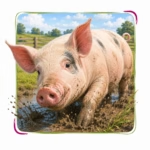
Hog Fact Highlight
From the full animal facts page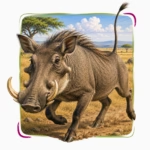
More Animal Comparisons
Pick another animal matchup and keep exploring. Compare appearances, habitats, diets, abilities, and surprising differences.




Make an Animal Story
Turn this pig vs hog comparison into a clever farmyard adventure with our free Animal Story Generator.
Source notes: References used for this comparison. See more See less
Try Another Matchup
Explore this comparison →