
Skate vs Stingray: Living Cartilaginous Fish Group Comparison
Skates and stingrays are close flattened relatives of sharks, and both can look like underwater kites. The most dependable classroom clue is reproduction: true skates lay tough horned egg cases on the seafloor, while typical stingrays retain embryos and give birth to live pups. A skate usually has a thicker tail with small fins near its tip and rows of ordinary thorns; a stingray more often has a slender or whip-like tail with a serrated venom-associated spine. These are broad group patterns, not a shortcut for every animal called a ray, because manta rays, electric rays, guitarfishes, and other batoids are not all stingrays.
About Skate
- Type Cartilaginous Fish
- Diet Bottom-feeding carnivore eating worms, shrimps, crabs, amphipods, clams, snails, squid, and small fishes, using smell and electroreception to locate hidden prey
- Group True skates (Order Rajiformes, including Rajidae and allied skate families)
- Known for Flattened shark relatives with wing-like pectoral fins joined to the head, eyes and spiracles on top, mouth and five gill slits below, a generally thicker fleshier tail often carrying two small dorsal fins near its tip, and skin that is frequently rough with denticles, prickles, or rows of nonvenomous thorns
- Special skill Flexible cartilage skeleton, flattened disc, ventral mouth with crushing or gripping teeth, electroreceptors around the snout, spiracles that draw in cleaner water above sediment, rough skin and tail thorns in many species, and leathery horned egg cases commonly called mermaid’s purses
About Stingray
- Type Cartilaginous Fish
- Diet Bottom-feeding carnivore using smell and electroreception to find clams, worms, shrimp, crabs, snails, and fishes, then crushing or sucking prey with underside mouth and flattened teeth; diet varies with species
- Group Typical stingrays (several families within Myliobatiformes, including whiptail and round stingrays)
- Known for Flattened shark relatives with broad rounded or diamond-shaped pectoral discs, eyes and spiracles above, mouth and five gill slits below, generally smoother skin than a skate, and a tail that is often slender or whip-like and may carry one or more serrated defensive spines associated with venom
- Special skill Flexible cartilage skeleton, broad lifting disc, top-side spiracles, electroreceptors, crushing dental plates, sandy camouflage, live birth with embryos nourished first by yolk and in many species nutrient-rich uterine fluid, plus a serrated venom-associated tail spine in most typical stingrays
Skate vs Stingray: Quick Answer
A true skate lays leathery rectangular egg cases called mermaid’s purses and usually has rougher skin, nonvenomous thorns, and a thicker tail with small dorsal fins near its end. A typical stingray gives birth to live pups and usually has a smoother disc plus a slender tail bearing a serrated venom-associated defensive spine. Both are cartilaginous shark relatives with eyes and spiracles on top and mouth and gill slits underneath.
Where Do They Fit?
Follow the branches to see how Skate and Stingray are classified and related.
Skate vs Stingray: Quick Comparison
| Feature | Skate | Stingray |
|---|---|---|
| Main group | True skates in order Rajiformes | Several typical stingray families within Myliobatiformes |
| Skeleton | Flexible cartilage, not bone | Flexible cartilage, not bone |
| Body | Flattened disc, often more angular with a pointed snout | Flattened rounded or diamond-shaped disc, varying by family |
| Tail | Usually thicker and fleshier, often with two small dorsal fins near the tip | Often slender or whip-like, usually without skate-like paired dorsal fins at the tip |
| Surface | Often rough with denticles, prickles, or rows of thorns | Often smoother, though some species carry denticles or tubercles |
| Defensive spine | No venomous sting; ordinary thorns can still injure | Most typical species carry one or more serrated venom-associated tail spines |
| Reproduction | Lays leathery horned egg cases on the bottom | Retains embryos and gives birth to live pups |
| Breathing on bottom | Draws water through spiracles behind the eyes | Draws water through spiracles behind the eyes |
| Food | Worms, crustaceans, mollusks, squid, and fish | Crustaceans, mollusks, worms, and fish, varying by species |
| Safety clue | Do not touch; thorns and powerful movement can injure | Do not touch or corner; shuffle feet in suitable shallow-water stingray habitat |
How Are Skates and Stingrays Alike?
- Both are batoids, a flattened branch of cartilaginous fishes closely related to sharks.
- Both have enlarged pectoral fins forming a disc, eyes and spiracles on top, and the mouth plus five pairs of gill slits underneath.
- Both sense the weak electrical fields of hidden animals through ampullae of Lorenzini around the head and snout.
- Many rest or bury in seafloor sediment, match sandy or muddy colors, and eat bottom-dwelling invertebrates and fishes.
- Both grow slowly or produce relatively few young in many species, making some populations vulnerable to fishing and habitat damage.
How Are Skates and Stingrays Different?
- True skates lay embryos inside tough leathery egg cases; typical stingrays give birth to live pups.
- A skate tail is generally thicker and often ends with two small dorsal fins; a stingray tail is commonly slender or whip-like.
- Skates lack a venomous stinger but often carry rough rows of nonvenomous thorns; most typical stingrays have a serrated venom-associated tail spine.
- Skate skin is often rougher with prominent denticles or prickles; many stingrays feel smoother, although exceptions occur.
- Skates are entirely marine and are especially diverse in temperate, cold, and deep seas; stingrays include many warm coastal species plus a few fully freshwater lineages.
- New skate young hatch from seafloor capsules; stingray pups are born as miniature free-swimming versions of the adults.
Skate vs Stingray Adaptation Showdown
Seafloor adaptation showdown: Stingray wins group-level size and muscular power because giant freshwater and short-tail stingrays outweigh even very large skates, while the serrated tail spine supplies a formidable last-resort defense. Speed, camouflage, social behavior, and swimming are ties because both groups include slow bottom-resters and capable fin-driven swimmers with varied habits. Skate wins weirdest adaptation for the horned mermaid’s purse, a nursery capsule that can spend months or even years developing on the seabed. These categories compare adaptations, not combat.
Fun Skate vs Stingray Facts
Both Are Flattened Shark Relatives
A skate or stingray has no bony skeleton. Its support comes from cartilage, the same flexible tissue found in a human outer ear. Greatly enlarged pectoral fins join the sides of the head to form a disc, while the mouth and five pairs of gill openings face downward.
A Mermaid’s Purse Belongs to a Skate
True skates enclose embryos in tough protein-rich capsules with horns or tendrils. The case rests or anchors on the seabed while water passes through tiny openings, supplying oxygen. A fully shaped young skate eventually emerges; an empty weathered case may later wash onto a beach.
A Stingray Pup Develops Inside Its Mother
Stingrays are live-bearing. Embryos begin with yolk, and in many species the uterus later supplies nutrient-rich fluid called histotroph through specialized extensions. When born, the pups look like small folded versions of adults and their defensive spine is soft or safely positioned during birth.
Thorns Are Not the Same as a Stinger
A skate may have rows of sharp rose-like thorns on the back and tail, but these are not venomous stings. Most typical stingrays carry one or more flattened serrated tail spines with venom-producing tissue. The spine is defense, not a hunting harpoon, and the animal usually tries to escape.
They Can Find Prey Without Seeing It
Tiny gel-filled pores called ampullae of Lorenzini detect electrical fields produced by muscles and nerves. With eyes on top but a mouth underneath, a buried skate or stingray can still locate a clam, shrimp, worm, or fish hidden in sediment, then uncover or crush it.
Skate vs Stingray Quiz
- Which animal lays a mermaid’s purse? Answer: The skate.
- Which animal usually has a venom-associated tail spine? Answer: The stingray.
- What is the skeleton of both animals made from? Answer: Cartilage.
- What openings let them draw water while resting on the bottom? Answer: Spiracles behind the eyes.
- How do their babies arrive differently? Answer: A skate hatches from an egg case, while a stingray is born alive.
Skate vs Stingray FAQ
Is a skate a stingray?
No. Both are batoid shark relatives, but true skates and typical stingrays occupy different branches and use different reproductive strategies.
How can children tell a skate from a stingray?
Look for several clues together. Skates tend to have rougher thorny skin and a thicker tail with small fins near its tip. Typical stingrays tend to have smoother discs and a slender tail with a defensive spine. Reproduction is the clearest scientific difference: egg case versus live birth.
Can a skate sting?
A true skate has no venomous sting. Its thorns and rough skin can still scratch or puncture, so never handle one.
Do stingrays attack people?
Stingrays are not hunting humans. Injuries usually occur when a hidden animal is stepped on, cornered, or handled. Follow local beach advice, shuffle rather than stamp through suitable shallow habitat, and never touch the tail.
Is every ray a stingray?
No. “Ray” is a broad term that also covers skates, manta and devil rays, electric rays, guitarfishes, sawfishes, and other batoids. This page compares true skates with typical stingrays, not every ray-shaped fish.
Animal Words to Know
- Cartilage: Tough flexible support tissue that forms the skeleton of sharks, skates, and rays.
- Batoid: A member of the flattened shark-relative group containing skates, rays, sawfishes, and guitarfishes.
- Spiracle: An opening behind the eye that draws water toward the gills while the animal rests on the bottom.
- Mermaid’s purse: The tough horned egg case laid by a skate and some sharks.
- Electroreception: The ability to detect weak electrical fields made by living things.
Skate and Stingray Seafloor Activity
Skate and Stingray Seafloor Activity
Draw a skate and a typical stingray resting on sand. Give the skate a thicker tail with small fins and thorny skin, then add its rectangular egg case. Give the stingray a slender whip-like tail with a clearly marked defensive spine and a pup nearby. Note that these are common differences, not rules for every species. Label cartilage, gill slits, egg case, live birth, thorn, spine, and camouflage.
Meet Each Animal
Want the full fact file? Here are quick highlights from each animal’s own facts page.
Skate Fact Highlight
From the full animal facts page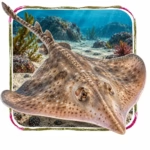
Stingray Fact Highlight
From the full animal facts page
More Animal Comparisons
Pick another animal matchup and keep exploring. Compare appearances, habitats, diets, abilities, and surprising differences.






Make an Animal Story
Turn this skate vs stingray comparison into a mermaid’s-purse seafloor mystery with our free Animal Story Generator.
Source notes: References used for this comparison. See more See less
Try Another Matchup
Explore this comparison →