
Wasp vs Yellow Jacket: Wasp Group-to-Social-Wasp Subgroup Comparison
A yellowjacket is already a wasp, so this is a broad-group comparison rather than two separate branches. To make the visual clues useful, the wasp side uses a northern paper wasp: typically longer-legged and more slender, with a small exposed umbrella comb and a modest annual colony. The eastern yellowjacket is typically shorter and more compact, with a much larger colony and stacked paper combs hidden inside an envelope, often underground. Both chew wood into paper, hunt prey for larvae, drink sugary liquids as adults, and can sting repeatedly if female. Their common names, colors, sizes, and nest sites vary, so safe distance matters more than instant identification.
About Wasp
- Type Insect
- Diet Adults drink nectar, fruit juice, honeydew, and other sugars; females hunt mainly soft-bodied insects such as caterpillars, chew prey, and feed the protein to larvae, which may return sugary secretions to adults
- Group Wasp, represented here by a northern paper wasp (Polistes fuscatus) so the familiar comparison is measurable; wasp is a much broader everyday group that includes yellowjackets
- Known for A long, slender social wasp commonly around 15–21 millimeters long, with a very narrow waist, long legs that trail during flight, two pairs of wings folded lengthwise at rest, and highly variable brown, red, black, and yellow facial or body markings across its range; females and males also differ
- Special skill Long legs for landing and handling prey, flexible flight, caterpillar hunting, wood-pulp paper making, open umbrella-shaped comb, chemical nest recognition, and—in northern populations of Polistes fuscatus—learning the individually variable facial patterns of other wasps
About Yellow Jacket
- Type Insect
- Diet Adults use nectar, fruit juice, honeydew, and other sugars; workers hunt insects and spiders or gather carrion and other animal protein for larvae, while some species become conspicuous scavengers around outdoor food and sweet drinks late in the season
- Group Yellow jacket, represented here by the eastern yellowjacket (Vespula maculifrons); every yellowjacket is a wasp, usually in the social-wasp genera Vespula or Dolichovespula
- Known for A shorter, more compact social wasp with a hard shiny body, crisp black-and-yellow markings, short-looking legs in flight, a sharply narrowed waist, and workers commonly about 9–13 millimeters long; queens are larger, and patterns differ among species and castes
- Special skill Compact armored body, strong jaws, fast traffic through a hidden entrance, alarm pheromones, coordinated defense, repeated female sting, opportunistic hunting and scavenging, and stacked paper combs protected by a multilayered envelope
Wasp vs Yellow Jacket: Quick Answer
Every yellowjacket is a wasp, but most wasps are not yellowjackets. Compared with a familiar paper wasp, an eastern yellowjacket is usually shorter, more compact, more sharply black-and-yellow, and part of a much larger colony hidden in an enclosed paper nest. A paper wasp is usually longer-legged and slender, and its small umbrella-shaped comb is open underneath. Both are useful insect predators and both deserve space around a nest.
Where Do They Fit?
Follow the branches to see how Wasp and Yellow Jacket are classified and related.
Wasp vs Yellow Jacket: Quick Comparison
| Feature | Wasp (Northern Paper Wasp Representative) | Yellow Jacket (Eastern Yellowjacket Representative) |
|---|---|---|
| Main meaning | A vast everyday group, represented here by Polistes fuscatus | One social-wasp subgroup, represented by Vespula maculifrons |
| Taxonomy | Paper-wasp subfamily Polistinae within family Vespidae | Yellowjacket subfamily Vespinae within family Vespidae |
| Typical body | Long, slender, and commonly around 15–21 mm | Shorter, compact, shiny, and commonly about 9–13 mm as a worker |
| Flight clue | Long legs often dangle visibly below the body | Legs look more tucked against a compact body |
| Color clue | Variable brown, red, black, and yellow markings | Crisp black-and-yellow markings, varying by species and caste |
| Nest design | One exposed umbrella-like comb without a paper envelope | Several stacked combs wrapped in a multilayered paper envelope |
| Common nest site | Under an eave, branch, beam, rail, ledge, or other shelter | Usually underground or in a hidden cavity for the eastern representative |
| Typical colony scale | Often fewer than 100 adults and sometimes fewer than a dozen | Often hundreds to thousands of adults at seasonal peak |
| Food pattern | Adults take sugar; workers hunt many caterpillars for larvae | Adults take sugar; workers hunt and often scavenge protein for larvae |
| Sting and safety | Females can sting repeatedly when threatened | Females can sting repeatedly and strongly defend a disturbed nest |
How Are Wasps and Yellow Jackets Alike?
- A yellowjacket is a wasp, and both representatives belong to the social-wasp family Vespidae.
- Both have six legs, two antennae, two pairs of wings, a narrow waist, and complete metamorphosis through egg, larva, pupa, and adult.
- Both form annual colonies in temperate climates, with reproductive females, nonreproductive female workers, and males.
- Both scrape plant fibers, chew them with saliva, and build hexagonal brood cells from the resulting paper pulp.
- Adults of both drink sugary liquids, while workers capture animal prey for larvae; females of both can sting repeatedly in defense.
How Are Wasps and Yellow Jackets Different?
- Wasp is the huge parent category; yellowjacket names one smaller set of social wasps, usually in Vespula and Dolichovespula.
- The northern paper-wasp representative is longer and more slender with dangling legs, while the eastern yellowjacket is shorter, shinier, and more compact.
- Paper wasps build a small exposed comb with no outer envelope; eastern yellowjackets build multiple stacked combs inside a layered envelope.
- Paper-wasp nests commonly hang beneath open shelters, while eastern-yellowjacket nests are usually hidden underground or inside cavities.
- A paper-wasp colony often stays below 100 adults, while a yellowjacket colony may grow to hundreds or thousands.
- Both hunt insects, but some yellowjacket species are much more likely to scavenge meat, rubbish, sweet drinks, and picnic food late in the season.
Wasp vs Yellow Jacket Adaptation Showdown
Paper-wasp-and-yellowjacket showdown: The paper-wasp representative wins typical body length because Polistes is usually longer, though size ranges and castes overlap. Speed is a tie because dependable representative flight maxima are not directly comparable. Yellowjacket wins compact strength, stealth, and colony teamwork for its robust build, hidden entrance, enclosed nest, alarm response, and much larger workforce. Swimming is a tie because neither is aquatic. Wasp wins weirdest adaptation because some northern Polistes fuscatus populations learn individual nestmates from variable facial patterns. These categories compare adaptations, not combat, and “wasp” is the larger category containing yellowjackets.
Fun Wasp vs Yellow Jacket Facts
Every Yellow Jacket Is Already a Wasp
Yellowjackets belong to family Vespidae, which also contains paper wasps and true hornets. Wasp is the broad word; yellowjacket is a narrower common name usually applied to Vespula and Dolichovespula. The comparison is like “bird vs duck”: the second animal fits inside the first group.
An Open Umbrella and a Hidden Paper Fortress
A Polistes paper-wasp nest is usually one open comb suspended from a narrow stalk, with uncovered cells facing downward. An eastern-yellowjacket nest places several rounded combs in tiers and wraps them in a paper envelope, usually inside soil or another cavity. Both papers begin as plant fibers chewed with saliva.
Long Landing Gear vs a Compact Flight Body
Paper wasps have long legs that often trail visibly as they fly and help them land on exposed comb. Yellowjackets have a shorter, stockier outline, and their legs look more tucked in flight. Color alone can mislead because European paper wasps and several other species can be strongly black-and-yellow.
The Adults Order Sugar and the Nursery Orders Protein
Adult paper wasps and yellowjackets fuel flight with nectar, fruit juices, honeydew, and other sugars. Workers capture caterpillars, flies, spiders, or other animal food, chew it, and deliver protein to larvae. Some larvae give adults sweet nutrient-rich droplets in return, linking two very different diets inside one colony.
Some Northern Paper Wasps Learn Individual Faces
Northern populations of Polistes fuscatus can learn the variable black-and-yellow facial patterns of nestmates and use individual recognition in social interactions. Southern populations with more uniform faces perform differently, so this is a fascinating population-linked ability—not proof that every paper wasp or every wasp recognizes faces.
Wasp vs Yellow Jacket Quiz
- Is a yellowjacket a kind of wasp? Answer: Yes.
- Which representative builds a small exposed umbrella-shaped comb? Answer: The paper wasp.
- Which representative usually hides several enclosed combs underground or in a cavity? Answer: The eastern yellowjacket.
- What do both groups feed their larvae? Answer: Chewed insects or other animal protein.
- Can children safely identify a nest by moving close to it? Answer: No. Stay back, leave the insects undisturbed, and tell an adult.
Wasp vs Yellow Jacket FAQ
What is the main difference between a wasp and a yellowjacket?
Wasp is the broad category, while yellowjacket is one type of social wasp. For a useful visual contrast, a paper wasp is usually slender and long-legged with an exposed comb; an eastern yellowjacket is compact and lives in a larger enclosed nest, often underground.
Are paper wasps yellowjackets?
No. Paper wasps such as Polistes belong to subfamily Polistinae, while familiar yellowjackets belong to subfamily Vespinae, usually genera Vespula or Dolichovespula. Both remain members of family Vespidae.
Do yellowjackets always nest underground?
No. Many Vespula species use soil or cavities, while many Dolichovespula species build aerial nests. The eastern yellowjacket representative usually nests underground, but even it may use buildings or other cavities.
Which colony is larger?
An eastern-yellowjacket colony usually becomes far larger, often reaching hundreds or thousands of adults. A Polistes paper-wasp nest commonly holds fewer than 100 and may hold fewer than a dozen.
Are paper wasps and yellowjackets dangerous?
Both are beneficial predators, and foragers away from a nest usually prefer to avoid people. Females can sting repeatedly, and a disturbed social nest can trigger defense. Give nests space, cover food and drinks outdoors, and seek urgent help for breathing difficulty or other severe allergic symptoms after a sting.
Animal Words to Know
- Vespidae: The social-and-solitary wasp family containing paper wasps, yellowjackets, and true hornets.
- Polistes: A widespread genus of long-legged paper wasps with exposed umbrella-like combs.
- Vespula: A genus containing many compact yellowjackets that nest in soil or cavities.
- Nest envelope: Protective paper layers wrapped around the brood combs of a yellowjacket nest.
- Foundress: A reproductive female that begins a new social-wasp nest.
Paper Wasp and Yellowjacket Nest Activity
Paper Wasp and Yellowjacket Nest Activity
Draw a northern paper wasp beside one open umbrella-shaped comb hanging beneath a roof edge. Draw an eastern yellowjacket beside a small ground entrance and a cutaway of several combs enclosed in a paper envelope. Label wasp family, open comb, enclosed nest, queen, worker, larva, and wood fiber. Never collect, block, or approach a real nest.
Meet Each Animal
Want the full fact file? Here are quick highlights from each animal’s own facts page.
Wasp Fact Highlight
From the full animal facts page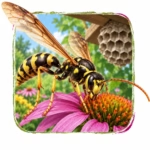
Yellow Jacket Fact Highlight
From the full animal facts page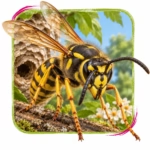
More Animal Comparisons
Pick another animal matchup and keep exploring. Compare appearances, habitats, diets, abilities, and surprising differences.


Make an Animal Story
Turn this wasp vs yellow jacket comparison into an open-and-hidden paper-nest mystery with our free Animal Story Generator.
Source notes: References used for this comparison. See more See less
Try Another Matchup
Explore this comparison →