
Mugger Crocodile Facts for Kids
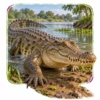
The mugger crocodile is a broad-snouted reptile of southern Asia. Its scientific name is Crocodylus palustris, and it is also called the marsh crocodile. Muggers are powerful freshwater predators, attentive parents, and surprisingly capable travelers on land—but they must always be observed from a safe distance.
Quick Mugger Crocodile Facts
- Scientific name: Crocodylus palustris
- Animal group: Reptile; crocodilian
- Range: Southern Iran, Pakistan, India, Nepal, and Sri Lanka
- Habitat: Rivers, lakes, marshes, reservoirs, canals, and ponds
- Diet: Fish, crustaceans, frogs, reptiles, birds, and mammals
- Length: Adults are often about 2.5–3.5 m (8–11.5 ft); exceptional animals can be larger
- Young: Hatchlings
- Other name: Marsh crocodile
- Conservation status: Vulnerable
What You’ll Learn
Discover 10 powerful mugger crocodile facts for kids about broad snouts, strong jaws, swimming, hunting, and southern Asian wetlands, with a quiz, glossary, and activity
These easy facts are written for children, parents, teachers, and curious little fact-finders.
10 Fun Mugger Crocodile Facts for Kids
1. The Broadest Crocodile Snout
Mugger crocodiles have especially broad, heavy snouts—broader in proportion than those of other living crocodiles. The shape can look somewhat alligator-like, but the mugger is a true crocodile in the genus Crocodylus. Its strong jaws hold many conical teeth for gripping prey.
Kid Decode: A broad snout does not turn this crocodile into an alligator.
2. A Name From South Asia
The animal name mugger comes from Hindi and Urdu magar, which traces back to an ancient Sanskrit word connected with a water creature. It was used for the crocodile before the English word for a robber gained its modern meaning. Marsh crocodile is another clear common name.
Kid Decode: The crocodile was called a mugger long before the word became famous for a street robber.
3. Mostly a Freshwater Crocodile
Muggers favor slow rivers, lakes, marshes, and shallow ponds. They can also live in human-made reservoirs and irrigation canals. Compared with the saltwater crocodile, they are much more strongly associated with inland freshwater habitats.
Kid Decode: A farm reservoir can become mugger habitat if it offers water, basking banks, and prey.
4. Sunshine Controls Body Heat
Like other reptiles, a mugger relies on its surroundings to manage body temperature. It basks on a bank to warm up, then enters water or shade to cool down. It may hold its mouth open while basking, allowing evaporation to release heat without meaning it is yawning.
Kid Decode: An open crocodile mouth can work like a cooling vent.
5. Burrows Beat Extreme Weather
Muggers dig or enlarge tunnels in banks and use them as shelters during very hot, cold, or dry conditions. The chamber inside stays more stable than the outside air. This behavior helps the crocodiles survive seasonal wetlands and harsh temperatures.
Kid Decode: A mugger’s riverside burrow is a natural temperature-controlled hideout.
6. They Can Walk Between Wetlands
A powerful tail drives a mugger through water, while sturdy legs support several kinds of movement on land. During dry periods, individuals may travel at night in search of another water body. Roads and railways make these journeys dangerous.
Kid Decode: A crocodile seen far from water may be traveling, not lost—people should stay far away and call wildlife authorities.
7. A Changing Menu With Age
Hatchlings begin with small prey such as insects, crustaceans, and frogs. Larger muggers can capture fish, turtles, snakes, birds, and mammals. They are opportunistic hunters, choosing available prey rather than depending on one meal.
Kid Decode: As a mugger grows, its menu grows too.
8. Eggs Buried on Land
A female digs a hole nest in sand or soil during the dry season and lays several dozen eggs. Nest temperature influences whether embryos develop as males or females. The mother guards the area and listens for calls when hatching time approaches.
Kid Decode: A baby crocodile can call from inside its egg to announce that it is ready.
9. Parents Carry Tiny Hatchlings
The mother may uncover the nest and gently lift hatchlings in her jaws to move them toward water. Adults can remain near and protect young after hatching. Those same jaws are powerful weapons when hunting, showing how carefully crocodiles can control them.
Kid Decode: A crocodile mouth can grip prey forcefully yet transport a hatchling with remarkable care.
10. A Vulnerable Wetland Predator
The mugger is classified as Vulnerable and is listed in CITES Appendix I. Wetland loss, fishing-net entanglement, road collisions, illegal killing, and conflict near shared water sources threaten populations. Protected wetlands and safe community responses help both people and crocodiles.
Kid Decode: Saving a marsh crocodile also protects the freshwater neighborhood used by fish, birds, turtles, and people.
A Crocodile With an Underground Room
Muggers do something many people never expect from a crocodile: they shelter in bank burrows with an entrance tunnel and a chamber large enough to turn around. The more stable underground temperature helps them wait out extreme conditions.
Try This Mugger Crocodile Activity
Build a Crocodile Cooling Model
You will need: two identical dark stones, two shallow trays, water, and a timer. Work with an adult.
- Place both stones in gentle sunlight for ten minutes.
- Move one stone into a shaded dry tray and the other into shallow water.
- After five minutes, carefully compare their temperatures by touch.
- Explain why a crocodile alternates among sun, shade, water, and burrows.
- Draw a wetland map labeling a basking bank, cooling pool, burrow, and protected nest.
Safety: Never perform this activity near wild crocodile habitat.
Quick Mugger Crocodile Quiz
- What is another name for the mugger crocodile?
A. Marsh crocodile
B. Ice crocodile
C. Tree crocodile
Answer: A - What shape is its snout?
A. Especially broad
B. Needle-thin
C. Beak-shaped
Answer: A - Why might it use a burrow?
A. To escape extreme conditions
B. To grow feathers
C. To store books
Answer: A - What affects hatchling sex?
A. Nest temperature
B. Moon color
C. Water taste
Answer: A - What is its global conservation status?
A. Vulnerable
B. Extinct
C. Domesticated
Answer: A
Mini Glossary
- Basking
- Resting in warmth, often sunlight, to raise body temperature.
- CITES
- An international agreement regulating trade in wild animals and plants.
- Crocodilian
- A member of the reptile group containing crocodiles, alligators, caimans, and gharials.
- Hatchling
- A young animal newly emerged from an egg.
- Vulnerable
- An IUCN category meaning a species faces a high risk of extinction in the wild.
 Buffalo Facts for Kids
 Skunk Facts for Kids
 King Penguin Facts for Kids
 Corythosaurus Facts for Kids
More Animal Facts for Kids
Visit the full animal facts library or explore a focused animal group.
More Extinct Animal Facts for Kids
Discover dinosaurs, Ice Age giants, prehistoric sea creatures, recently extinct species, and other animals from the past.
Fact check note: Fact-checked against the IUCN-SSC Crocodile Specialist Group species account and IUCN Red List assessment for Crocodylus palustris (range, ecology, threats, and Vulnerable status), CITES Appendix listings, and peer-reviewed mugger studies covering burrows, terrestrial movement, nesting, and parental care. Accessed July 2026.

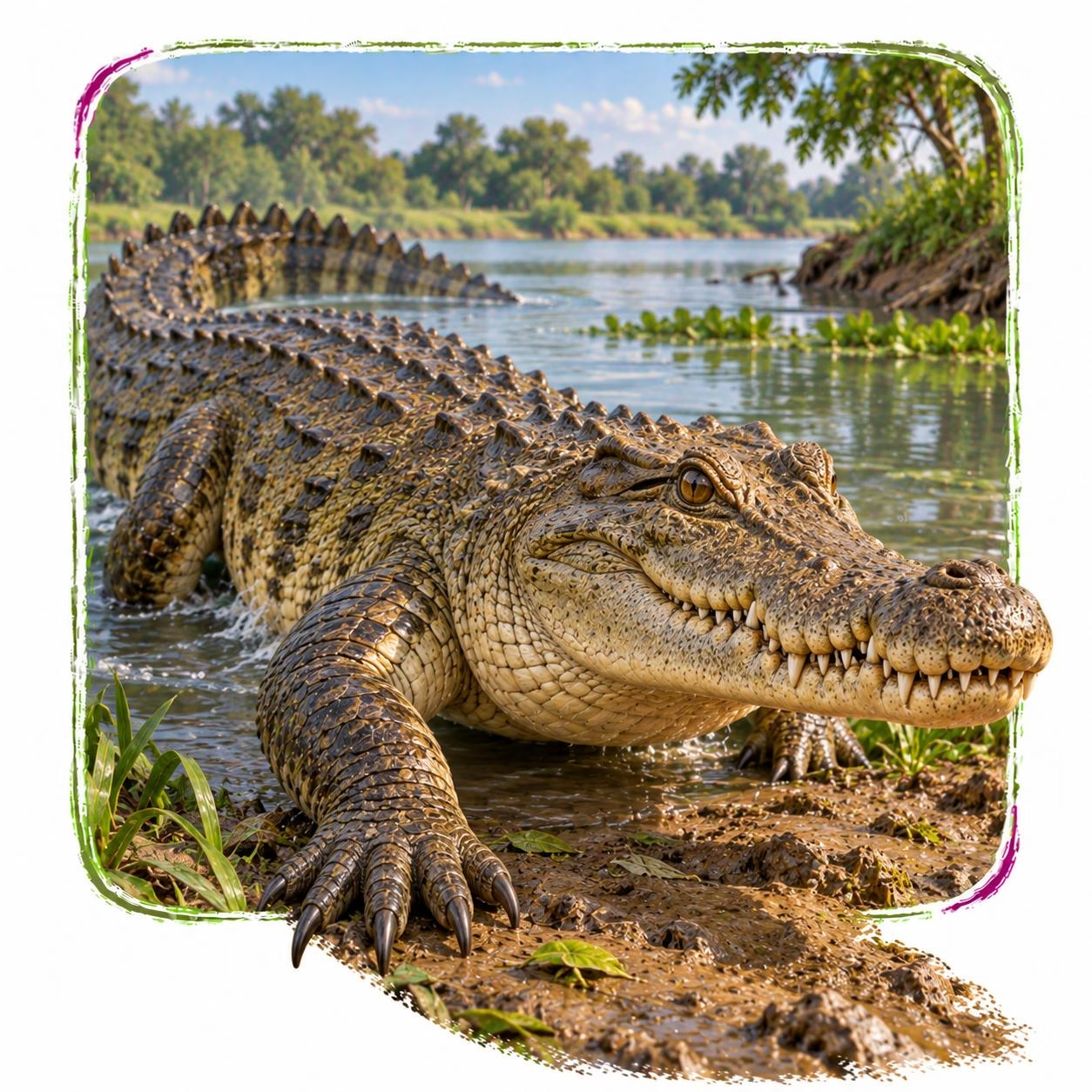
Mugger Crocodile in its natural Freshwater rivers, lakes, marshes, reservoirs, canals, and ponds habitat