
Red Fox Facts for Kids
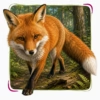
Red foxes are clever wild members of the dog family with reddish fur, pointed ears, narrow faces, and bushy white-tipped tails. They can live in forests, farmlands, grasslands, suburbs, and even some cities.
Quick Red Fox Facts
- Animal Type: Mammal
- Group: Dog family
- Known For: Bushy tail and clever hunting
- Habitat: Forests, farms, grasslands, suburbs, and cities
- Diet: Small mammals, birds, eggs, fruit, insects, and other foods
What You’ll Learn
Discover 10 fascinating red fox facts for kids about bushy tails, sharp hearing, hunting, dens, and clever behavior, plus a quiz, glossary, and red fox activity
These facts are easy for kids, families, teachers, and curious young learners to understand.
10 Fun Red Fox Facts for Kids
1. Red Foxes Belong to the Dog Family
Red foxes are canids, which means they are related to dogs, wolves, coyotes, and jackals.
Kid Decode: A red fox is a wild cousin in the dog family.
2. Red Foxes Have Bushy White-Tipped Tails
Many red foxes have long, bushy tails with a white tip. The tail helps with balance and warmth.
Kid Decode: A fox tail is a fluffy scarf with steering powers.
3. Red Foxes Live in Many Places
Red foxes can live in forests, grasslands, farms, mountains, suburbs, and cities. They are very adaptable animals.
Kid Decode: Red foxes can make many neighborhoods work.
4. Red Foxes Often Hunt Alone
Red foxes usually hunt by themselves. They use patience, quiet movement, and sharp senses to catch food.
Kid Decode: A fox is a solo snack detective.
5. Red Foxes Have Great Hearing
Red foxes can hear tiny movements made by small animals. Their large ears help them locate prey hidden in grass or snow.
Kid Decode: Fox ears are little satellite dishes for mouse sounds.
6. Red Foxes Eat Many Foods
Red foxes eat mice, voles, rabbits, birds, eggs, insects, fruit, and other available food.
Kid Decode: A red fox menu changes with the season.
7. Baby Foxes Are Called Kits
Baby foxes are called kits, pups, or cubs. They are born in dens and stay near their parents while they grow.
Kid Decode: A fox kit is a tiny orange explorer.
8. Red Foxes Use Dens
Red foxes may use underground dens for raising young, resting, or staying safe. Dens can be dug or borrowed from other animals.
Kid Decode: A fox den is a secret underground nursery.
9. Red Foxes Communicate With Sounds and Body Language
Foxes use barks, screams, whines, tail signals, ear positions, and scent marks to communicate.
Kid Decode: Foxes have a whole woodland message system.
10. Red Foxes Can Live Near People
Red foxes adapt well to human places and can be found in some towns, suburbs, and cities.
Kid Decode: Some foxes trade deep forest paths for backyard edges.
The Weirdest Red Fox Fact
Red foxes can leap into the air and pounce down through snow or grass when hunting small animals.
Try This Red Fox Activity
Red Fox Drawing Activity
Draw a red fox standing near a forest den. Add pointed ears, a white-tipped tail, orange fur, grass, trees, and a tiny kit peeking out.
Quick Red Fox Quiz
- What animal family do red foxes belong to? Answer: The dog family.
- What are baby foxes often called? Answer: Kits, pups, or cubs.
- What helps foxes hear tiny prey? Answer: Their large ears and sharp hearing.
- Do red foxes usually hunt alone? Answer: Yes.
- What is a fox home or nursery often called? Answer: A den.
Mini Glossary
- Canid: A member of the dog family.
- Kit: A baby fox.
- Den: An underground animal home or shelter.
- Prey: An animal hunted for food.
- Adaptable: Able to live in different places or conditions.

 Harpy Eagle Facts for Kids
 Aardvark Facts for Kids
 Scallop Facts for Kids
 Diplocaulus Facts for Kids
More Animal Facts for Kids
Visit the full animal facts library or explore a focused animal group.
More Extinct Animal Facts for Kids
Discover dinosaurs, Ice Age giants, prehistoric sea creatures, recently extinct species, and other animals from the past.
Fact check note: Fact checked with Britannica Kids fox resources, Britannica Kids red fox resources, National Geographic Kids red fox resources, and trusted wildlife education references.

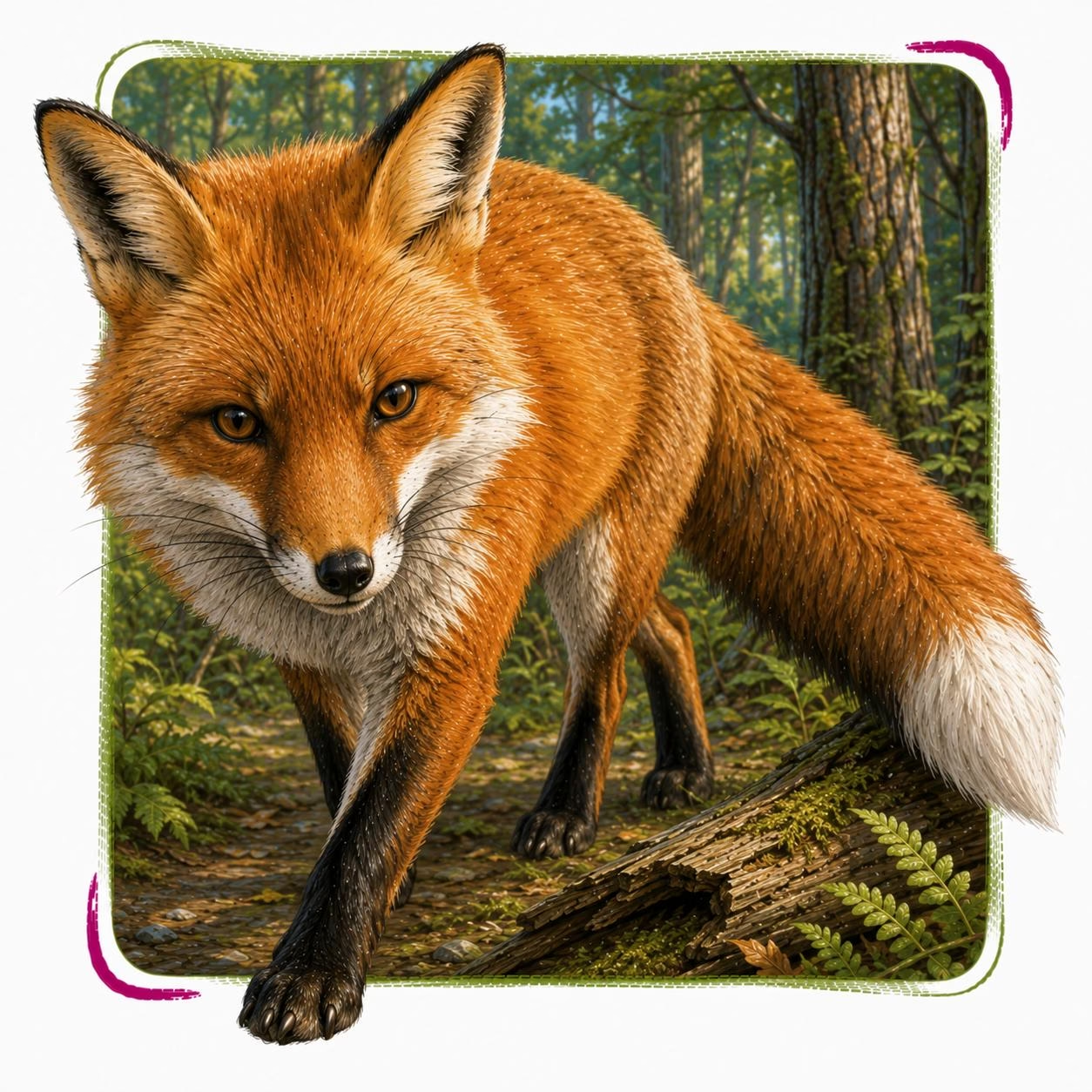
Red Fox in its natural Forests habitat