
Anteosaurus Facts for Kids
Anteosaurus was a giant carnivorous dinocephalian therapsid that lived in what is now South Africa during the Middle Permian. It was not a dinosaur or a crocodile. Its enormous skull carried large incisors, saber-like canines, thickened bony bosses, and powerful jaw muscles, while inner-ear evidence suggests that it was a surprisingly agile terrestrial predator.
Quick Anteosaurus Facts
- Animal Type: Extinct predatory therapsid
- Group: Anteosaurid dinocephalian
- Known For: Huge skull, giant canines, thickened skull bosses, agile hunting, and top-predator role
- Lived During: Middle Permian, about 264–260 million years ago
- Diet: Large herbivorous therapsids and other terrestrial prey
What You’ll Learn
Learn 10 powerful anteosaurus facts for kids about its giant skull, strong jaws, massive body, and life in the Permian, with a quiz, glossary, and activity
These facts are kept simple for kids, parents, teachers, and curious young minds.
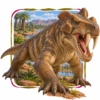
10 Fun Anteosaurus Facts for Kids
1. Anteosaurus Was a Dinocephalian
Anteosaurus belonged to Dinocephalia, an early therapsid group containing both giant predators and bulky herbivores.
Kid Decode: It joined the mammal-line family tree wearing one of its largest predator skulls.
2. It Was Not a Dinosaur
Anteosaurus lived long before dinosaurs and belonged to a separate synapsid branch closer to mammals.
Kid Decode: The dinosaur age had not begun, but the giant-land-predator job was already occupied.
3. It Lived in South Africa
Its fossils come from the Tapinocephalus Assemblage Zone of the Karoo Basin in South Africa.
Kid Decode: Its hunting ground became a stone archive packed with Middle Permian giants.
4. Its Skull Reached About Eighty Centimetres
The largest known Anteosaurus skulls approached roughly 80 centimetres in length.
Kid Decode: Its head alone stretched almost as long as a dining table is wide.
5. It Had Huge Canine Teeth
Large upper canines and strong incisors helped it seize, stab, and tear flesh from substantial prey.
Kid Decode: Its mouth arrived with a full set of heavyweight predator equipment.
6. Its Skull Had Thickened Bosses
Parts of the skull roof and the bones behind the eyes formed thickened bosses that may have strengthened the head or played roles in display and combat.
Kid Decode: The skull carried built-in bumps that looked ready for rough social negotiations.
7. It Was Probably Agile
CT studies of the inner ear and braincase suggest that Anteosaurus held its head forward and was more agile than older sluggish reconstructions implied.
Kid Decode: This giant predator received a speed upgrade when scientists looked inside its skull.
8. It Was a Terrestrial Hunter
Modern research reconstructs Anteosaurus as a land-based predator rather than the slow semi-aquatic animal shown in some older artwork.
Kid Decode: It belonged on the floodplain, not parked permanently like a crocodile in a swamp.
9. One Model Weighed It Near Four Hundred Kilograms
A 2024 three-dimensional reconstruction estimated roughly 403 to 424 kilograms for one Anteosaurus specimen.
Kid Decode: It carried several grand pianos’ worth of predator mass without reaching fantasy-monster weight.
10. Its Name May Honor a Mythical Giant
Anteosaurus is commonly interpreted as referring to Antaeus, the giant wrestler defeated by Heracles, although the original naming explanation was not recorded.
Kid Decode: The name suits a predator that looked ready for a Permian wrestling final.
The Weirdest Anteosaurus Fact
Inner-ear evidence suggests that this massive skull-bearing predator was agile and held its head in a forward hunting position rather than lumbering slowly.
Try This Anteosaurus Activity
Anteosaurus Drawing Activity
Draw Anteosaurus hunting across a Middle Permian South African floodplain. Add a giant deep skull, large incisors and canines, thickened skull bosses, powerful neck, strong limbs, a long tail, bulky herbivore prey, dry river channels, and an inner-ear balance diagram.
Quick Anteosaurus Quiz
- Was Anteosaurus a dinosaur? Answer: No, it was a dinocephalian therapsid.
- Where did it live? Answer: South Africa.
- How long could its skull grow? Answer: About 80 centimetres.
- What did its inner ear suggest? Answer: That it was an agile terrestrial predator.
- How much did one recent model estimate it weighed? Answer: Roughly 403 to 424 kilograms.
Mini Glossary
- Dinocephalian: A member of an early therapsid group whose name means terrible head.
- Anteosaurid: A family of large predatory dinocephalians.
- Pachyostosis: Unusual thickening and increased density of bone.
- Bony Labyrinth: The hard inner-ear structure that helps with balance and head movement.
- Tapinocephalus Assemblage Zone: A Middle Permian fossil interval in South Africa containing many therapsids.
 Squid Facts for Kids
 Ladybug Facts for Kids
 Mussel Facts for Kids
 Basilosaurus Facts for Kids
More Animal Facts for Kids
Visit the full animal facts library or explore a focused animal group.
More Extinct Animal Facts for Kids
Discover dinosaurs, Ice Age giants, prehistoric sea creatures, recently extinct species, and other animals from the past.
Fact check note: Fact checked with Benoit and colleagues’ 2021 palaeoneurology study, Benoit and Midzuk’s 2024 three-dimensional mass estimate, Kruger and colleagues’ Anteosaurus growth research, and South African Tapinocephalus-zone records.

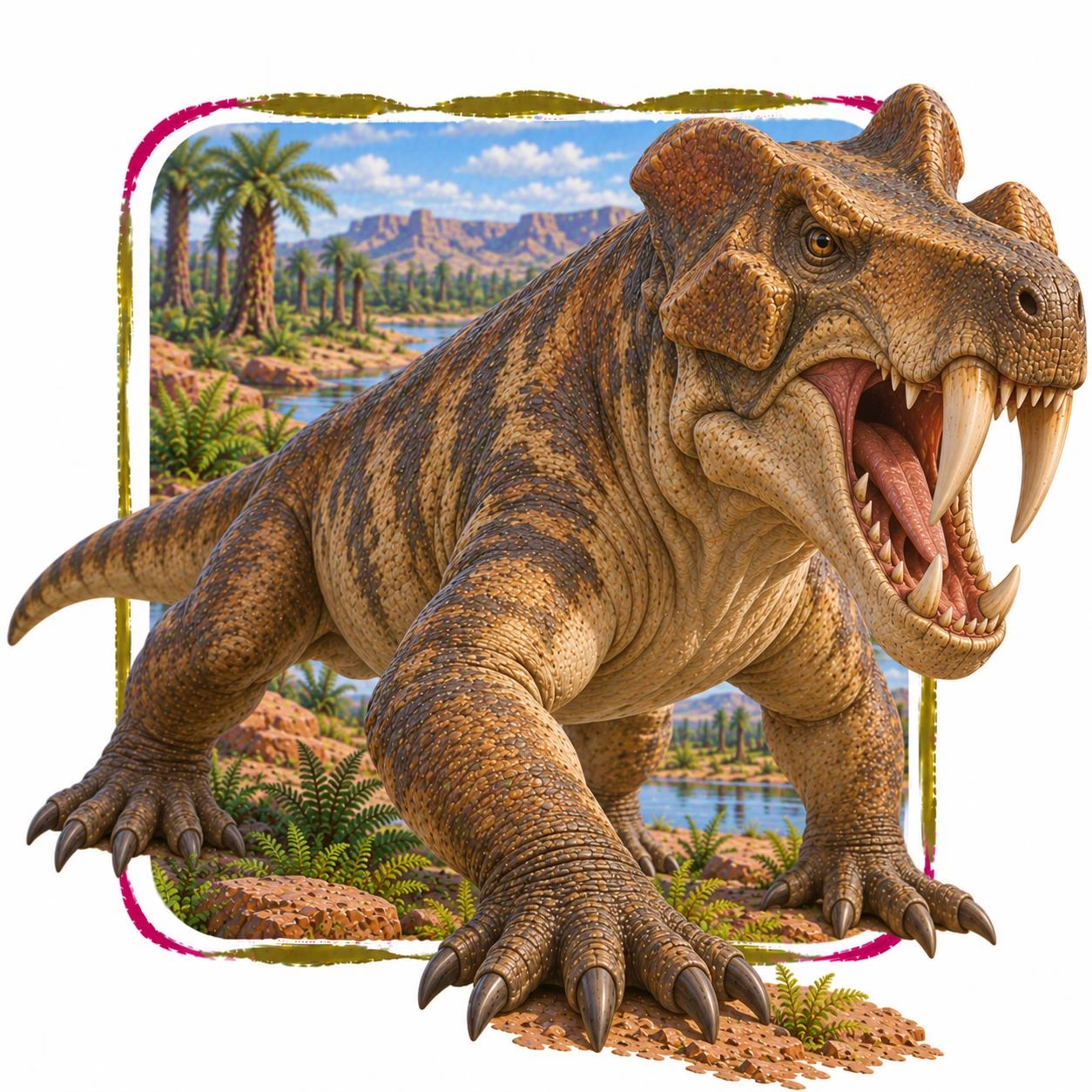
Anteosaurus in its natural Middle Permian river floodplains, seasonal wetlands, dry lowlands, wooded plains, and terrestrial habitats of the South African Karoo habitat