
Cretoxyrhina Facts for Kids
Cretoxyrhina was a large predatory shark that hunted in Late Cretaceous seas while mosasaurs, plesiosaurs, and giant fish shared the water. It was not a dinosaur. The best-known species, Cretoxyrhina mantelli, commonly grew around 5 to 6 metres long, while some specimens may have been larger. Its broad, sharp teeth earned it the informal nickname Ginsu shark.
Quick Cretoxyrhina Facts
- Animal Type: Extinct shark
- Group: Large lamniform shark
- Known For: Broad slicing teeth, Ginsu shark nickname, giant body, fast-swimming shape, unusually complete fossil skeletons, and top-predator role
- Lived During: Late Cretaceous, roughly 107–73 million years ago
- Diet: Large fish, marine reptiles, turtles, other sharks, and carrion
What You’ll Learn
Learn 10 giant cretoxyrhina facts for kids about sharp teeth, fast swimming, powerful jaws, hunting, and Cretaceous seas, plus a quiz, glossary, and activity
These simple facts are written for kids, parents, teachers, and curious young minds.
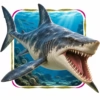
10 Fun Cretoxyrhina Facts for Kids
1. Cretoxyrhina Was a Shark
Cretoxyrhina was a cartilaginous fish in the lamniform shark group, not a dinosaur, marine reptile, or mammal.
Kid Decode: It brought shark hardware into seas crowded with giant reptiles.
2. It Rivalled Great White Sharks in Size
Well-studied adults reached about 5 to 6.5 metres long, while larger estimates based on isolated fossils remain less certain.
Kid Decode: A large one could stretch longer than a family car with room left for several bicycles.
3. Its Teeth Were Built for Slicing
Broad triangular teeth had extremely sharp cutting edges and generally lacked the coarse serrations seen on a modern great white shark.
Kid Decode: The teeth relied on smooth razor edges rather than tiny saw teeth.
4. It Is Nicknamed the Ginsu Shark
Paleontologists informally call Cretoxyrhina the Ginsu shark because its tooth row formed a formidable slicing toolkit.
Kid Decode: The nickname sounds like kitchen equipment, but the shark supplied its own fins.
5. It Hunted Large Prey
Tooth marks, damaged bones, and fossils found with prey remains show that Cretoxyrhina fed on large fish and marine reptiles, although some meals may have been scavenged.
Kid Decode: Its dinner list included animals that could look frightening on somebody else’s page.
6. It Swam Through the Western Interior Seaway
Many famous fossils come from the inland sea that split North America into eastern and western landmasses during the Cretaceous.
Kid Decode: A giant shark once cruised above places that are now dry farms and plains.
7. It Lived Across Much of the World
Cretoxyrhina teeth and skeletons have been found in North America, Europe, Africa, Asia, and Australia.
Kid Decode: Its fossil passport collected stamps from oceans across the globe.
8. Some Skeletons Are Remarkably Complete
Shark skeletons are mostly cartilage and rarely fossilise well, but several Cretoxyrhina specimens preserve long vertebral columns, teeth, and body outlines.
Kid Decode: For a shark, it left behind an unusually generous pile of fossil clues.
9. It Probably Swam Quickly
Its streamlined body, stiffened backbone, and crescent-shaped tail reconstruction suggest that Cretoxyrhina was an active open-water swimmer.
Kid Decode: This was not a slow seafloor drifter; it was built for ocean pursuit mode.
10. It Grew Rapidly When Young
Growth bands in fossil vertebrae suggest that young Cretoxyrhina increased in size quickly before growth slowed later in life.
Kid Decode: Growing fast helped a young shark leave the vulnerable snack-sized stage behind.
The Weirdest Cretoxyrhina Fact
Most ancient sharks are known mainly from loose teeth, but Cretoxyrhina left several partial skeletons that let scientists reconstruct its body, growth, and swimming style in unusual detail.
Try This Cretoxyrhina Activity
Cretoxyrhina Drawing Activity
Draw Cretoxyrhina swimming through the Western Interior Seaway. Add a streamlined shark body, tall triangular dorsal fin, crescent-shaped tail, broad smooth-edged teeth, large fish, a distant mosasaur, ammonites, a map showing the sea across North America, and a fossil vertebral column beside the nickname “Ginsu shark.”
Quick Cretoxyrhina Quiz
- Was Cretoxyrhina a dinosaur? Answer: No, it was a shark.
- What informal nickname does it have? Answer: The Ginsu shark.
- How long did well-studied large adults grow? Answer: About 5 to 6.5 metres.
- What did Cretoxyrhina eat? Answer: Large fish, marine reptiles, turtles, other sharks, and carrion.
- Why are its skeletons unusual? Answer: Shark cartilage rarely fossilises, yet several Cretoxyrhina specimens preserve much of the body.
Mini Glossary
- Lamniform: A member of the shark order that includes great white, mako, and sand tiger sharks.
- Cartilage: Strong flexible tissue that forms a shark’s skeleton.
- Western Interior Seaway: A Cretaceous sea that once divided North America.
- Pelagic: Living or swimming in open water away from the seafloor.
- Growth Band: A layer in bone or cartilage used to study an animal’s growth.
 Carrion Crow Facts for Kids
 Roseate Spoonbill Facts for Kids
 Impala Facts for Kids
 Riojasaurus Facts for Kids
More Animal Facts for Kids
Visit the full animal facts library or explore a focused animal group.
More Extinct Animal Facts for Kids
Discover dinosaurs, Ice Age giants, prehistoric sea creatures, recently extinct species, and other animals from the past.
Fact check note: Fact checked with Shimada’s anatomical and growth studies of Cretoxyrhina mantelli, Amalfitano and colleagues’ 2019 large-skeleton report, research on Cretaceous shark feeding traces, and Western Interior Seaway fossil records.

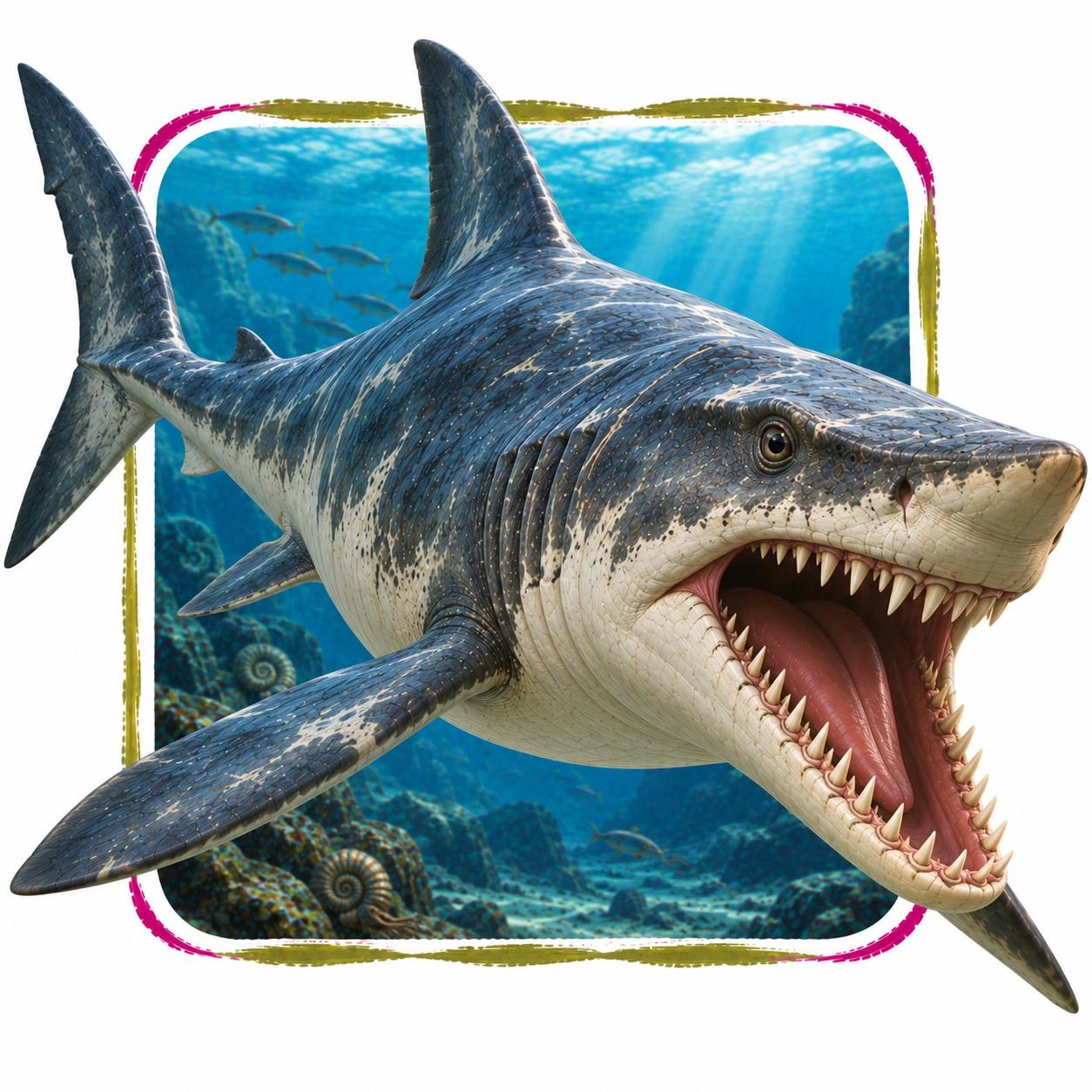
Cretoxyrhina in its natural Late Cretaceous open oceans, continental shelf waters, warm inland seas, pelagic hunting grounds, coastal marine basins, and the Western Interior Seaway habitat