
Cymbospondylus Facts for Kids
Cymbospondylus was an early ichthyosaur that lived in Triassic seas. Different species varied greatly in size, but the giant Cymbospondylus youngorum may have exceeded 17 metres in length and had a skull around 2 metres long. Its discovery showed that ichthyosaurs evolved enormous bodies surprisingly soon after their ancestors returned to the ocean.
Quick Cymbospondylus Facts
- Animal Type: Prehistoric marine reptile
- Group: Early-diverging ichthyosaur
- Known For: Long body, giant species, two-metre skull, Nevada fossils, rapid evolution of huge size, flippers, and Triassic ocean life
- Lived During: Early to Middle Triassic, roughly 250–240 million years ago
- Diet: Fish, squid-like animals, and other marine prey
What You’ll Learn
Explore 10 giant cymbospondylus facts for kids about enormous size, long bodies, flippers, swimming, and Triassic oceans, plus a quiz, glossary, and activity
These easy facts are made for kids, parents, teachers, and curious young learners.
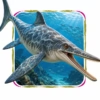
10 Fun Cymbospondylus Facts for Kids
1. Cymbospondylus Was an Ichthyosaur
Cymbospondylus was a marine reptile in the ichthyosaur group, not a dinosaur, fish, dolphin, or whale.
Kid Decode: It looked ocean-ready, but its family tree stayed firmly reptilian.
2. It Lived During the Triassic
Species of Cymbospondylus lived during the Early and Middle Triassic, when ocean ecosystems were rebuilding after the largest mass extinction in Earth’s history.
Kid Decode: It swam through seas that were busy rebooting the planet’s marine life.
3. Different Species Had Different Sizes
Some Cymbospondylus species were several metres long, while the largest known species was dramatically bigger.
Kid Decode: This genus came in large, larger, and ocean-liner editions.
4. Cymbospondylus youngorum Was Enormous
The giant species Cymbospondylus youngorum has been estimated at more than 17 metres long, although its complete skeleton is not known.
Kid Decode: One early ichthyosaur grew to a size usually associated with giant whales.
5. Its Skull Was About Two Metres Long
The known skull of Cymbospondylus youngorum measured around 2 metres from front to back.
Kid Decode: Its head alone was longer than many beds.
6. Giant Size Evolved Very Quickly
Cymbospondylus youngorum lived only a few million years after the earliest ichthyosaurs appeared, showing that ocean giants evolved rapidly.
Kid Decode: Ichthyosaurs went from shoreline newcomers to sea giants at evolutionary turbo speed.
7. It Had a Long Slender Body
Unlike later dolphin-shaped ichthyosaurs, Cymbospondylus had a more elongated trunk and tail.
Kid Decode: It was built more like a stretched marine reptile than a compact dolphin.
8. It Swam With Four Flippers
Its arms and legs had become paddle-like flippers that helped steer and control movement underwater.
Kid Decode: Four flippers turned ancient limbs into a full underwater control panel.
9. It Was a Meat Eater
Its jaws and teeth show that Cymbospondylus was a predator that ate marine animals such as fish and squid-like cephalopods.
Kid Decode: Its Triassic menu came with fins, tentacles, and escape plans.
10. It Probably Gave Birth to Live Young
Ichthyosaurs were live-bearing reptiles, so Cymbospondylus likely gave birth in the water rather than crawling onto land to lay eggs.
Kid Decode: Its babies probably entered the world already surrounded by ocean.
The Weirdest Cymbospondylus Fact
Cymbospondylus youngorum became giant-sized only a few million years after ichthyosaurs first appeared, much faster than whales evolved enormous bodies.
Try This Cymbospondylus Activity
Cymbospondylus Drawing Activity
Draw Cymbospondylus swimming through a Middle Triassic sea. Add a long slender body, four flippers, long tail, narrow snout, giant Cymbospondylus youngorum beside a smaller species, ammonites, fish, a two-metre skull scale, rocky seafloor, and an “early ocean giant” label.
Quick Cymbospondylus Quiz
- Was Cymbospondylus a dinosaur? Answer: No, it was an ichthyosaur and marine reptile.
- During which period did it live? Answer: The Triassic.
- How long may Cymbospondylus youngorum have grown? Answer: More than 17 metres.
- How long was its known skull? Answer: About 2 metres.
- Did ichthyosaurs lay eggs on beaches? Answer: No, they gave birth to live young in the water.
Mini Glossary
- Ichthyosaur: A prehistoric marine reptile with flippers and a fish-like or dolphin-like body.
- Triassic: The geologic period before the Jurassic, lasting from about 252 to 201 million years ago.
- Cephalopod: A squid, octopus, ammonite, or related animal.
- Viviparous: Giving birth to live young instead of laying eggs outside the body.
- Mass Extinction: A time when a very large number of species disappear across Earth.
 Bighorn Sheep Facts for Kids
 Meadow Vole Facts for Kids
 Mole Crab Facts for Kids
 Corythosaurus Facts for Kids
More Animal Facts for Kids
Visit the full animal facts library or explore a focused animal group.
More Extinct Animal Facts for Kids
Discover dinosaurs, Ice Age giants, prehistoric sea creatures, recently extinct species, and other animals from the past.
Fact check note: Fact checked with Sander and colleagues’ 2021 Science description of Cymbospondylus youngorum, the Natural History Museum of Los Angeles County giant ichthyosaur summary, and Sander and colleagues’ 2024 study of Early Triassic Cymbospondylus material.

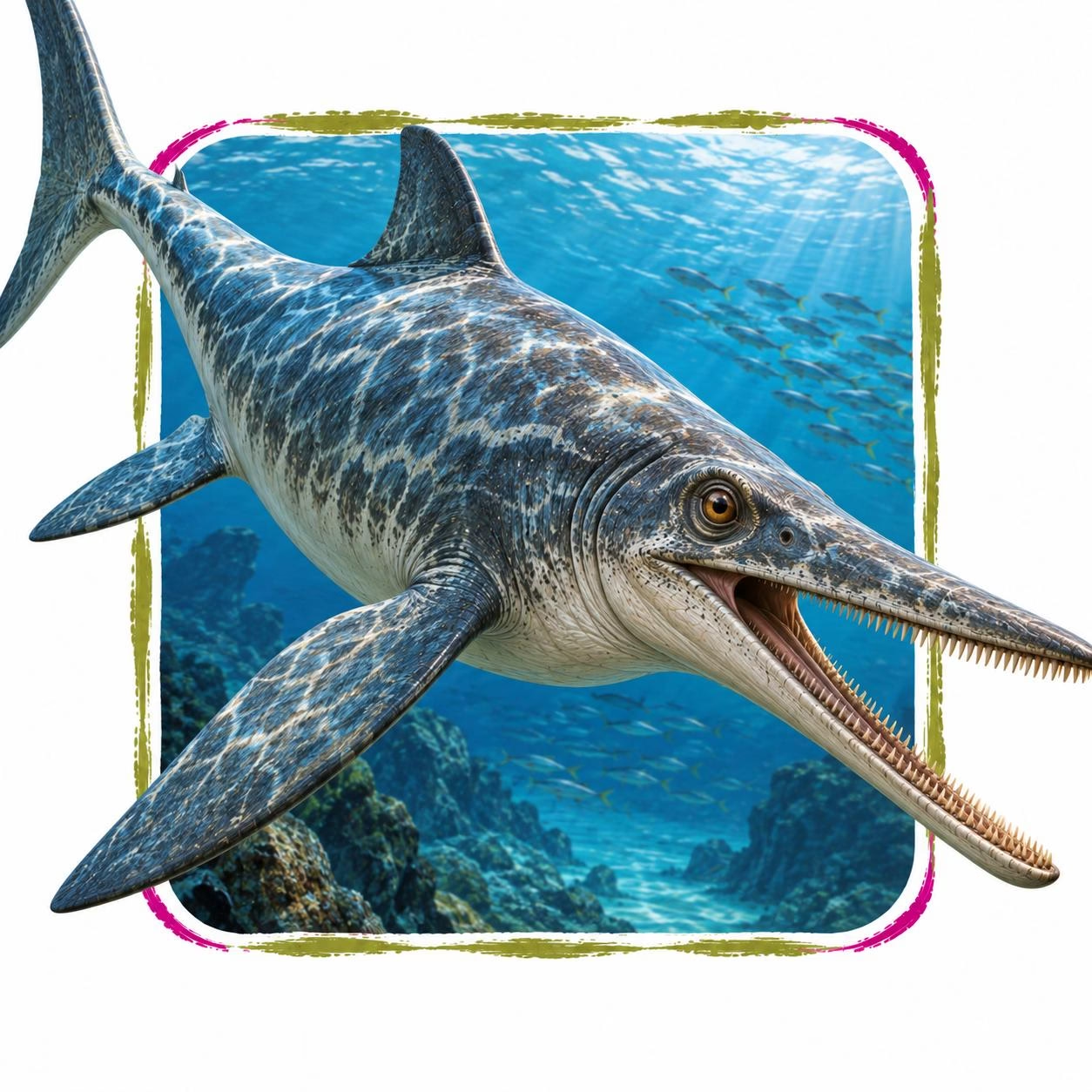
Cymbospondylus in its natural Triassic open seas, continental shelf waters, offshore marine basins, warm coastal oceans, deep channels, and fish-rich pelagic habitats habitat