
Edestus Facts for Kids
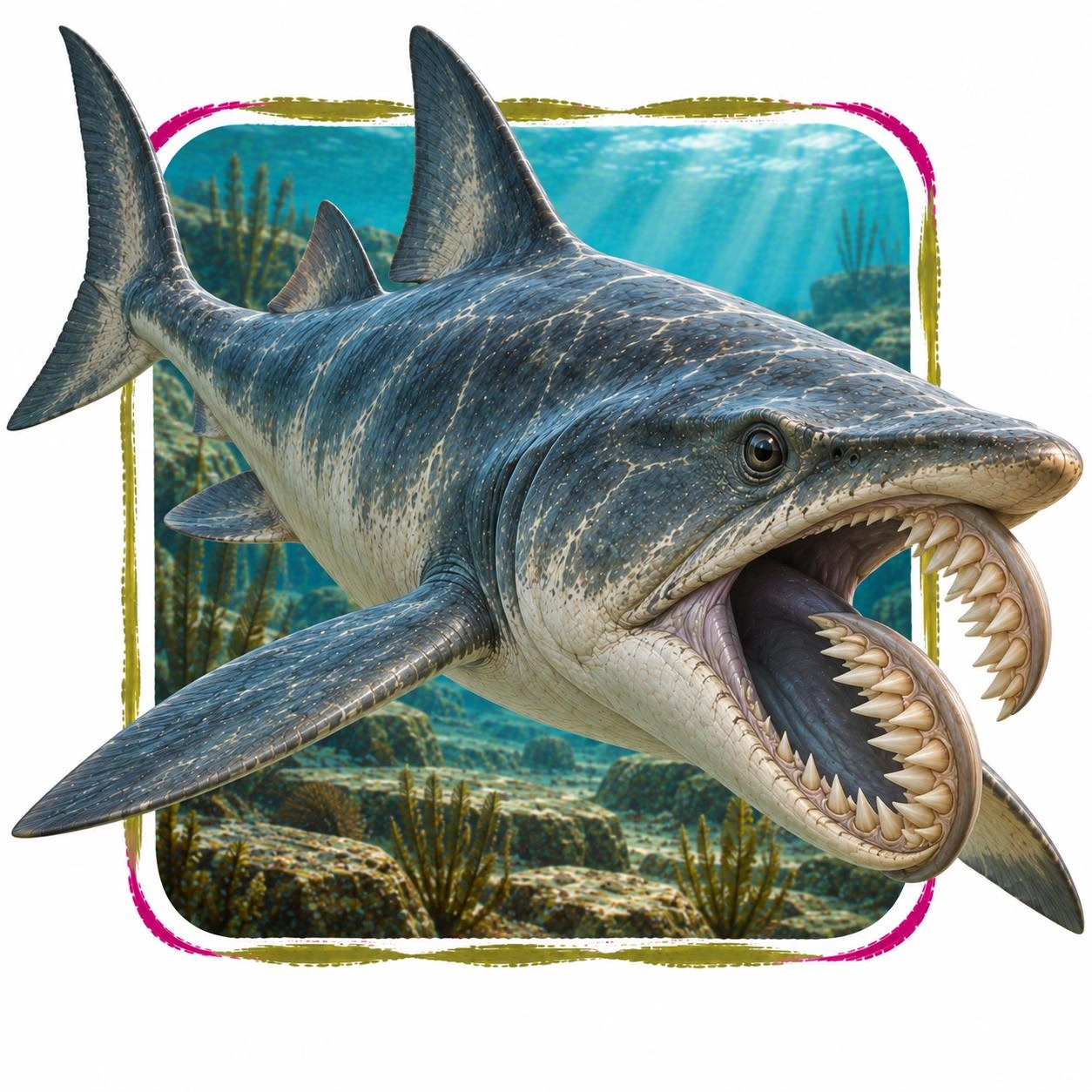
Edestus was a large cartilaginous fish that hunted in coastal seas and estuaries during the Late Carboniferous. It is often nicknamed the scissor-tooth shark, but it belonged to an ancient branch closer to chimaeras than to modern sharks. Curved tooth whorls in both jaws carried rows of sharp teeth that sliced through prey in a motion unlike any living fish.
Quick Edestus Facts
- Animal Type: Extinct cartilaginous fish
- Group: Eugeneodont and stem holocephalan
- Known For: Opposing tooth whorls, serrated triangular teeth, slicing jaws, giant species, and scissor-tooth nickname
- Lived During: Late Carboniferous, about 313–307 million years ago
- Diet: Fish and other marine animals
What You’ll Learn
Discover 10 strange edestus facts for kids about its scissor-like tooth blades, shark-like body, hunting, and ancient oceans, with a quiz, glossary, and activity
Clear explanations make them fun for children, families, teachers, and little fact-hunters.
10 Fun Edestus Facts for Kids
1. Edestus Was a Cartilaginous Fish
Edestus had a skeleton made mainly from cartilage and belonged to the broad group that also includes sharks, rays, and chimaeras.
Kid Decode: It wore shark-shaped fame, but its closest living cousins are more chimaera than great white.
2. It Had Two Curved Tooth Whorls
One tooth whorl sat along the middle of the upper jaw and another occupied the middle of the lower jaw.
Kid Decode: Its mouth carried two curved saw blades where ordinary fish keep rows of teeth.
3. The Teeth Grew in Stacked Rows
New teeth formed at the rear of each whorl while older teeth moved toward the front, creating a roof-tile stack of roots and crowns.
Kid Decode: Its dental conveyor belt kept sending fresh cutters toward the action.
4. It Did Not Bite Like Real Scissors
The upper and lower whorls stayed nearly parallel and stopped short of crossing, so they sliced prey without shearing past each other like metal scissors.
Kid Decode: The nickname works, but the jaws refused to follow proper stationery rules.
5. Its Bite Made Long Slicing Motions
Jaw reconstructions suggest that closing and reopening the mouth dragged the teeth through prey over several tooth lengths.
Kid Decode: One bite may have delivered a double swipe from a mouth-sized carving tool.
6. Some Teeth Had Serrated Edges
Many Edestus teeth were triangular, flattened from side to side, and edged with small denticles that improved their cutting surface.
Kid Decode: Each crown was a tiny steak knife attached to a much stranger machine.
7. Edestus heinrichi Was Huge
Scaling from its largest tooth whorls suggests that Edestus heinrichi could have exceeded 6.7 metres in length.
Kid Decode: The biggest species may have stretched longer than a large van.
8. Its Body Is Poorly Known
Most Edestus fossils are isolated teeth or tooth whorls because cartilage and the rest of the body rarely fossilised.
Kid Decode: Science received the nightmare mouth but misplaced most of the owner.
9. It Lived Near Coasts and Estuaries
Edestus fossils come from coastal marine and estuarine deposits in places that are now the United States, Britain, and Russia.
Kid Decode: It patrolled waters where rivers and Carboniferous seas met.
10. Its Teeth Changed as It Grew
Studies of hundreds of teeth show that crown shape and size changed during growth and also differed between the upper and lower whorls.
Kid Decode: A young Edestus and an adult did not carry exactly the same dental design.
The Weirdest Edestus Fact
Edestus replaced its teeth through curved whorls in both jaws, producing a slicing device with no close match among living vertebrates.
Try This Edestus Activity
Edestus Drawing Activity
Draw Edestus hunting in a Late Carboniferous estuary. Add a streamlined cartilaginous-fish body, curved upper and lower tooth whorls, triangular serrated teeth, fish prey, murky coastal water, fern-covered shoreline, a fossil tooth whorl, and arrows showing the slicing jaw motion.
Quick Edestus Quiz
- Was Edestus a dinosaur? Answer: No, it was a cartilaginous fish.
- What nickname is Edestus often given? Answer: The scissor-tooth shark.
- Where were its tooth whorls located? Answer: Along the middle of the upper and lower jaws.
- How large may Edestus heinrichi have grown? Answer: More than 6.7 metres.
- What did Edestus probably eat? Answer: Fish and other marine animals.
Mini Glossary
- Cartilage: Strong flexible tissue that forms the skeleton of sharks and chimaeras.
- Tooth Whorl: A curved series of connected teeth that grows by adding new teeth.
- Holocephalan: A cartilaginous-fish branch represented today by chimaeras.
- Denticle: A small tooth-like point or serration.
- Estuary: A place where river water mixes with seawater.
 House Wren Facts for Kids
 Macaw Facts for Kids
 Heron Facts for Kids
 Gigantophis Facts for Kids
More Animal Facts for Kids
Visit the full animal facts library or explore a focused animal group.
More Extinct Animal Facts for Kids
Discover dinosaurs, Ice Age giants, prehistoric sea creatures, recently extinct species, and other animals from the past.
Fact check note: Fact checked with Tapanila and Pruitt’s 2019 PLOS ONE revision of Edestus species, CT-based jaw-function research, tooth-wear studies, and Carboniferous occurrence records.

Edestus in its natural Late Carboniferous coastal seas, estuaries, shallow marine waters, river mouths, warm continental shelves, and nearshore hunting grounds habitat