
Inostrancevia Facts for Kids
Inostrancevia was a giant saber-toothed gorgonopsian that lived near the end of the Permian Period. It was not a dinosaur or a mammal, but it belonged to the therapsid branch of the synapsid family tree. A long skull, enormous canine teeth, a wide-opening mouth, and a robust body made it one of the largest land predators of its time.
Quick Inostrancevia Facts
- Animal Type: Extinct predatory therapsid
- Group: Gorgonopsian synapsid
- Known For: Huge saber canines, wide gape, robust body, giant size, and fossils from Russia and southern Africa
- Lived During: Latest Permian, roughly 253–252 million years ago
- Diet: Large herbivorous tetrapods, including dicynodonts, and other prey
What You’ll Learn
Explore 10 fearsome inostrancevia facts for kids about saber-like teeth, strong jaws, powerful legs, hunting, and Permian Russia, plus a quiz, glossary, and activity
Easy explanations make them great for children, families, teachers, and young fossil fans.
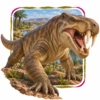
10 Fun Inostrancevia Facts for Kids
1. Inostrancevia Was a Gorgonopsian
Inostrancevia belonged to Gorgonopsia, a group of predatory therapsids famous for enlarged saber-like canine teeth.
Kid Decode: It was a saber-toothed hunter from the mammal-line branch, not a cat in reptile costume.
2. It Was Not a Dinosaur
Inostrancevia vanished around the end of the Permian, millions of years before the first dinosaurs appeared.
Kid Decode: The saber teeth had already left the stage before dinosaurs entered it.
3. It Was One of the Largest Gorgonopsians
Complete and partial fossils suggest that large Inostrancevia individuals reached around 3 metres, with some estimates extending somewhat beyond that.
Kid Decode: It reached tiger-scale predator territory without being a tiger or mammal.
4. Its Skull Was Long and Powerful
Large individuals carried skulls roughly 40 to 60 centimetres long, depending on the species and specimen.
Kid Decode: The head alone could stretch about as long as a school backpack.
5. It Had Huge Saber Canines
Long, flattened upper canines projected far below the rest of the tooth row and were suited to stabbing or slashing prey.
Kid Decode: Its smile came with two built-in Permian carving blades.
6. It Could Open Its Mouth Widely
Gorgonopsian jaw joints and skull shape allowed a wide gape so the long canines could clear the lower jaw during an attack.
Kid Decode: Those sabers required the mouth to open in dramatic double-door mode.
7. It Replaced Its Canines
Developing replacement canines formed beside or behind working teeth, allowing worn or broken sabers to be renewed.
Kid Decode: Even the giant fangs had backups waiting in the dental wings.
8. It Was a Top Predator
Inostrancevia likely attacked large plant eaters such as dicynodonts and occupied the highest levels of its food web.
Kid Decode: Its dinner could be an armored beaked herbivore with its own survival plan.
9. Its Fossils Were Found Far Apart
Famous fossils come from European Russia, while a 2023 study identified Inostrancevia in latest Permian rocks of South Africa.
Kid Decode: One predator’s fossil trail stretched across a vast slice of the supercontinent Pangaea.
10. It Appeared During a Predator Crisis
The African fossils show that Inostrancevia entered ecosystems where earlier top predators had disappeared shortly before the Permian-Triassic mass extinction.
Kid Decode: It briefly claimed an empty predator throne while the whole ecosystem was wobbling.
The Weirdest Inostrancevia Fact
Fossils from South Africa revealed that this giant predator’s range crossed much of Pangaea just before the largest mass extinction in Earth’s history.
Try This Inostrancevia Activity
Inostrancevia Drawing Activity
Draw Inostrancevia stalking across a latest Permian floodplain. Add a long skull, enormous saber canines, a wide-open mouth, replacement-tooth inset, robust limbs, a long tail, dicynodont prey, dry river channels, sparse trees, and a map line linking Russia with South Africa across Pangaea.
Quick Inostrancevia Quiz
- Was Inostrancevia a dinosaur? Answer: No, it was a gorgonopsian therapsid.
- What were its most famous teeth? Answer: Huge saber-like upper canines.
- How long could large individuals grow? Answer: Around 3 metres, with some estimates somewhat larger.
- What did it probably hunt? Answer: Large herbivorous tetrapods such as dicynodonts.
- Where have important fossils been found? Answer: Russia and South Africa.
Mini Glossary
- Gorgonopsian: A saber-toothed predatory therapsid from the Permian Period.
- Therapsid: A synapsid belonging to the broad branch that includes mammals and their closer extinct relatives.
- Canine Tooth: A pointed tooth used for gripping, stabbing, or slicing prey.
- Dicynodont: A mostly plant-eating therapsid with a beak and usually two tusks.
- Pangaea: The supercontinent that joined most of Earth’s land during the late Paleozoic and early Mesozoic.
 Chickadee Facts for Kids
 Lamb Facts for Kids
 Toco Toucan Facts for Kids
 Enhydriodon Facts for Kids
More Animal Facts for Kids
Visit the full animal facts library or explore a focused animal group.
More Extinct Animal Facts for Kids
Discover dinosaurs, Ice Age giants, prehistoric sea creatures, recently extinct species, and other animals from the past.
Fact check note: Fact checked with Kammerer and colleagues’ 2023 Current Biology study of African Inostrancevia, later work on Inostrancevia africana, classic Russian anatomical descriptions, and comparative gorgonopsian tooth-replacement research.

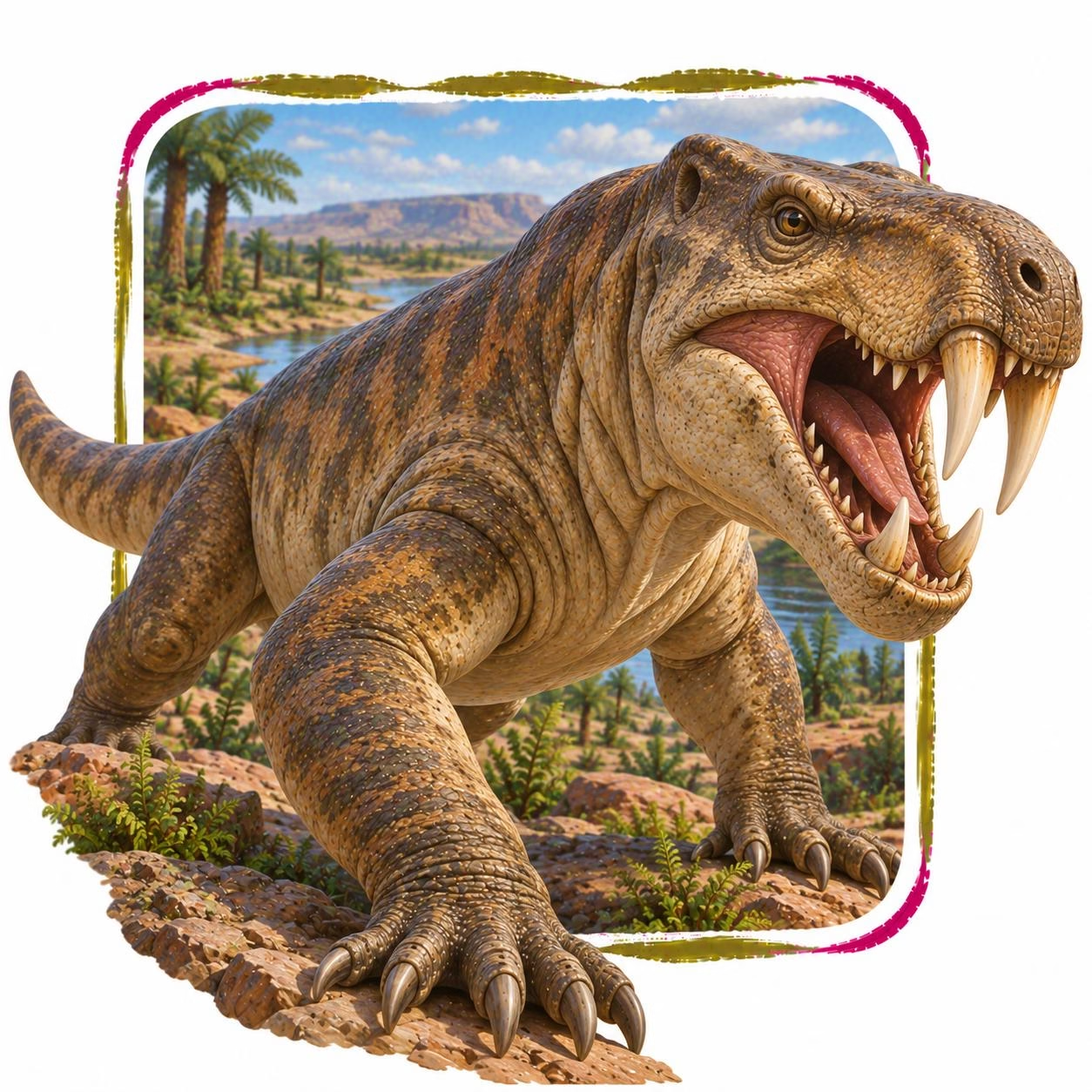
Inostrancevia in its natural Latest Permian river floodplains, seasonal dry plains, wooded lowlands, semi-arid basins, and terrestrial habitats across northern and southern Pangaea habitat