
Glossotherium Facts for Kids
Glossotherium was a giant ground sloth that lived across South America during the Pliocene and Pleistocene. Unlike modern tree sloths, it walked on the ground and grew to the size of a small car. Its broad muzzle gathered large mouthfuls of grasses and herbs, while massive forelimbs and curved claws made it a powerful digger capable of excavating enormous burrows.
Quick Glossotherium Facts
- Animal Type: Extinct giant ground sloth
- Group: Mylodontid sloth
- Known For: Broad muzzle, huge digging claws, powerful forelimbs, skin osteoderms, and enormous fossil burrows
- Lived During: Pliocene to Late Pleistocene, roughly 3 million to 10,000 years ago
- Diet: Grasses, herbs, and other low-growing plants
What You’ll Learn
Discover 10 giant glossotherium facts for kids about huge claws, digging, plant diets, powerful bodies, and Ice Age South America, with a quiz, glossary, and activity
These simple facts are made for kids, parents, teachers, and curious little fact-hunters.

10 Fun Glossotherium Facts for Kids
1. Glossotherium Was a Giant Ground Sloth
Glossotherium belonged to the mylodontids, a family of large terrestrial sloths that walked on the ground instead of hanging from trees.
Kid Decode: It turned the slow-sloth blueprint into a one-tonne machine for roaming the open plains.
2. It Grew Three to Four Metres Long
Large Glossotherium individuals reached roughly 3 to 4 metres in length and may have weighed around 1 to 1.5 tonnes.
Kid Decode: It carried small-car size beneath a coat of shaggy sloth hair.
3. Its Muzzle Was Broad
The front of the skull was wide and blunt, an adaptation associated with gathering large quantities of low-growing vegetation.
Kid Decode: Its face worked more like a wide lawn scoop than a pair of plant-picking tweezers.
4. It Was a Bulk Feeder
Biomechanical and muzzle studies indicate that Glossotherium ate large mouthfuls of grasses and herbaceous plants rather than carefully selecting individual leaves.
Kid Decode: Lunch arrived by the armful instead of one dainty leaf at a time.
5. Its Forelimbs Were Built for Digging
Short, immensely strong forelimbs and large claws could produce high force, making Glossotherium well suited to excavating hard soil.
Kid Decode: Its front legs brought the construction equipment of a furry bulldozer.
6. It May Have Dug Giant Burrows
Large Pleistocene tunnels in South America contain scratch marks and dimensions consistent with digging by giant sloths such as Glossotherium.
Kid Decode: Some prehistoric burrows were roomy enough to make a human crawl feel surprisingly comfortable.
7. Its Skin Contained Tiny Bones
Like several other mylodontid sloths, Glossotherium had small bony osteoderms embedded within its skin rather than a single rigid shell.
Kid Decode: Hidden under the hide was a flexible sprinkling of pebble-sized armor.
8. Its Teeth Grew Continuously
Glossotherium lacked enamel and carried high-crowned teeth that continued growing as abrasive plants and gritty soil wore them down.
Kid Decode: Its teeth answered a dusty diet by refusing to stop growing.
9. Charles Darwin Collected an Early Fossil
Darwin collected part of a Glossotherium skull in Uruguay during the voyage of HMS Beagle, and Richard Owen later studied the specimen.
Kid Decode: A broken skull piece sailed home with Darwin and helped introduce this giant sloth to science.
10. Its Name Means Tongue Beast
Owen named Glossotherium from words meaning tongue beast because he originally imagined that it possessed a long protruding tongue.
Kid Decode: The name preserves an old idea even though its exact tongue length remains unknown.
The Weirdest Glossotherium Fact
Glossotherium may have been among the largest burrowing mammals ever, excavating tunnels with forelimbs strong enough to shift huge amounts of soil.
Try This Glossotherium Activity
Glossotherium Drawing Activity
Draw Glossotherium digging beside a Late Pleistocene South American grassland. Add a huge shaggy body, broad muzzle, powerful forelimbs, long curved claws, a cutaway showing small osteoderms in the skin, grasses and herbs, a giant burrow entrance, and Charles Darwin examining a fossil skull fragment.
Quick Glossotherium Quiz
- Was Glossotherium a tree sloth? Answer: No, it was a giant ground sloth.
- How long could it grow? Answer: Roughly 3 to 4 metres.
- What did its broad muzzle help it do? Answer: Gather large mouthfuls of low-growing plants.
- What were its powerful forelimbs used for? Answer: Digging and moving soil or vegetation.
- Who collected an early Glossotherium fossil? Answer: Charles Darwin.
Mini Glossary
- Mylodontid: A member of a family of extinct ground sloths.
- Bulk Feeder: An herbivore that gathers large amounts of food with each bite.
- Osteoderm: A small bony plate formed inside the skin.
- Hypsodont: Having tall-crowned teeth adapted to heavy wear.
- Palaeoburrow: An ancient animal-made tunnel preserved in sediment or rock.
 Zebra Facts for Kids
 Langur Facts for Kids
 Horned Lizard Facts for Kids
 Palaeoloxodon Facts for Kids
More Animal Facts for Kids
Visit the full animal facts library or explore a focused animal group.
More Extinct Animal Facts for Kids
Discover dinosaurs, Ice Age giants, prehistoric sea creatures, recently extinct species, and other animals from the past.
Fact check note: Fact checked with Bargo and Vizcaíno’s 2008 masticatory-biomechanics review, Bargo and colleagues’ limb-strength and digging study, Bargo and colleagues’ 2006 hypsodonty research, and Natural History Museum records of Darwin’s Glossotherium fossil.

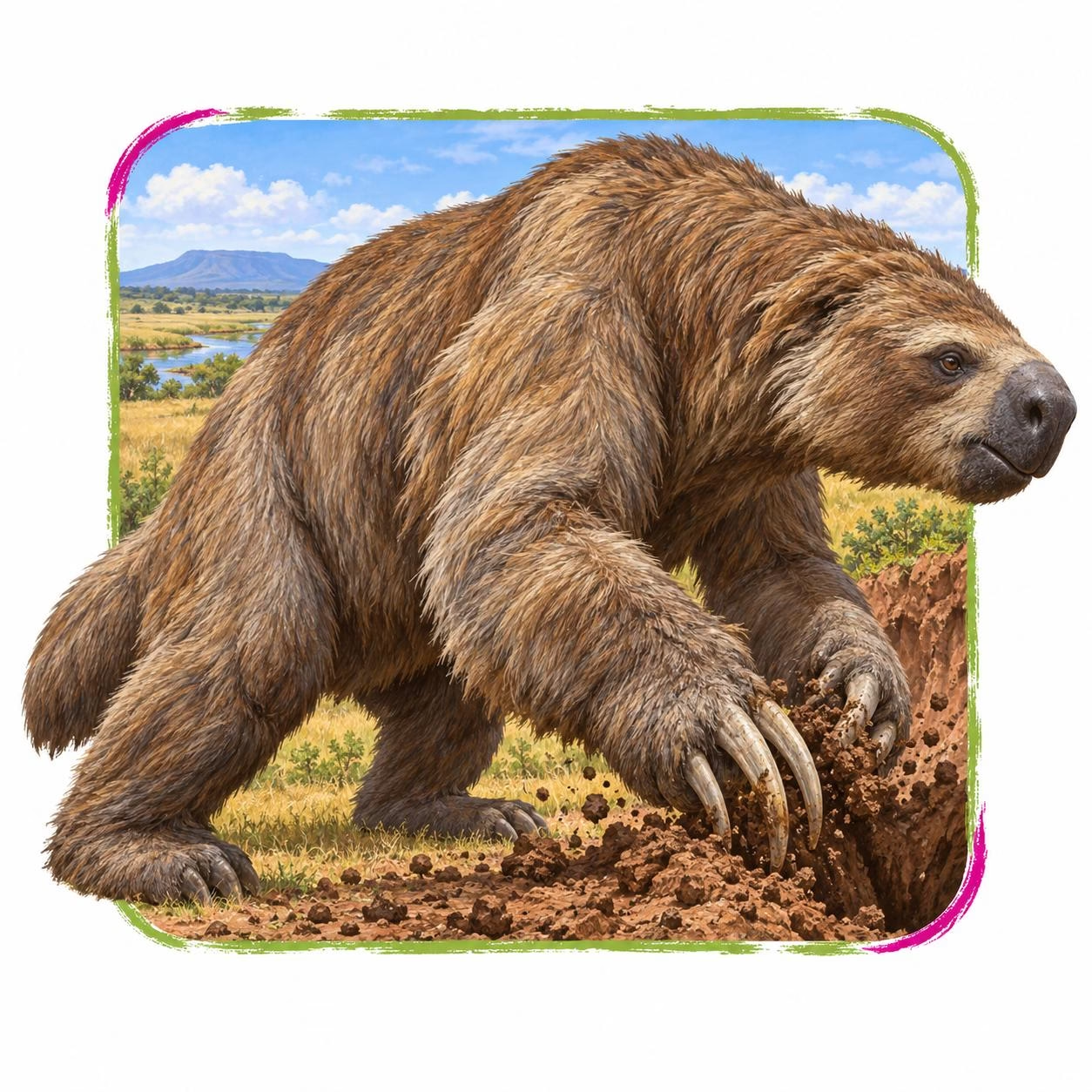
Glossotherium in its natural Pliocene and Pleistocene grasslands, open savannas, dry scrub, river floodplains, cave regions, and burrow-rich plains across South America habitat