
Lystrosaurus Facts for Kids
Lystrosaurus was a stocky plant-eating dicynodont that lived across the end-Permian mass extinction and into the Early Triassic. It was not a dinosaur, but a therapsid on the broad evolutionary branch that later produced mammals. Its short face carried a horny beak and usually a pair of ever-growing tusks, while powerful forelimbs helped it walk and dig in a harsh changing world.
Quick Lystrosaurus Facts
- Animal Type: Extinct herbivorous therapsid
- Group: Dicynodont
- Known For: Beaked mouth, paired tusks, burrowing, mass-extinction survival, leathery egg, and widespread fossils
- Lived During: Late Permian to Early Triassic, roughly 255–247 million years ago
- Diet: Tough low-growing plants
What You’ll Learn
Learn 10 amazing lystrosaurus facts for kids about tusks, sturdy bodies, survival after the Great Dying, and Triassic life, plus a quiz, glossary, and activity
Everything is explained simply for kids, parents, teachers, and young prehistoric-animal explorers.
10 Fun Lystrosaurus Facts for Kids
1. Lystrosaurus Was a Dicynodont
Lystrosaurus belonged to Dicynodontia, a successful group of beaked, tusked therapsids from the Permian and Triassic.
Kid Decode: It was a mammal-line relative built from beak, tusks, and remarkable stubbornness.
2. It Survived the Great Dying
Several Lystrosaurus species crossed the end-Permian mass extinction, the greatest known loss of species in Earth’s history.
Kid Decode: When much of the world’s life vanished, this stocky plant eater kept trudging.
3. It Became Extremely Abundant
Lystrosaurus fossils dominate some Early Triassic land-animal assemblages, showing that it flourished in damaged post-extinction ecosystems.
Kid Decode: Some fossil beds contain enough Lystrosaurus to feel like one enormous family reunion.
4. It Had a Horny Beak
A keratin-covered beak cropped vegetation, while the lower jaw could slide backward and forward to shear plant material.
Kid Decode: Its mouth worked more like garden clippers than chewing molars.
5. Many Had Two Tusks
Most familiar Lystrosaurus species carried a pair of upper canine tusks that grew continuously, although tusk development varied.
Kid Decode: The beak handled lunch while two ever-growing teeth supplied the dramatic accessories.
6. It Could Dig Burrows
Strong forelimbs and skeletons preserved in burrow casts show that Lystrosaurus could excavate shelters, even while young.
Kid Decode: Underground rooms may have offered shade, safety, and steadier moisture when the surface became brutal.
7. A Fossil Egg Held an Embryo
A 2026 study described a tightly curled Lystrosaurus embryo preserved inside a large egg that probably once had a soft leathery shell.
Kid Decode: After 250 million years, one tiny survivor finally cracked open its reproductive secret.
8. Young Animals Grew Quickly
Bone studies suggest rapid early growth and relatively young breeding, useful traits in unstable post-extinction environments.
Kid Decode: Grow fast, reproduce early, and do not waste time was a powerful survival recipe.
9. Antarctic Tusks Record Torpor Clues
Stress marks in Antarctic tusks may record seasonal torpor, though they do not prove hibernation exactly like that of a modern mammal.
Kid Decode: Its tusks may contain a yearly diary of slowing down through the polar dark.
10. Its Fossils Helped Map Pangaea
Lystrosaurus fossils from Africa, Antarctica, India, China, Russia, and Mongolia helped support the idea that today’s continents were once joined.
Kid Decode: One beaked animal left matching puzzle pieces across a broken supercontinent.
The Weirdest Lystrosaurus Fact
A 250-million-year-old curled embryo revealed in 2026 that Lystrosaurus laid a relatively large egg, probably protected by a soft leathery shell.
Try This Lystrosaurus Activity
Lystrosaurus Drawing Activity
Draw Lystrosaurus outside an Early Triassic burrow. Add a short beaked face, two tusks, powerful forelimbs, a stocky hairless body, tough plants, hot dusty ground, a leathery egg with a curled embryo diagram, and a Pangaea map marked with fossil locations.
Quick Lystrosaurus Quiz
- Was Lystrosaurus a dinosaur? Answer: No, it was a dicynodont therapsid.
- Which mass extinction did it survive? Answer: The end-Permian mass extinction, or Great Dying.
- What covered the front of its mouth? Answer: A horny beak.
- What behaviour is supported by burrow fossils? Answer: Digging and sheltering in burrows.
- What did a 2026 fossil discovery reveal? Answer: A Lystrosaurus embryo developed inside an egg.
Mini Glossary
- Dicynodont: A beaked therapsid, commonly equipped with a pair of tusks.
- Therapsid: A synapsid from the broad evolutionary branch containing mammals.
- Mass Extinction: A relatively short interval when many species disappear worldwide.
- Torpor: A temporary reduction in activity and metabolism.
- Precocial: Relatively well developed and capable soon after hatching or birth.
 Potoroo Facts for Kids
 American Mink Facts for Kids
 Loon Facts for Kids
 Bachman's Warbler Facts for Kids
More Animal Facts for Kids
Visit the full animal facts library or explore a focused animal group.
More Extinct Animal Facts for Kids
Discover dinosaurs, Ice Age giants, prehistoric sea creatures, recently extinct species, and other animals from the past.
Fact check note: Fact checked with Botha-Brink’s 2017 burrowing study, Whitney and colleagues’ 2020 tusk-torpor research, Kulik and colleagues’ Lystrosaurus life-history studies, and Benoit, Fernandez and Botha’s 2026 PLOS ONE egg-and-embryo description.

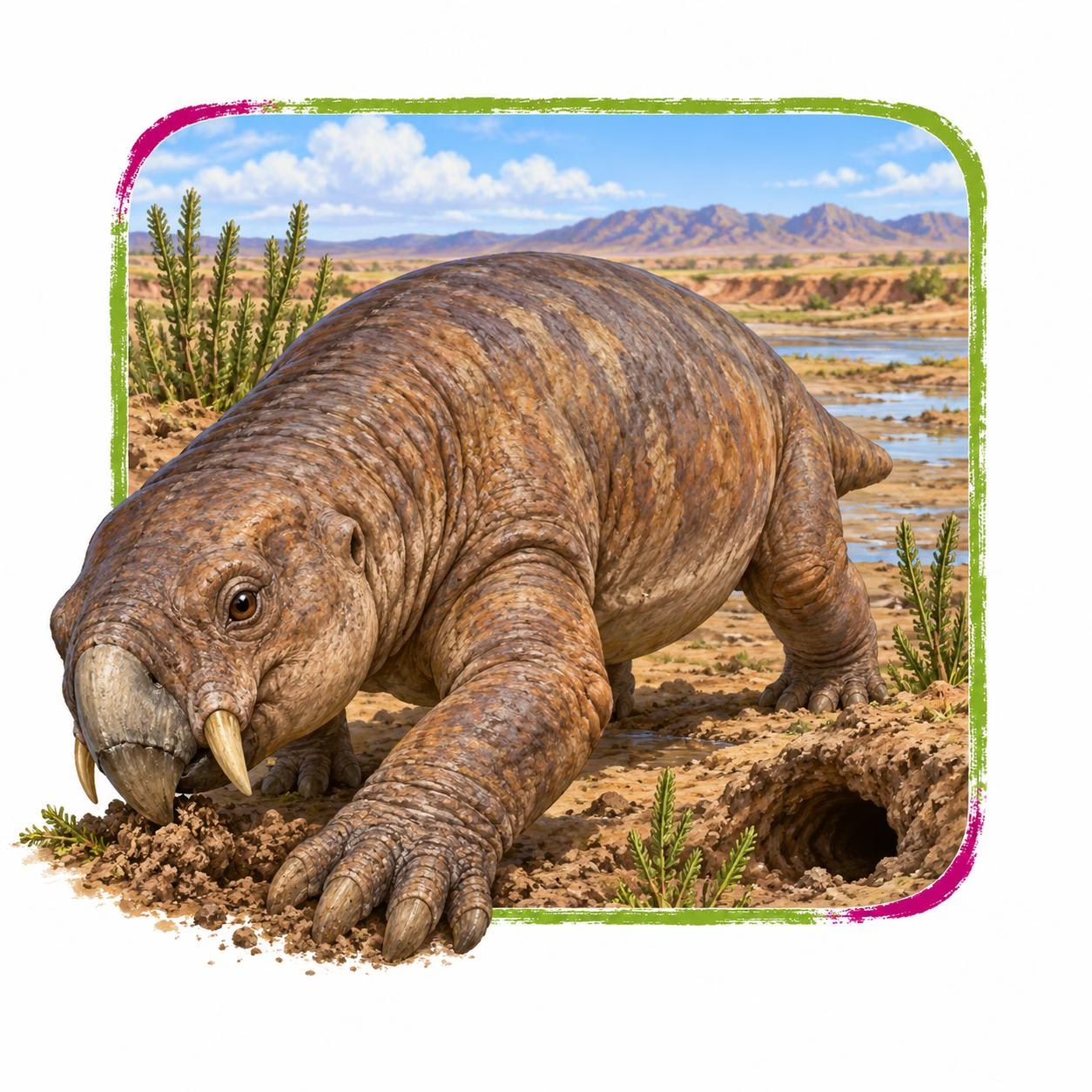
Lystrosaurus in its natural Late Permian and Early Triassic floodplains, dry river valleys, seasonal wetlands, polar lowlands, burrow systems, and harsh terrestrial habitats across Pangaea habitat