
Mastodonsaurus Facts for Kids
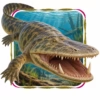
Mastodonsaurus was a giant aquatic temnospondyl that lived in European lakes, rivers, and brackish waters during the Middle Triassic. It was not a dinosaur or a true modern amphibian, although it belonged to an ancient amphibian-grade branch of tetrapods. Its enormous flattened skull carried rows of teeth, large palate fangs, and two lower-jaw tusks that passed through openings in the roof of its mouth.
Quick Mastodonsaurus Facts
- Animal Type: Extinct amphibian-grade tetrapod
- Group: Capitosaur temnospondyl
- Known For: Giant flat skull, upward-projecting lower-jaw tusks, sensory grooves, aquatic ambush hunting, and enormous growth range
- Lived During: Middle Triassic, about 242–237 million years ago
- Diet: Fish and other aquatic vertebrates
What You’ll Learn
Discover 10 giant mastodonsaurus facts for kids about its huge flat head, sharp teeth, water hunting, strong body, and Triassic wetlands, plus a quiz, glossary, and activity
These facts are explained simply for kids, parents, teachers, and curious little fact-finders.
10 Fun Mastodonsaurus Facts for Kids
1. Mastodonsaurus Was a Temnospondyl
Mastodonsaurus belonged to Temnospondyli, a diverse extinct group of early tetrapods that included many amphibian-like animals.
Kid Decode: It lived in the amphibian chapter of the family tree, not the dinosaur aisle.
2. It Lived in Middle Triassic Europe
Fossils are especially common in Germany, with additional material known from other parts of Europe.
Kid Decode: Its ancient neighbourhood later became a patchwork of European countries.
3. Its Skull Could Reach About 1.2 Metres
The largest well-documented skulls measured around 1.2 metres long, making the head longer than many desks.
Kid Decode: The skull alone could occupy most of a classroom table.
4. It Had Two Upward-Pointing Tusks
A pair of large teeth in the lower jaw projected upward through openings in the palate when the mouth closed.
Kid Decode: Its tusks poked through the roof of its own mouth without causing a dental emergency.
5. Its Mouth Held Several Tooth Rows
Small conical teeth lined the jaws, while larger fangs on the palate and lower jaw helped seize and hold struggling prey.
Kid Decode: The mouth combined a fish trap, gripping spikes, and two dramatic tusks.
6. Sensory Grooves Crossed Its Skull
Channels on the skull probably supported a lateral-line system that detected movement and pressure changes in water.
Kid Decode: It may have felt a fish moving before the fish realised it had company.
7. It Was an Aquatic Ambush Predator
Its flat skull, sensory system, and powerful jaws suggest that Mastodonsaurus waited in water and snapped at passing prey.
Kid Decode: Much of the animal could stay hidden while the giant mouth handled the surprise.
8. It Grew From Tiny Young to Giants
Known fossils range from very small juveniles with skull parts only millimetres long to adults with skulls over a metre long.
Kid Decode: Its growth chart travelled from pocket-sized beginnings to swamp-monster scale.
9. Its Body Was Longer Than Old Drawings Showed
Newer skeletal research indicates a relatively long trunk and tail rather than the extremely short, frog-like body shown in older reconstructions.
Kid Decode: The classic giant-frog look needed a substantial tail extension.
10. It Dominated Many Aquatic Habitats
Large Mastodonsaurus individuals were among the top predators in freshwater and brackish ecosystems of Middle Triassic Europe.
Kid Decode: In its waterways, the food web ended near one very broad head.
The Weirdest Mastodonsaurus Fact
Its lower-jaw tusks passed through special openings in the palate and rose into the skull when the mouth was shut.
Try This Mastodonsaurus Activity
Mastodonsaurus Drawing Activity
Draw Mastodonsaurus waiting in a Middle Triassic lake. Add a huge flat triangular skull, rows of small teeth, large palate fangs, two lower-jaw tusks passing through skull openings, sensory grooves, a long body and tail, fish, reeds, and a 1.2-metre skull scale.
Quick Mastodonsaurus Quiz
- Was Mastodonsaurus a dinosaur? Answer: No, it was a temnospondyl.
- How long could its largest skulls grow? Answer: About 1.2 metres.
- What happened to its lower-jaw tusks when the mouth closed? Answer: They passed through openings in the palate.
- What may its sensory grooves have detected? Answer: Movement and pressure changes in water.
- What did Mastodonsaurus eat? Answer: Fish and other aquatic vertebrates.
Mini Glossary
- Temnospondyl: A member of a diverse extinct group of early tetrapods.
- Capitosaur: A large, flat-headed group of mainly Triassic temnospondyls.
- Palate: The roof of the mouth.
- Lateral Line: A sensory system that detects movement and pressure in water.
- Brackish: Slightly salty water formed where fresh water mixes with seawater.
 Sea Sponge Facts for Kids
 Warbler Facts for Kids
 Kea Facts for Kids
 Thylacine Facts for Kids
More Animal Facts for Kids
Visit the full animal facts library or explore a focused animal group.
More Extinct Animal Facts for Kids
Discover dinosaurs, Ice Age giants, prehistoric sea creatures, recently extinct species, and other animals from the past.
Fact check note: Fact checked with Schoch and colleagues’ 2024 study of Mastodonsaurus growth and life history, Schoch’s comparative osteology of Mastodonsaurus giganteus, and capitosaur feeding research.

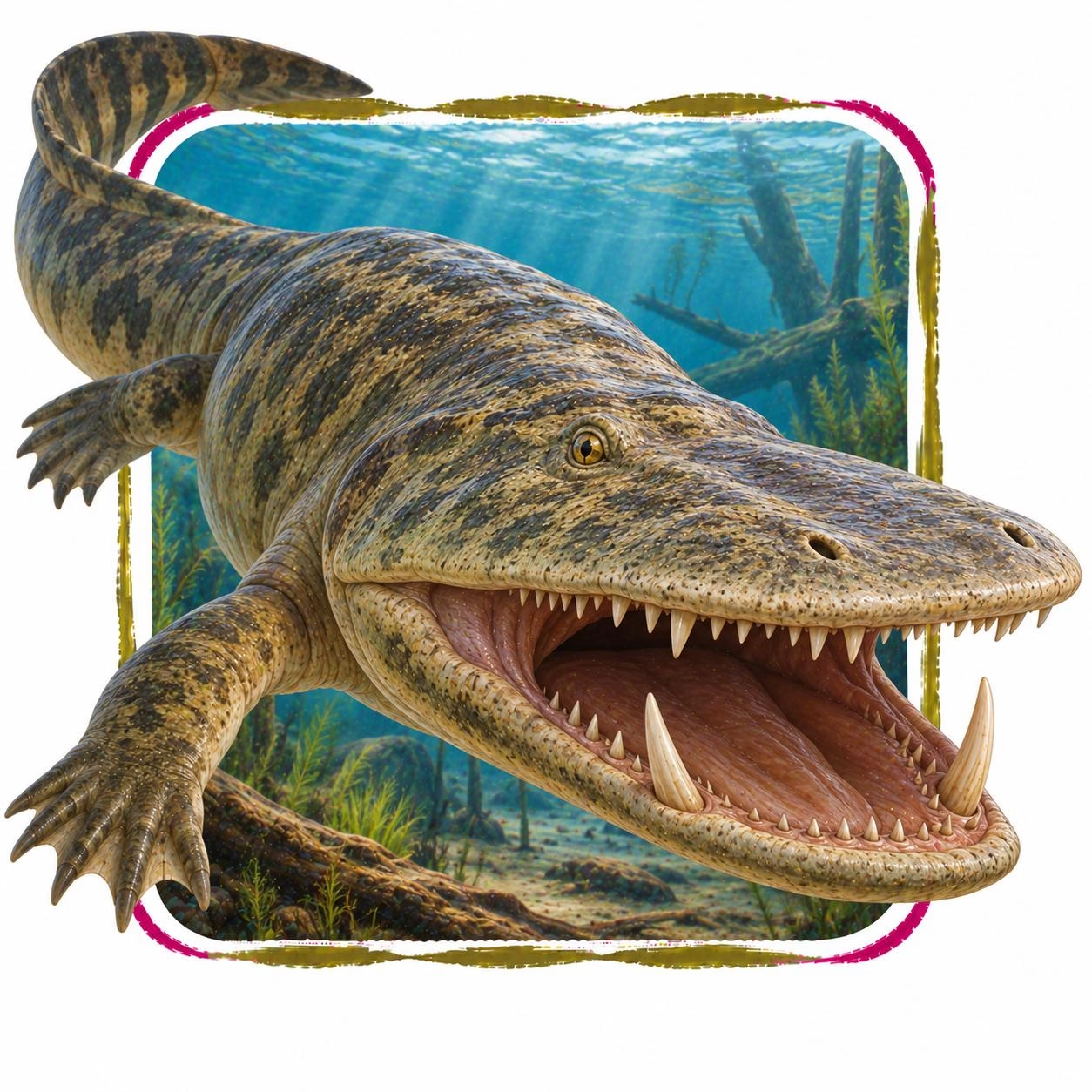
Mastodonsaurus in its natural Middle Triassic lakes, rivers, floodplain channels, brackish lagoons, muddy wetlands, and shallow aquatic habitats across ancient Europe habitat