
Megalichthys Facts for Kids
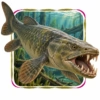
Megalichthys was a predatory lobe-finned fish that lived in freshwater habitats during the late Paleozoic Era. It belonged to the tetrapodomorph branch, meaning it was more closely related to four-limbed vertebrates than to ordinary ray-finned fish. Its broad skull, large fangs, fleshy paired fins, and shiny cosmine-covered scales made it a powerful hunter in rivers, lakes, and coal-swamp waterways.
Quick Megalichthys Facts
- Animal Type: Extinct bony fish
- Group: Megalichthyid tetrapodomorph
- Known For: Lobe fins, large fangs, broad skull, cosmine-coated scales, freshwater hunting, and relationship to early tetrapods
- Lived During: Late Devonian to Carboniferous, roughly 370–300 million years ago
- Diet: Fish and other small aquatic animals
What You’ll Learn
Explore 10 fascinating megalichthys facts for kids about large bodies, lobe-shaped fins, sharp teeth, freshwater life, and ancient ecosystems, plus a quiz, glossary, and activity
These easy facts are made for kids, parents, teachers, and curious young learners.
10 Fun Megalichthys Facts for Kids
1. Megalichthys Was a Lobe-Finned Fish
Megalichthys belonged to Sarcopterygii, the bony-fish group with fleshy paired fins containing internal bones.
Kid Decode: Its fins came with a meaty framework instead of being built only from thin rays.
2. It Was a Tetrapodomorph
Megalichthys belonged to the broad evolutionary branch that includes fishes more closely related to tetrapods than to most other living fish.
Kid Decode: It was not walking on land, but its family tree pointed toward animals that eventually did.
3. Its Name Means Great Fish
The name Megalichthys combines Greek words meaning great or large and fish.
Kid Decode: The scientific name wastes no time: this was the big-fish file.
4. It Had a Broad Low Skull
Megalichthyids had relatively broad, low heads with strong jaws suited to capturing prey in freshwater habitats.
Kid Decode: Its head was built less like a needle and more like a sturdy aquatic trap.
5. It Carried Large Fangs
Large tusk-like teeth sat near rows of smaller teeth in the jaws, helping Megalichthys seize slippery animals.
Kid Decode: The mouth mixed little teeth with several oversized troublemakers.
6. Its Bones and Scales Had Cosmine
Many skull bones and rhomboid scales were coated in cosmine, a hard porous tissue found in several ancient lobe-finned fishes.
Kid Decode: Its armour wore a mineral glaze with microscopic plumbing.
7. It Lived in Fresh Water
Fossils of Megalichthys and close relatives are mostly associated with rivers, lakes, swamps, and other freshwater environments.
Kid Decode: It hunted through coal-swamp waterways instead of open ocean.
8. It Was a Predator
Its strong jaws and pointed teeth indicate that Megalichthys ate fish and probably other small aquatic vertebrates.
Kid Decode: Anything bite-sized in the swamp had reason to keep swimming.
9. Some Species Grew Over a Metre
Megalichthys hibberti was a medium-to-large predator that probably exceeded 1 metre, although complete skeletons are rare and maximum size estimates vary.
Kid Decode: It was a serious freshwater hunter without needing a sea-monster growth chart.
10. Most Fossils Are Separate Pieces
Researchers often find isolated scales, teeth, skull bones, and tail impressions rather than complete Megalichthys skeletons.
Kid Decode: This fish usually arrives at museums one puzzle piece at a time.
The Weirdest Megalichthys Fact
Megalichthys was a fully aquatic fish, yet it belonged to the tetrapodomorph branch that also contains the distant ancestry of amphibians, reptiles, birds, and mammals.
Try This Megalichthys Activity
Megalichthys Drawing Activity
Draw Megalichthys hunting in a Carboniferous freshwater swamp. Add a broad low skull, large fangs, rows of smaller teeth, fleshy paired fins, diamond-shaped cosmine scales, a powerful tail, smaller fish, submerged roots, giant ferns, and separate fossil scales and skull bones.
Quick Megalichthys Quiz
- Was Megalichthys a dinosaur? Answer: No, it was a lobe-finned fish.
- What does its name mean? Answer: Great fish or large fish.
- Where did it mainly live? Answer: Freshwater rivers, lakes, and swamps.
- What covered many of its bones and scales? Answer: Cosmine.
- What did Megalichthys eat? Answer: Fish and other small aquatic animals.
Mini Glossary
- Lobe-Finned Fish: A fish whose paired fins contain a fleshy base and internal bones.
- Tetrapodomorph: A member of the evolutionary branch containing tetrapods and their closest fish relatives.
- Cosmine: A hard porous tissue coating the scales and skull bones of some ancient fishes.
- Rhomboid Scale: A hard scale shaped roughly like a diamond.
- Carboniferous: A geologic period famous for coal-forming forests, lasting from about 359 to 299 million years ago.
 Genet Facts for Kids
 Rhinoceros Beetle Facts for Kids
 African Lion Facts for Kids
 Titanoboa Facts for Kids
More Animal Facts for Kids
Visit the full animal facts library or explore a focused animal group.
More Extinct Animal Facts for Kids
Discover dinosaurs, Ice Age giants, prehistoric sea creatures, recently extinct species, and other animals from the past.
Fact check note: Fact checked with Clement and colleagues’ 2021 PeerJ review of megalichthyid anatomy and relationships, research on Megalichthys and related Carboniferous tetrapodomorphs, and British fossil-fish records.
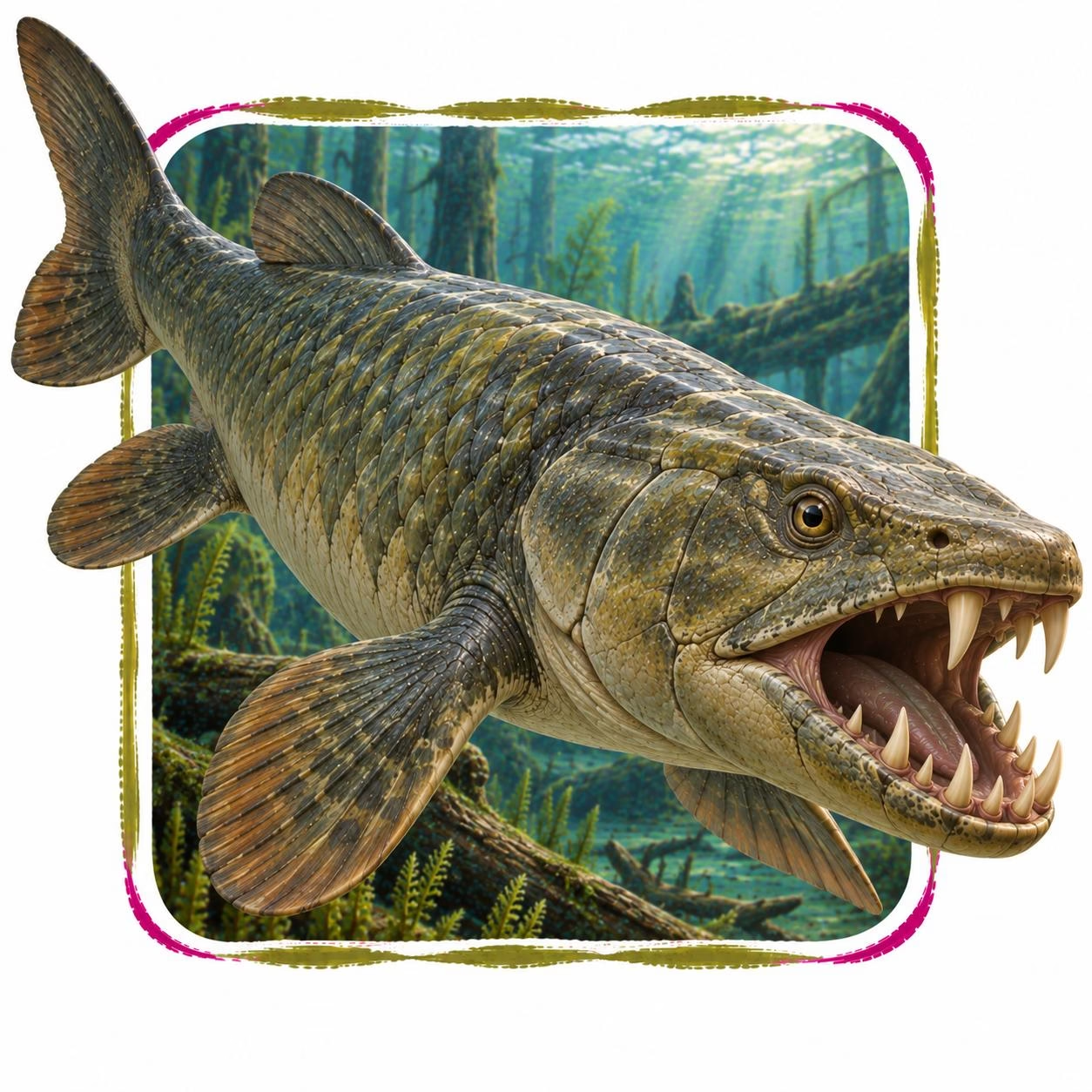
Megalichthys in its natural Late Paleozoic freshwater rivers, lakes, coal swamps, floodplain channels, forested wetlands, and slow-moving waterways habitat