
Megantereon Facts for Kids
Megantereon was a stocky saber-toothed cat that lived across Africa, Europe, and Asia during the Pliocene and Pleistocene. It was not a tiger, although it belonged to the cat family. Flattened upper canines, a protective flange on the lower jaw, powerful front limbs, and a strong neck suggest that it ambushed prey, wrestled it down, and delivered a carefully placed killing bite.
Quick Megantereon Facts
- Animal Type: Extinct saber-toothed cat
- Group: Smilodontin machairodont
- Known For: Long flattened canines, mandibular flange, robust forelimbs, ambush hunting, and wide Old World range
- Lived During: Pliocene to Middle Pleistocene, roughly 3.5 million to 500,000 years ago
- Diet: Medium and large hoofed mammals and other vertebrate prey
What You’ll Learn
Learn 10 fierce megantereon facts for kids about saber-like teeth, strong forelimbs, hunting, and prehistoric habitats, with a quiz, glossary, and activity
These facts are explained simply for kids, parents, teachers, and curious young minds.
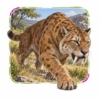
10 Fun Megantereon Facts for Kids
1. Megantereon Was a True Cat
Megantereon belonged to Felidae, the cat family, and to the saber-toothed subfamily Machairodontinae.
Kid Decode: It was a genuine cat, but no living cat carries its remarkable dental toolkit.
2. It Was Not a Saber-Toothed Tiger
The nickname saber-toothed tiger is misleading because Megantereon was not a tiger and did not belong to the modern tiger lineage.
Kid Decode: The sabers were real; the tiger label wandered into the wrong family folder.
3. It Was Usually Jaguar-Sized
Many Megantereon individuals were roughly leopard- to jaguar-sized, although body size varied among species and some Asian forms were especially large.
Kid Decode: It packed heavyweight forelimbs into a cat that was not usually lion-sized.
4. Its Upper Canines Were Long and Flat
The upper canine teeth were elongated, narrow from side to side, and sharpened along their edges for a specialised stabbing or slicing bite.
Kid Decode: Each saber was less like a cone and more like a carefully shaped ivory blade.
5. Its Lower Jaw Had a Protective Flange
A downward-projecting bony flange at the front of the lower jaw helped shield the long upper canines when the mouth was closed.
Kid Decode: Its chin carried two built-in parking guards for expensive teeth.
6. It Could Open Its Mouth Very Wide
Jaw anatomy allowed a larger gape than in living big cats, giving the upper canines enough room to clear the lower jaw during a strike.
Kid Decode: The mouth opened in double-door mode before the sabers went to work.
7. Its Forelimbs Were Extremely Powerful
Short, robust arm bones and strong muscle attachments suggest that Megantereon grappled with prey rather than chasing it over long distances.
Kid Decode: The front half was built to turn a struggle into a very brief wrestling match.
8. It Was Probably an Ambush Hunter
Its stocky body and limb proportions fit a predator that attacked from cover and relied on a sudden burst of force.
Kid Decode: It preferred one explosive surprise over a long-distance race.
9. It Lived Across the Old World
Megantereon fossils are known from Africa, Europe, and Asia, including important remains from South Africa, Europe, China, and the Siwalik region.
Kid Decode: Its fossil trail stretches across three continents and several very different landscapes.
10. It May Have Been Close to Smilodon’s Ancestry
Megantereon was a smilodontin and is often considered close to the ancestry of Smilodon, although the exact evolutionary relationship remains debated.
Kid Decode: It may sit near the earlier chapters of the famous Smilodon story, but the family tree still has pencilled lines.
The Weirdest Megantereon Fact
Megantereon protected its long upper sabers with a bony flange on the lower jaw, creating a built-in sheath-like guard beneath each canine.
Try This Megantereon Activity
Megantereon Drawing Activity
Draw Megantereon waiting beside cover in a Pleistocene woodland. Add a stocky cat body, powerful shoulders, short robust forelimbs, long flattened upper canines, a lower-jaw flange protecting the sabers, a wide-open-mouth diagram, hoofed prey, rocks, shrubs, and a map marking Africa, Europe, and Asia.
Quick Megantereon Quiz
- Was Megantereon a tiger? Answer: No, it was a saber-toothed cat but not a true tiger.
- What protected its long upper canines? Answer: A bony flange on the lower jaw.
- How did it probably hunt? Answer: By ambushing and overpowering prey with powerful forelimbs.
- Where have its fossils been found? Answer: Africa, Europe, and Asia.
- Which famous saber-toothed cat may have been a close later relative? Answer: Smilodon.
Mini Glossary
- Machairodont: A member of the extinct saber-toothed cat subfamily.
- Smilodontin: A robust dirk-toothed cat from the branch containing Megantereon and Smilodon.
- Mandibular Flange: A downward bony projection on the lower jaw.
- Ambush Predator: A hunter that waits before making a sudden attack.
- Canine Shear Bite: A specialised bite using long flattened canines to cut deeply into soft tissue.
 Sea Krait Facts for Kids
 Black-Backed Jackal Facts for Kids
 Sea Snake Facts for Kids
 Phorusrhacos Facts for Kids
More Animal Facts for Kids
Visit the full animal facts library or explore a focused animal group.
More Extinct Animal Facts for Kids
Discover dinosaurs, Ice Age giants, prehistoric sea creatures, recently extinct species, and other animals from the past.
Fact check note: Fact checked with Antón and colleagues’ 2024 facial reconstruction of Megantereon cultridens, Stimpson and colleagues’ 2024 Siwalik review, Sardella and colleagues’ work on Megantereon whitei, and comparative machairodont forelimb and canine-biomechanics studies.

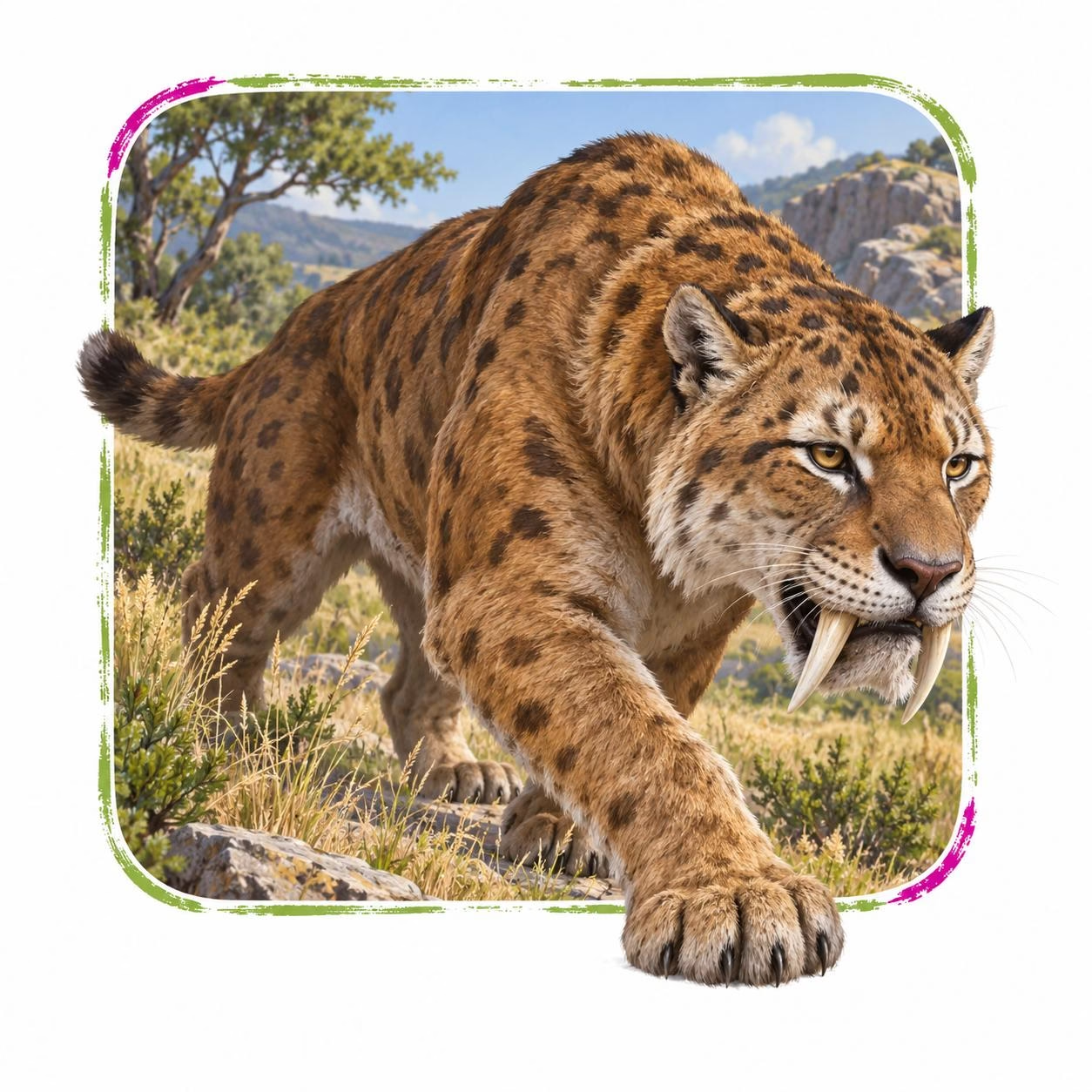
Megantereon in its natural Pliocene and Pleistocene woodlands, scrub, rocky valleys, open grasslands, forest edges, and mixed terrestrial habitats across the Old World habitat