
Moschops Facts for Kids
Moschops was a heavily built plant-eating therapsid that lived in what is now South Africa during the Middle Permian. It was not a dinosaur, reptile, or mammal, although it belonged to the synapsid branch that later produced mammals. Its small head had an extraordinarily thickened skull roof, while a barrel-shaped body and strong limbs supported a mass of roughly 400 kilograms in one recent reconstruction.
Quick Moschops Facts
- Animal Type: Extinct herbivorous therapsid
- Group: Tapinocephalid dinocephalian
- Known For: Thick skull roof, possible head-butting, small head, barrel body, and powerful limbs
- Lived During: Middle Permian, about 264–260 million years ago
- Diet: Tough terrestrial plants
What You’ll Learn
Explore 10 unusual moschops facts for kids about thick skulls, bulky bodies, plant diets, and prehistoric life, with a quiz, glossary, and activity
Easy explanations make these facts fun for children, families, teachers, and curious young learners.
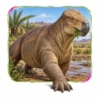
10 Fun Moschops Facts for Kids
1. Moschops Was a Therapsid
Moschops belonged to Therapsida, the synapsid branch containing mammals and many extinct mammal-line relatives.
Kid Decode: It stood on the mammal side of the family tree without being a mammal.
2. Its Skull Roof Was Extremely Thick
Bones across the top and back of the skull became heavily thickened, a condition called pachyostosis.
Kid Decode: Its head came with a built-in bone crash helmet.
3. It May Have Butted Heads
The reinforced skulls of Moschops and related tapinocephalids have long been interpreted as adaptations for head-to-head contests, though the exact behaviour cannot be observed directly.
Kid Decode: The Permian may have hosted heavyweight forehead negotiations.
4. Its Head Was Small
Compared with its deep trunk, Moschops had a relatively compact head with a short rounded snout.
Kid Decode: Evolution gave the digestive system the mansion and the head the studio apartment.
5. It Had a Barrel-Shaped Body
A broad rib cage probably held a large digestive tract for processing fibrous, low-quality vegetation.
Kid Decode: Its belly was a plant-fermentation factory carried on four legs.
6. It Was About Two and a Half Metres Long
A well-known skeleton has a vertebral column measuring about 2.4 metres along its curve, placing the living animal near 2.5 metres in length.
Kid Decode: It was roughly sofa-length with considerably more bone in the forehead.
7. It Weighed Around Four Hundred Kilograms
A 2024 three-dimensional reconstruction estimated about 406 to 426 kilograms for one adult-sized specimen.
Kid Decode: It packed several piano players’ worth of mass into one sturdy herbivore.
8. Its Teeth Cropped Tough Plants
Stout, long-crowned teeth helped Moschops bite and process resistant vegetation rather than slice meat.
Kid Decode: The teeth were built for stubborn salad, not steak.
9. Its Limbs Were Strong
Heavy limb bones and robust shoulder and hip regions supported the animal’s broad body on land.
Kid Decode: This plant eater carried Permian construction-site legs.
10. Its Name Means Calf Face
The name Moschops comes from Greek words meaning calf and face, probably referring to the shape of its snout.
Kid Decode: A bull-sized body ended up with a name inspired by a calf.
The Weirdest Moschops Fact
Moschops may have settled disputes by ramming its heavily thickened skull against another Moschops, making it one of the earliest famous boneheads.
Try This Moschops Activity
Moschops Drawing Activity
Draw Moschops crossing a Middle Permian South African floodplain. Add a small rounded head, very thick skull roof, barrel-shaped body, strong limbs, short tail, tough plants, red soil, and two adults facing one another beneath a “head-butting?” question label.
Quick Moschops Quiz
- Was Moschops a dinosaur? Answer: No, it was a therapsid.
- What was unusual about its skull? Answer: The skull roof was extremely thick.
- What may Moschops have done during contests? Answer: Butted heads.
- What did Moschops eat? Answer: Tough terrestrial plants.
- How much did one recent model estimate it weighed? Answer: About 406 to 426 kilograms.
Mini Glossary
- Therapsid: A synapsid from the broad branch containing mammals and their closer extinct relatives.
- Dinocephalian: A group of often large Middle Permian therapsids.
- Tapinocephalid: A mostly herbivorous dinocephalian with a thickened skull.
- Pachyostosis: Unusual thickening and increased density of bone.
- Herbivore: An animal that eats plants.
 Wallaby Facts for Kids
 Solenodon Facts for Kids
 Kinkajou Facts for Kids
 Moeritherium Facts for Kids
More Animal Facts for Kids
Visit the full animal facts library or explore a focused animal group.
More Extinct Animal Facts for Kids
Discover dinosaurs, Ice Age giants, prehistoric sea creatures, recently extinct species, and other animals from the past.
Fact check note: Fact checked with Gregory’s 1926 Moschops skeleton monograph, Benoit and Midzuk’s 2024 three-dimensional body-mass study, tapinocephalid skull research, and South African Karoo fossil records.

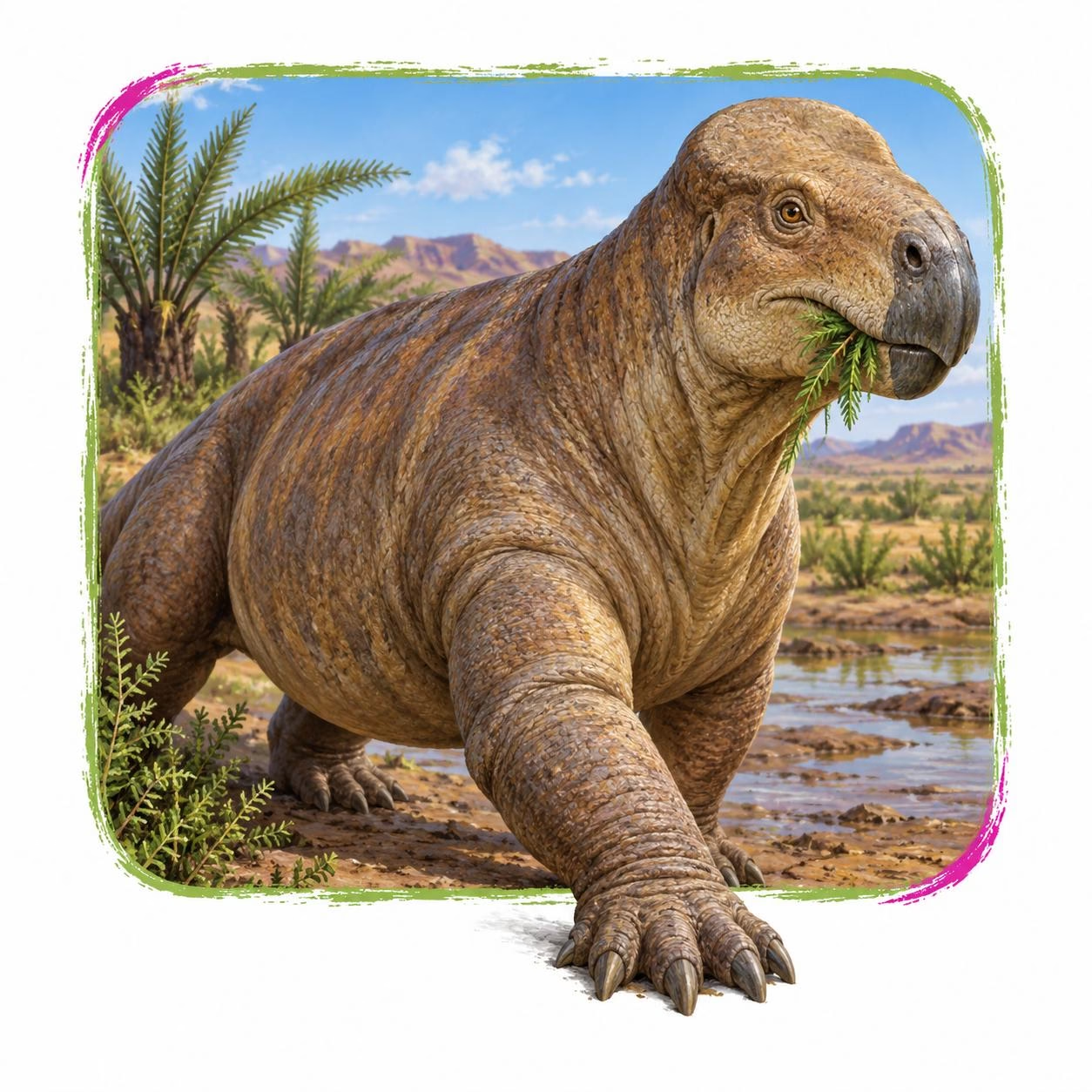
Moschops in its natural Middle Permian river floodplains, seasonal wetlands, dry lowlands, wooded plains, and terrestrial habitats of the South African Karoo habitat