
Muraenosaurus Facts for Kids
Muraenosaurus was a long-necked plesiosaur from the Middle Jurassic seas of England. It was not a dinosaur. Its name means moray-eel lizard because its small head and extremely long neck gave early scientists an eel-like impression. A large individual measured about 5 metres long and carried 44 vertebrae in its neck.
Quick Muraenosaurus Facts
- Animal Type: Prehistoric marine reptile
- Group: Long-necked cryptoclidid plesiosaur
- Known For: Forty-four neck vertebrae, small head, slender ridged teeth, four flippers, eel-inspired name, and Oxford Clay fossils
- Lived During: Middle Jurassic, about 166–163 million years ago
- Diet: Fish, cephalopods, crustaceans, and other small marine prey
What You’ll Learn
Explore 10 fascinating muraenosaurus facts for kids about its extra-long neck, small head, flippers, ocean hunting, and Jurassic seas, with a quiz, glossary, and activity
Easy explanations make them fun for children, families, teachers, and young marine-life fans.
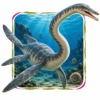
10 Fun Muraenosaurus Facts for Kids
1. Muraenosaurus Was a Plesiosaur
Muraenosaurus was a marine reptile belonging to the plesiosaur group, not a dinosaur or an actual eel.
Kid Decode: It borrowed an eel-shaped nickname without joining the eel family.
2. It Lived in Middle Jurassic England
Its fossils come mainly from the Oxford Clay Formation, deposited beneath a warm sea that covered part of England.
Kid Decode: Modern fields now sit above a vanished ocean packed with Jurassic reptiles.
3. Its Name Means Moray-Eel Lizard
The name Muraenosaurus combines a word for moray eel with the Greek word for lizard, referring to its long-necked appearance.
Kid Decode: Scientists looked at the neck and reached for the eel section of the dictionary.
4. It Had Forty-Four Neck Vertebrae
Muraenosaurus leedsii had 44 cervical vertebrae, producing a neck that made up a large portion of its total length.
Kid Decode: Forty-four neck bones created a very long route from body to bite.
5. It Grew to About Five Metres Long
The largest well-known individuals reached roughly 5 to 5.2 metres from the tip of the snout to the end of the tail.
Kid Decode: It stretched beyond many cars, with much of that distance devoted to neck.
6. Its Head Was Small
Muraenosaurus had a relatively small skull at the end of its long neck, reducing the weight carried far from the body.
Kid Decode: The neck delivered a compact head instead of hauling a giant skull.
7. It Had Slender Ridged Teeth
Its narrow teeth carried fine lengthwise ridges and were suited to gripping small marine animals rather than crushing hard shells.
Kid Decode: Those teeth were tiny spears with textured sides.
8. It Swam With Four Flippers
Two front and two rear flippers pushed and steered Muraenosaurus through the water in a wing-like swimming motion.
Kid Decode: It flew through water using a four-paddle power set.
9. Its Species Name Honors Leeds
The species name leedsii honors fossil collector Alfred Nicholson Leeds, whose collection contained many important Oxford Clay marine reptiles.
Kid Decode: A fossil hunter’s surname became permanently attached to a Jurassic swimmer.
10. It Probably Gave Birth to Live Young
No Muraenosaurus embryo has been found, but evidence from another plesiosaur shows that members of the group gave birth in the sea.
Kid Decode: Its young likely arrived already afloat in the Jurassic ocean.
The Weirdest Muraenosaurus Fact
Muraenosaurus packed 44 vertebrae into its neck, giving it one of the most neck-heavy body plans in its Middle Jurassic ecosystem.
Try This Muraenosaurus Activity
Muraenosaurus Drawing Activity
Draw Muraenosaurus gliding through a Middle Jurassic English sea. Add an extremely long neck, tiny head, barrel-shaped body, four flippers, slender ridged teeth, fish, ammonites, crustaceans, muddy seafloor, an Oxford Clay fossil tag, and 44 small neck-bone markers.
Quick Muraenosaurus Quiz
- Was Muraenosaurus a dinosaur? Answer: No, it was a plesiosaur.
- What does its name mean? Answer: Moray-eel lizard.
- How many neck vertebrae did it have? Answer: Forty-four.
- Where are its best-known fossils found? Answer: The Oxford Clay Formation of England.
- What did it probably eat? Answer: Fish, cephalopods, crustaceans, and other small marine prey.
Mini Glossary
- Plesiosaur: A prehistoric marine reptile with four flippers.
- Cervical Vertebra: A bone forming part of the neck.
- Cryptoclidid: A family of mostly long-necked Jurassic plesiosaurs.
- Cephalopod: A squid, ammonite, octopus, or related animal.
- Oxford Clay: A fossil-rich Middle Jurassic rock formation in England.
 Halibut Facts for Kids
 Bullfrog Facts for Kids
 European Goldfinch Facts for Kids
 Baryonyx Facts for Kids
More Animal Facts for Kids
Visit the full animal facts library or explore a focused animal group.
More Extinct Animal Facts for Kids
Discover dinosaurs, Ice Age giants, prehistoric sea creatures, recently extinct species, and other animals from the past.
Fact check note: Fact checked with Seeley’s 1874 description of Muraenosaurus leedsii, Evans’s 1999 skull reconstruction, Brown’s 1981 Oxford Clay plesiosaur review, Alfred Leeds collection records, and plesiosaur live-birth evidence.

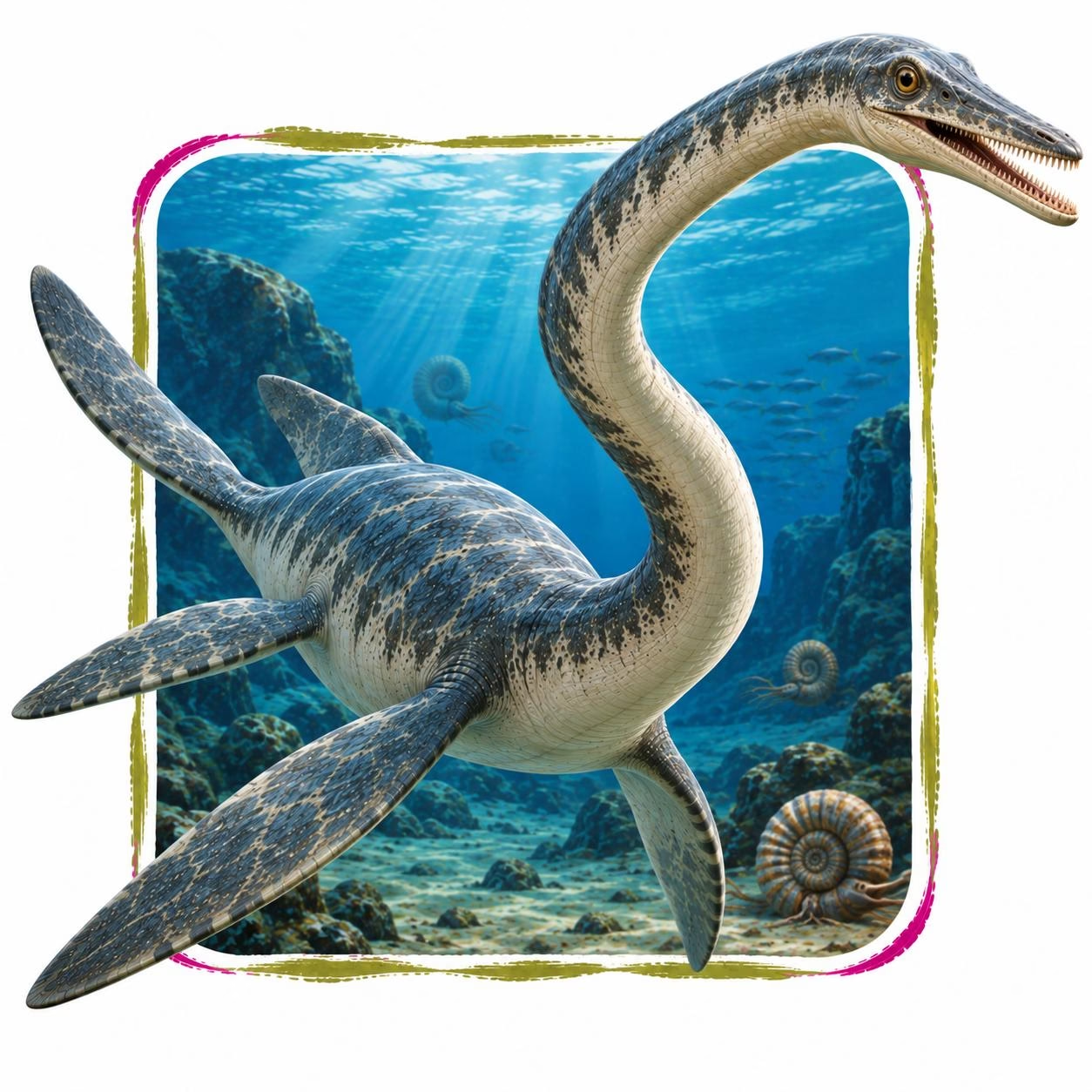
Muraenosaurus in its natural Middle Jurassic shallow seas, warm shelf waters, muddy offshore environments, island channels, coastal marine habitats, and ammonite-rich waters of the Oxford Clay habitat