
Pikaia Facts for Kids
Pikaia was a small, fish-shaped chordate that lived in the Cambrian sea about 505 million years ago. It was not a true fish and had no backbone like a modern vertebrate, but its body included important chordate features such as repeated muscle blocks and a dorsal nerve cord. A 2024 study even showed that scientists had been reconstructing the fossil upside down.
Quick Pikaia Facts
- Animal Type: Early chordate
- Group: Stem-group chordate
- Known For: V-shaped muscle blocks, dorsal nerve cord, laterally flattened body, tiny head appendages, and an upside-down reconstruction puzzle
- Lived During: Middle Cambrian, about 505 million years ago
- Diet: Probably organic particles and food gathered near the seafloor
What You’ll Learn
Explore 10 fascinating pikaia facts for kids about its slender body, swimming, muscle blocks, early chordate features, and Cambrian seas, plus a quiz, glossary, and activity
These easy facts are made for kids, parents, teachers, and curious young learners.
10 Fun Pikaia Facts for Kids
1. Pikaia Was an Early Chordate
Pikaia belonged to the chordate branch, the broad animal group that later includes fish, amphibians, reptiles, birds, and mammals.
Kid Decode: It sat near the opening pages of the enormous chordate family album.
2. It Was Not a True Fish
Pikaia had a fish-like shape, but it lacked the skull, jaws, fins, and backbone of a genuine vertebrate fish.
Kid Decode: Fish-shaped is not the same as fish-certified.
3. It Grew About Five Centimetres Long
The largest known specimens reached roughly 5.5 centimetres, with a narrow body flattened from side to side.
Kid Decode: This famous evolutionary clue was only about finger-length.
4. Its Body Had Repeated Muscle Blocks
Around 100 zigzag or V-shaped bands along the body are interpreted as myomeres, the segmented muscles used for swimming.
Kid Decode: Its sides carried a long row of tiny muscle-powered chevrons.
5. It Had a Dorsal Nerve Cord
A 2024 study identified a nerve cord running along the upper side of the body, one of the clearest features linking Pikaia with chordates.
Kid Decode: A slender line of nervous tissue helped settle a very old family-tree argument.
6. Scientists Had It Upside Down
New research reinterpreted the fossil’s gut and nerve cord, showing that earlier reconstructions had swapped the animal’s back and belly.
Kid Decode: For more than a century, Pikaia’s portrait had quietly been hanging the wrong way up.
7. Its Head Was Small
The front end carried a tiny head region with two lobes and short tentacle-like structures, but no confirmed eyes.
Kid Decode: Its face kept things minimalist: little head, small feelers, no obvious stare.
8. It Probably Swam Side to Side
Pikaia’s flattened body and repeated muscles suggest that it moved by sending waves of bending along its body.
Kid Decode: It likely wriggled through the water with a whole-body swimming ripple.
9. It May Have Fed Near the Seafloor
Sediment or organic material preserved in the gut has led scientists to suggest deposit feeding, although its exact diet remains uncertain.
Kid Decode: Its meals may have come from the muddy Cambrian snack layer.
10. Its Name Comes From a Mountain Animal
Pikaia was named after the pika, a small rabbit relative living in the Rocky Mountains near the Burgess Shale region.
Kid Decode: A tiny sea creature borrowed its name from a tiny mountain mammal.
The Weirdest Pikaia Fact
A 2024 anatomical study showed that the famous fossil had long been reconstructed upside down, and the corrected view revealed a clear dorsal nerve cord.
Try This Pikaia Activity
Pikaia Drawing Activity
Draw Pikaia swimming above the Burgess Shale seafloor. Add a narrow side-flattened body, about 100 zigzag muscle blocks, a small head with short feelers, a dorsal nerve cord line, a simple tail fin, muddy sediment, sponges, and an arrow showing how the old reconstruction was flipped upside down.
Quick Pikaia Quiz
- Was Pikaia a true fish? Answer: No, it was an early stem-group chordate.
- How long could it grow? Answer: About 5.5 centimetres.
- What were the zigzag bands along its body? Answer: Muscle blocks called myomeres.
- What major feature did a 2024 study identify? Answer: A dorsal nerve cord.
- What surprising mistake had scientists made? Answer: They had reconstructed Pikaia upside down.
Mini Glossary
- Chordate: An animal belonging to the group that includes vertebrates and several simpler relatives.
- Stem Group: An extinct branch close to, but outside, the living members of a major group.
- Myomere: A repeated block of muscle along the body.
- Dorsal Nerve Cord: A main nerve cord running along the back or upper side of a chordate.
- Deposit Feeder: An animal that eats organic material collected from sediment.
 Kudu Facts for Kids
 Anaconda Facts for Kids
 Giant Squid Facts for Kids
 Christmas Island Pipistrelle Facts for Kids
More Animal Facts for Kids
Visit the full animal facts library or explore a focused animal group.
More Extinct Animal Facts for Kids
Discover dinosaurs, Ice Age giants, prehistoric sea creatures, recently extinct species, and other animals from the past.
Fact check note: Fact checked with Mussini and colleagues’ 2024 Current Biology reinterpretation, Conway Morris and Caron’s 2012 anatomical study, and Royal Ontario Museum Burgess Shale records.

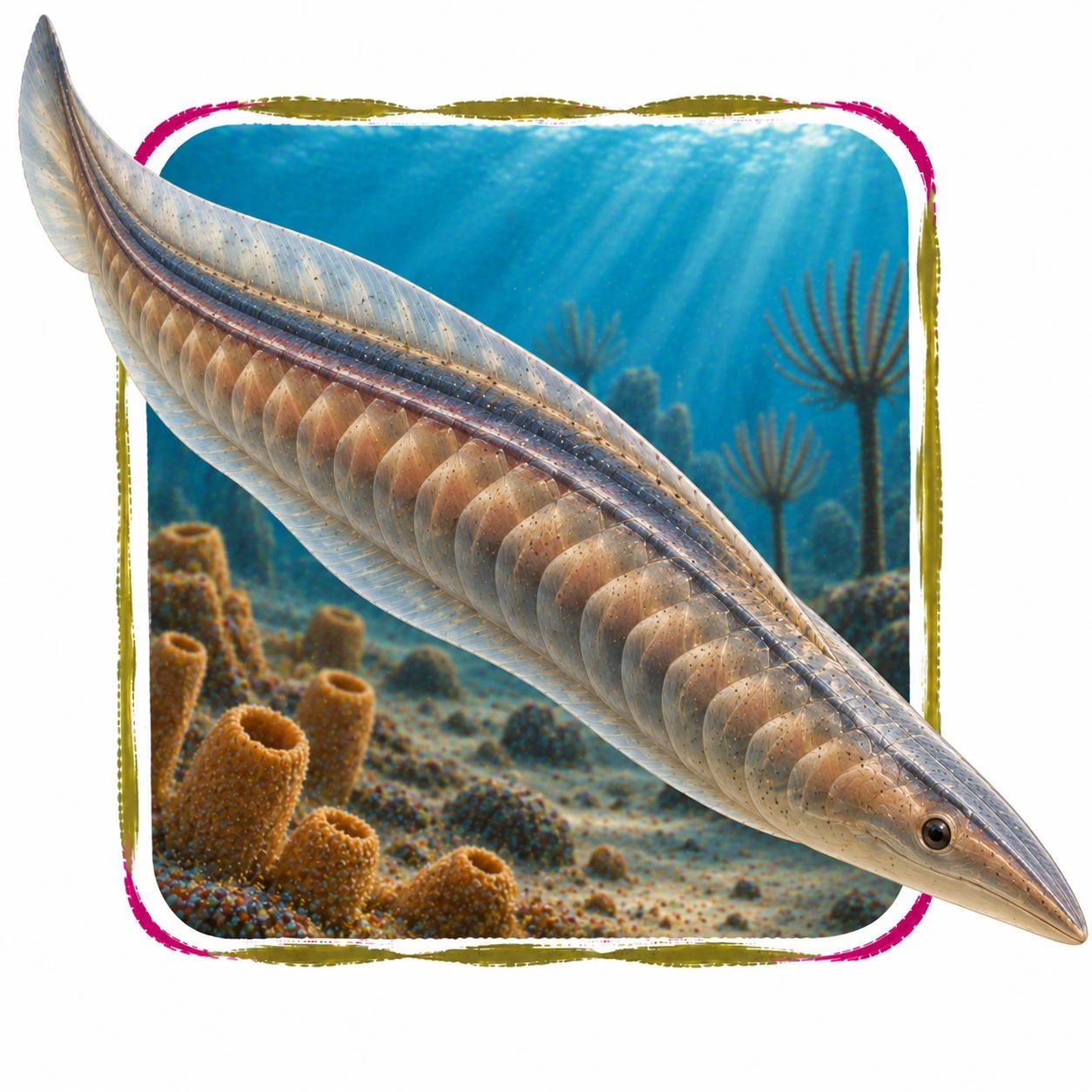
Pikaia in its natural Middle Cambrian offshore seas, muddy seafloors, low swimming zones above sediment, sponge communities, and quiet continental shelf habitats habitat