
Psittacosaurus Facts for Kids
Psittacosaurus was a small beaked dinosaur from Early Cretaceous Asia. It was not Triceratops, but it was an early ceratopsian relative from the same broad horned-dinosaur line. Psittacosaurus had a parrot-like beak, strong cheek bones, plant-eating teeth, and in some fossils, long bristle-like structures along the tail.
Quick Psittacosaurus Facts
- Animal Type: Early ceratopsian dinosaur
- Group: Psittacosaurid ceratopsian
- Known For: Parrot lizard name, strong beak, early horned-dinosaur relative, tail bristles, many Asian fossils, hatchlings, preserved skin and color clues, and plant diet
- Lived During: Early Cretaceous, about 126 to 101 million years ago
- Diet: Leaves, seeds, fruits, tough plants, and other vegetation
What You’ll Learn
Explore 10 adorable psittacosaurus facts for kids about its parrot-like beak, bristles, small body, plant diet, and Cretaceous Asia, with a quiz, glossary, and activity
These easy facts are made for kids, parents, teachers, and curious young learners.
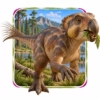
10 Fun Psittacosaurus Facts for Kids
1. Psittacosaurus Was a Dinosaur
Psittacosaurus was a ceratopsian dinosaur, meaning it belonged to the horned-dinosaur branch.
Kid Decode: Early ceratopsian, before the huge frill-and-horn parade.
2. Its Name Means Parrot Lizard
Psittacosaurus means parrot lizard because of its strong curved beak.
Kid Decode: This dinosaur had serious parrot-beak energy without being a bird.
3. It Was Not Triceratops
Psittacosaurus was much earlier, smaller, and simpler than Triceratops, with no giant horns or big frill.
Kid Decode: Same broad family road, very different dinosaur vehicle.
4. It Lived in Asia
Fossils of Psittacosaurus are known from places including China, Mongolia, Russia, and Thailand.
Kid Decode: This little beaked dinosaur had a busy Asian fossil passport.
5. It Was About 2 Metres Long
The Natural History Museum lists Psittacosaurus at about 2 metres long and about 50 kilograms.
Kid Decode: Small for a dinosaur, but big enough to make a scooter nervous.
6. It Had Tail Bristles
Some Psittacosaurus fossils preserve long bristle-like structures along the top of the tail.
Kid Decode: Not feathers exactly like a bird wing, more like a tail brush from fossilland.
7. Its Skin and Colors Are Famous
Exceptional fossils preserve skin and pigment clues, helping scientists study countershading and dinosaur skin evolution.
Kid Decode: This dinosaur left behind more outfit information than most ancient celebrities.
8. It Swallowed Stones
Psittacosaurus fossils often contain gastroliths, or stomach stones, that may have helped grind food.
Kid Decode: Built-in rock tumbler digestion, tiny dinosaur edition.
9. Baby Psittacosaurs Were Hatchlings
Psittacosaurus dinosaurs hatched from eggs, so babies can be called hatchlings.
Kid Decode: A hatchling parrot lizard was a tiny beaked plant-nibbler.
10. It Helps Explain Ceratopsian Evolution
Psittacosaurus shows what early ceratopsians looked like before later giants evolved massive horns and frills.
Kid Decode: Before Triceratops wore a shield on its head, this cousin carried a beak and bristles.
The Weirdest Psittacosaurus Fact
Psittacosaurus had a parrot-like beak and tail bristles, making it one of the most memorable small plant-eating dinosaurs.
Try This Psittacosaurus Activity
Psittacosaurus Drawing Activity
Draw Psittacosaurus in Early Cretaceous Asia. Add a parrot-like beak, small body, tail bristles, gastrolith stones, skin color pattern, hatchling egg clue, leafy plants, and a “parrot lizard” label.
Quick Psittacosaurus Quiz
- Was Psittacosaurus a dinosaur? Answer: Yes, it was an early ceratopsian dinosaur.
- What does Psittacosaurus mean? Answer: Parrot lizard.
- Was Psittacosaurus the same as Triceratops? Answer: No, it was smaller and much earlier.
- What special structures are known from its tail? Answer: Long bristle-like structures.
- What did Psittacosaurus eat? Answer: Plants such as leaves, seeds, fruits, and tough vegetation.
Mini Glossary
- Ceratopsian: A beaked dinosaur group that includes Psittacosaurus and later horned dinosaurs.
- Psittacosaurid: A family of early ceratopsians with parrot-like beaks.
- Gastrolith: A swallowed stone that may help grind food in the stomach.
- Bristle: A stiff hair-like or quill-like structure.
- Hatchling: A baby animal newly hatched from an egg.
 Pipefish Facts for Kids
 Olive Baboon Facts for Kids
 River Otter Facts for Kids
 Schomburgk's Deer Facts for Kids
More Animal Facts for Kids
Visit the full animal facts library or explore a focused animal group.
More Extinct Animal Facts for Kids
Discover dinosaurs, Ice Age giants, prehistoric sea creatures, recently extinct species, and other animals from the past.
Fact check note: Fact checked with Natural History Museum Psittacosaurus page, recent Psittacosaurus skin fossil reporting, and trusted ceratopsian dinosaur references.

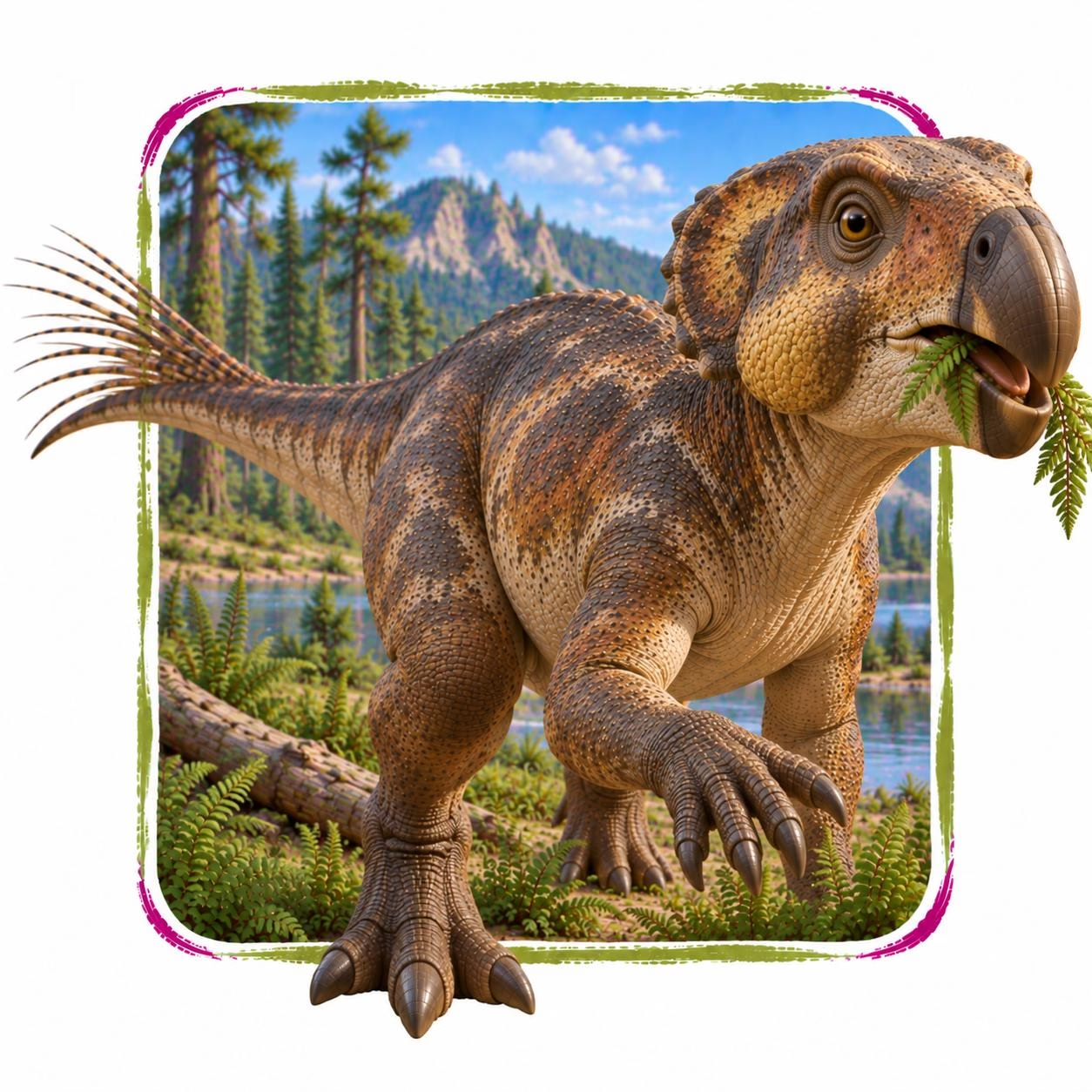
Psittacosaurus in its natural Early Cretaceous Asian forests, northeastern Chinese lake margins, Mongolian and Russian lowlands, river floodplains, fern and conifer vegetation, dry woodland edges, preserved skin fossil beds, and early ceratopsian browsing ecosystems habitat