
Seymouria Facts for Kids
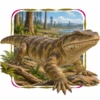
Seymouria was a sturdy reptiliomorph tetrapod that lived during the Early Permian. It was not a dinosaur, true reptile, or modern amphibian, although it combined amphibian-like ancestry with a strongly land-adapted adult skeleton. Robust limbs, well-formed wrists and ankles, and fossils from dry terrestrial deposits show that adults were capable walkers on land.
Quick Seymouria Facts
- Animal Type: Extinct reptiliomorph tetrapod
- Group: Seymouriamorph
- Known For: Strong land-going limbs, reptile-like adult body, toothy palate, and a debated amphibian-style life cycle
- Lived During: Early Permian, roughly 290–275 million years ago
- Diet: Insects, worms, and small vertebrates
What You’ll Learn
Discover 10 fascinating seymouria facts for kids about strong legs, reptile-like features, land movement, breeding near water, and Permian life, with a quiz, glossary, and activity
Clear explanations make them ideal for children, families, teachers, and little fact-hunters.
10 Fun Seymouria Facts for Kids
1. Seymouria Was Not a Reptile
Seymouria looked reptile-like, but it belonged to an extinct reptiliomorph branch outside the true amniotes.
Kid Decode: It wore the reptile-shaped outfit without receiving a true reptile membership card.
2. Adults Were Well Adapted to Land
Mature Seymouria had strong limb bones, sturdy joints, and well-developed wrists and ankles suited to supporting its body on land.
Kid Decode: Those feet were built for Permian ground duty rather than permanent pond life.
3. It Grew About Sixty Centimetres Long
Many reconstructions place Seymouria at roughly 60 centimetres long, although size varied between species and individuals.
Kid Decode: It was about the length of a large school ruler laid end to end with another half ruler.
4. Its Skull Was Broad and Low
Seymouria had a relatively broad skull with a short snout and openings behind the eyes called otic notches.
Kid Decode: Its head looked sturdy, flat, and ready to inspect the Permian floor for snacks.
5. It Had Teeth on Its Palate
In addition to teeth along the jaws, Seymouria carried smaller teeth on bones forming the roof of its mouth.
Kid Decode: The ceiling of its mouth joined the prey-gripping department.
6. Its Teeth Had Folded Inner Structure
Like many early tetrapods, Seymouria had labyrinthodont teeth with complex folds of dentine inside.
Kid Decode: Each tooth hid a tiny maze beneath the surface.
7. Its Life Cycle Is Still Debated
Aquatic larvae are known in some close seymouriamorph relatives, but no certain Seymouria larvae have been identified.
Kid Decode: The adults are clear; the baby chapter remains partly missing from the fossil book.
8. It Lived in North America and Europe
Seymouria fossils are known from Early Permian rocks in the United States and Germany.
Kid Decode: This compact tetrapod left footprints in the fossil story on both sides of the Atlantic.
9. Its Name Comes From Seymour, Texas
The genus was named after Seymour, Texas, near the region where important fossils were discovered.
Kid Decode: A small Texas town became permanently attached to a very old branch of tetrapod history.
10. It Was Probably a Small Predator
Its pointed teeth and strong land-going body suggest that Seymouria hunted insects, worms, and small vertebrates.
Kid Decode: It was no giant, but tiny Permian neighbours still had reasons to keep moving.
The Weirdest Seymouria Fact
Seymouria looked so reptile-like that early scientists placed it close to reptile ancestry, yet its exact position and whether it had an amphibian-style larval stage remain debated.
Try This Seymouria Activity
Seymouria Drawing Activity
Draw Seymouria walking across an Early Permian landscape. Add a broad low skull, sturdy body, strong sprawling limbs, well-formed wrists and ankles, pointed teeth, a palate-tooth cutaway, insects, small vertebrate tracks, dry plants, and a sign pointing toward Seymour, Texas.
Quick Seymouria Quiz
- Was Seymouria a dinosaur? Answer: No, it was a reptiliomorph tetrapod.
- Where could adult Seymouria move well? Answer: On land.
- How long was it roughly? Answer: About 60 centimetres.
- What unusual teeth occurred inside its mouth? Answer: Small teeth on the palate.
- Is an aquatic Seymouria larva known for certain? Answer: No, its early life cycle remains debated.
Mini Glossary
- Reptiliomorph: An early tetrapod from the broad branch closer to amniotes than many other amphibian-grade animals.
- Seymouriamorph: A member of the extinct group containing Seymouria and its relatives.
- Amniote: A vertebrate belonging to the group containing reptiles, birds, and mammals.
- Otic Notch: An indentation at the rear side of the skull in some early tetrapods.
- Labyrinthodont Tooth: A tooth with complicated folds of dentine inside.
 Sea Pickle Facts for Kids
 Cobra Facts for Kids
 Black-Capped Chickadee Facts for Kids
 Muraenosaurus Facts for Kids
More Animal Facts for Kids
Visit the full animal facts library or explore a focused animal group.
More Extinct Animal Facts for Kids
Discover dinosaurs, Ice Age giants, prehistoric sea creatures, recently extinct species, and other animals from the past.
Fact check note: Fact checked with Bazzana and colleagues’ 2020 postcranial anatomy and histology study, Maho and colleagues’ 2022 dental study, and mature Seymouria specimens from the Early Permian of Germany and North America.

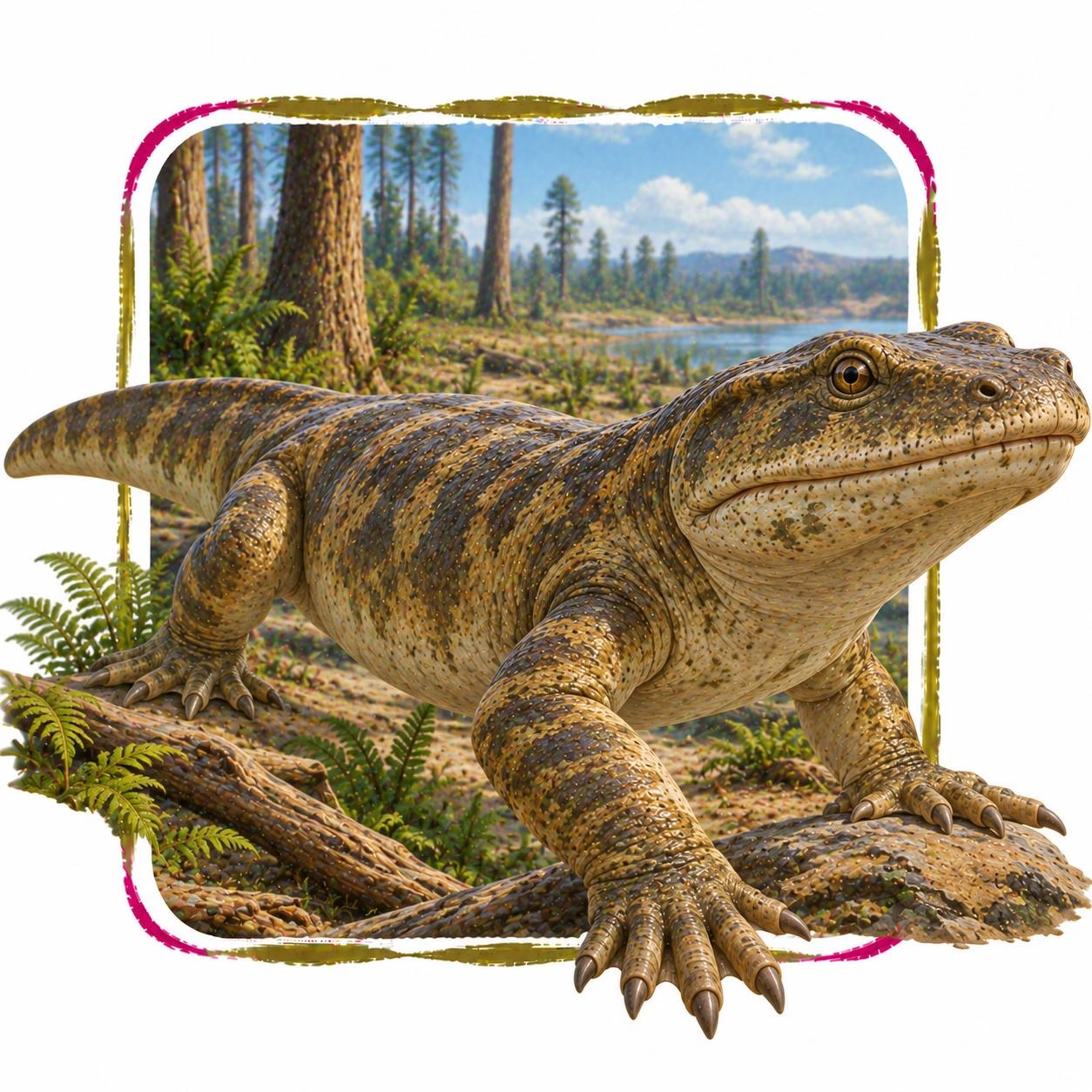
Seymouria in its natural Early Permian dry floodplains, seasonal river margins, wooded lowlands, upland soils, and terrestrial habitats of North America and Europe habitat