
Thrinaxodon Facts for Kids
Thrinaxodon was a small meat-eating cynodont that lived shortly after the end-Permian mass extinction. It was not a dinosaur or a mammal, but it belonged to the therapsid branch that eventually produced mammals. Differently shaped teeth, a partly developed secondary palate, strong jaws, and direct fossil evidence of burrowing make it one of the best-known early mammal relatives.
Quick Thrinaxodon Facts
- Animal Type: Extinct predatory therapsid
- Group: Early cynodont
- Known For: Burrowing, differentiated teeth, partial secondary palate, shared-burrow fossil, and mammal-like jaw changes
- Lived During: Early Triassic, roughly 252–247 million years ago
- Diet: Insects, small vertebrates, and other animal food
What You’ll Learn
Explore 10 amazing thrinaxodon facts for kids about burrowing, whisker-like features, sharp teeth, and its close connection to mammal evolution, with a quiz, glossary, and activity
These simple facts are made for kids, parents, teachers, and curious young learners.
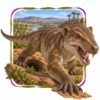
10 Fun Thrinaxodon Facts for Kids
1. Thrinaxodon Was a Cynodont
Thrinaxodon belonged to Cynodontia, the therapsid group that includes mammals and their closest extinct relatives.
Kid Decode: It stood on an early branch of the mammal family tree without being a mammal itself.
2. It Was About Half a Metre Long
Most reconstructions place Thrinaxodon at roughly 40 to 50 centimetres long, with a low body and a fairly large head.
Kid Decode: This important mammal relative was about house-cat length, minus the cat.
3. It Had Different Kinds of Teeth
Incisors, a large canine, and several postcanine teeth performed different jobs instead of repeating one simple tooth shape.
Kid Decode: Its mouth had a tiny division of labour: grip in front, pierce in the middle, process farther back.
4. Its Secondary Palate Was Partly Developed
Bones and probably tough soft tissue separated much of the nasal passage from the mouth, allowing breathing while food remained between the jaws.
Kid Decode: The breathing hallway stayed open while the dining room was busy.
5. Its Lower Jaw Was Becoming More Mammal-Like
The dentary bone formed most of the lower jaw, while the smaller rear jaw bones were reduced compared with those of earlier synapsids.
Kid Decode: Its jaw was quietly renovating itself toward the mammal blueprint.
6. It Dug and Used Burrows
A fossil burrow cast containing an articulated Thrinaxodon skeleton provides the earliest direct evidence of burrowing by a cynodont.
Kid Decode: One small survivor left its underground bedroom fossilised around it.
7. It Shared a Burrow With an Amphibian
One remarkable burrow preserved Thrinaxodon beside an injured Broomistega amphibian, apparently without signs that one had attacked the other.
Kid Decode: A mammal relative and an amphibian became the Triassic’s strangest emergency roommates.
8. Burrows May Have Helped It Survive Harsh Seasons
Underground shelter could have protected Thrinaxodon from heat, drought, predators, and rapid environmental changes after the mass extinction.
Kid Decode: When the surface became dreadful, the sensible address was below ground.
9. It Lived in Africa and Antarctica
Thrinaxodon fossils are known from South Africa and Antarctica, which were connected within the southern supercontinent Gondwana.
Kid Decode: Its fossil trail crossed lands now separated by a frozen ocean.
10. Fur and Whiskers Are Not Proven
Thrinaxodon is often drawn with fur and whiskers, but its fossils do not preserve a coat, and facial openings alone cannot confirm whiskers.
Kid Decode: The mammal-like face comes with a scientific label reading: soft tissues unknown.
The Weirdest Thrinaxodon Fact
A fossil burrow contains Thrinaxodon and an injured amphibian called Broomistega together, suggesting an unusual moment of shelter sharing during a harsh Early Triassic season.
Try This Thrinaxodon Activity
Thrinaxodon Drawing Activity
Draw Thrinaxodon resting inside an Early Triassic burrow. Add a low body, large head, incisors, one canine, postcanine teeth, sturdy digging limbs, a secondary-palate cutaway, dry floodplain soil, and an injured Broomistega sheltering nearby beneath a “shared burrow” label.
Quick Thrinaxodon Quiz
- Was Thrinaxodon a dinosaur? Answer: No, it was an early cynodont therapsid.
- How long was it roughly? Answer: About 40 to 50 centimetres.
- What direct behaviour is preserved by a fossil cast? Answer: Burrowing.
- Which injured animal shared one burrow with it? Answer: A Broomistega amphibian.
- Are fur and whiskers known from fossils? Answer: No, they remain uncertain.
Mini Glossary
- Cynodont: A therapsid from the group containing mammals and their closest extinct relatives.
- Dentary: The main tooth-bearing bone of the lower jaw.
- Secondary Palate: A partition separating part of the breathing passage from the mouth.
- Burrow Cast: Sediment that filled an animal’s tunnel and later hardened into rock.
- Gondwana: The southern region of Pangaea containing Africa, Antarctica, South America, India, Australia, and nearby lands.
 Slug Facts for Kids
 Otter Facts for Kids
 Chamois Facts for Kids
 Tanystropheus Facts for Kids
More Animal Facts for Kids
Visit the full animal facts library or explore a focused animal group.
More Extinct Animal Facts for Kids
Discover dinosaurs, Ice Age giants, prehistoric sea creatures, recently extinct species, and other animals from the past.
Fact check note: Fact checked with Damiani and colleagues’ 2003 burrow study, Fernandez and colleagues’ 2013 shared-burrow analysis, Jasinoski and colleagues’ 2015 growth study, and recent Thrinaxodon nasal-cavity research.

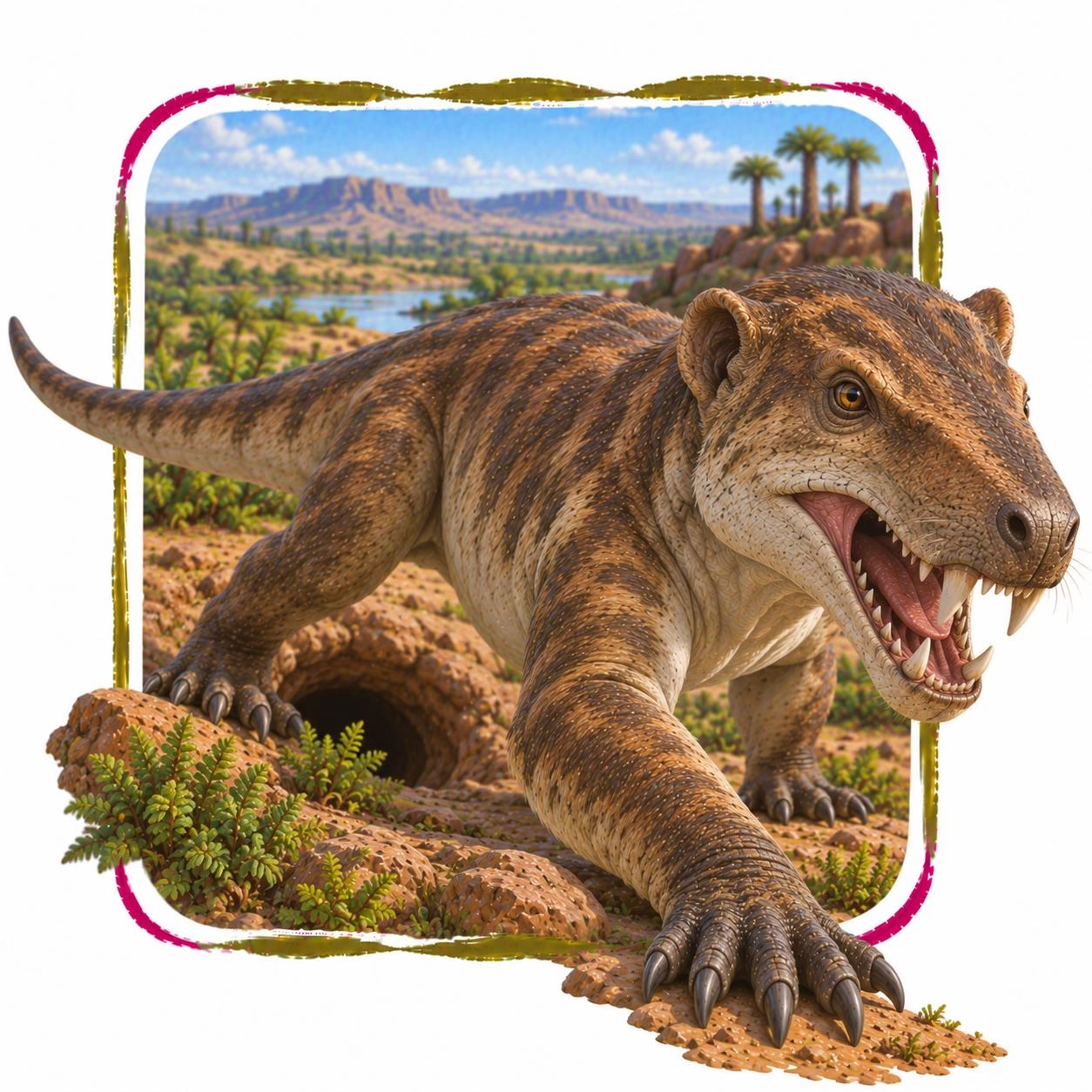
Thrinaxodon in its natural Early Triassic seasonal floodplains, dry river valleys, burrow systems, sparse lowlands, and cool southern environments across Gondwana habitat