
Titanichthys Facts for Kids
Titanichthys was a giant armored fish that lived in Late Devonian seas. It belonged to the placoderms, an extinct group of early jawed vertebrates protected by bony plates around the head and front of the body. Unlike its powerful relative Dunkleosteus, Titanichthys had long, narrow jaw plates without sharp cutting edges, and research suggests that it probably swallowed plankton-rich water as a huge suspension feeder.
Quick Titanichthys Facts
- Animal Type: Extinct armored fish
- Group: Arthrodire placoderm
- Known For: Giant body, armored front section, long toothless jaw plates, weak bite, and probable suspension feeding
- Lived During: Late Devonian, roughly 372–359 million years ago
- Diet: Probably zooplankton and other tiny drifting animals
What You’ll Learn
Discover 10 giant titanichthys facts for kids about enormous size, armored heads, filter feeding, swimming, and Devonian oceans, plus a quiz, glossary, and activity
These facts are explained simply for kids, parents, teachers, and curious little fact-finders.
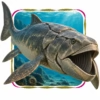
10 Fun Titanichthys Facts for Kids
1. Titanichthys Was an Armored Fish
Titanichthys belonged to the placoderms, an extinct branch of jawed vertebrates with bony armor over the head and front of the trunk.
Kid Decode: It entered Devonian seas wearing a helmet and chest plate made by evolution.
2. It Was One of the Devonian Giants
Although exact body length is uncertain, Titanichthys was several metres long and ranked among the largest vertebrates of its time.
Kid Decode: It achieved sea-monster scale without needing a sea-monster bite.
3. It Had Long Toothless Jaw Plates
Its lower jaw plates were narrow and lacked the sharp blades or crushing surfaces found in many other giant placoderms.
Kid Decode: The mouth brought giant doors to dinner but forgot to install knives.
4. It Probably Filtered Tiny Food
Computer tests of its jaw strength support the idea that Titanichthys fed by taking in water containing plankton and other small organisms.
Kid Decode: A giant fish may have survived on meals too tiny to notice one at a time.
5. Its Jaws Were Relatively Weak
The lower jaw was less resistant to stress than the jaws of placoderms adapted to bite large prey or crush hard shells.
Kid Decode: Weak for chomping did not mean useless; it meant the mouth had a different job.
6. It May Have Used Ram Feeding
Titanichthys may have swum forward with its mouth open, funnelling food-filled water inside in a method called continuous ram suspension feeding.
Kid Decode: Its feeding plan was basically swim, scoop, strain, repeat.
7. It Was Very Different From Dunkleosteus
Titanichthys and Dunkleosteus were both giant arthrodire placoderms, but Dunkleosteus had powerful cutting jaws while Titanichthys probably targeted tiny prey.
Kid Decode: One brought armored can-opener jaws; the other brought a plankton funnel.
8. It Had Small Eyes for Its Skull
The eye openings were relatively small compared with the enormous head, which may fit an animal that did not rely on spotting individual prey.
Kid Decode: When dinner drifted everywhere, eagle-eyed aiming mattered a little less.
9. Its Fossils Span Two Continents
Titanichthys fossils are best known from Late Devonian marine rocks in Morocco and eastern North America, especially the Cleveland Shale of Ohio.
Kid Decode: Its armored remains crossed an ancient ocean before becoming fossils on opposite shores.
10. Its Name Means Titanic Fish
The name Titanichthys combines words meaning titan or giant and fish, a fitting title for one of the Devonian’s biggest swimmers.
Kid Decode: The name arrives with its own size warning label.
The Weirdest Titanichthys Fact
Titanichthys may have been an enormous armored filter feeder, showing that giant animals were living on tiny drifting prey hundreds of millions of years before basking sharks and baleen whales.
Try This Titanichthys Activity
Titanichthys Drawing Activity
Draw Titanichthys swimming through a Late Devonian sea. Add a huge armored head and trunk shield, long narrow toothless jaw plates, a wide open mouth, clouds of tiny plankton, smaller fish, a Dunkleosteus silhouette for comparison, coral-like reefs, and arrows showing water flowing through the mouth.
Quick Titanichthys Quiz
- Was Titanichthys a dinosaur? Answer: No, it was an armored placoderm fish.
- During which period did it live? Answer: The Late Devonian.
- What was unusual about its jaw plates? Answer: They were long, narrow, and lacked sharp cutting edges.
- What did it probably eat? Answer: Zooplankton and other tiny drifting animals.
- Which powerful placoderm had a very different bite? Answer: Dunkleosteus.
Mini Glossary
- Placoderm: An extinct early jawed vertebrate protected partly by bony armor.
- Arthrodire: A major placoderm group with a joint between the head and trunk armor.
- Suspension Feeder: An animal that collects tiny food suspended in water.
- Zooplankton: Small drifting animals and animal-like organisms in water.
- Ram Feeding: Collecting food by swimming forward with the mouth open.
 Diving Beetle Facts for Kids
 Pheasant Facts for Kids
 Cobra Facts for Kids
 Deinotherium Facts for Kids
More Animal Facts for Kids
Visit the full animal facts library or explore a focused animal group.
More Extinct Animal Facts for Kids
Discover dinosaurs, Ice Age giants, prehistoric sea creatures, recently extinct species, and other animals from the past.
Fact check note: Fact checked with Coatham and colleagues’ 2020 Royal Society Open Science jaw-mechanics study, Boyle and Ryan’s 2017 Cleveland Shale redescription, and Late Devonian placoderm research.

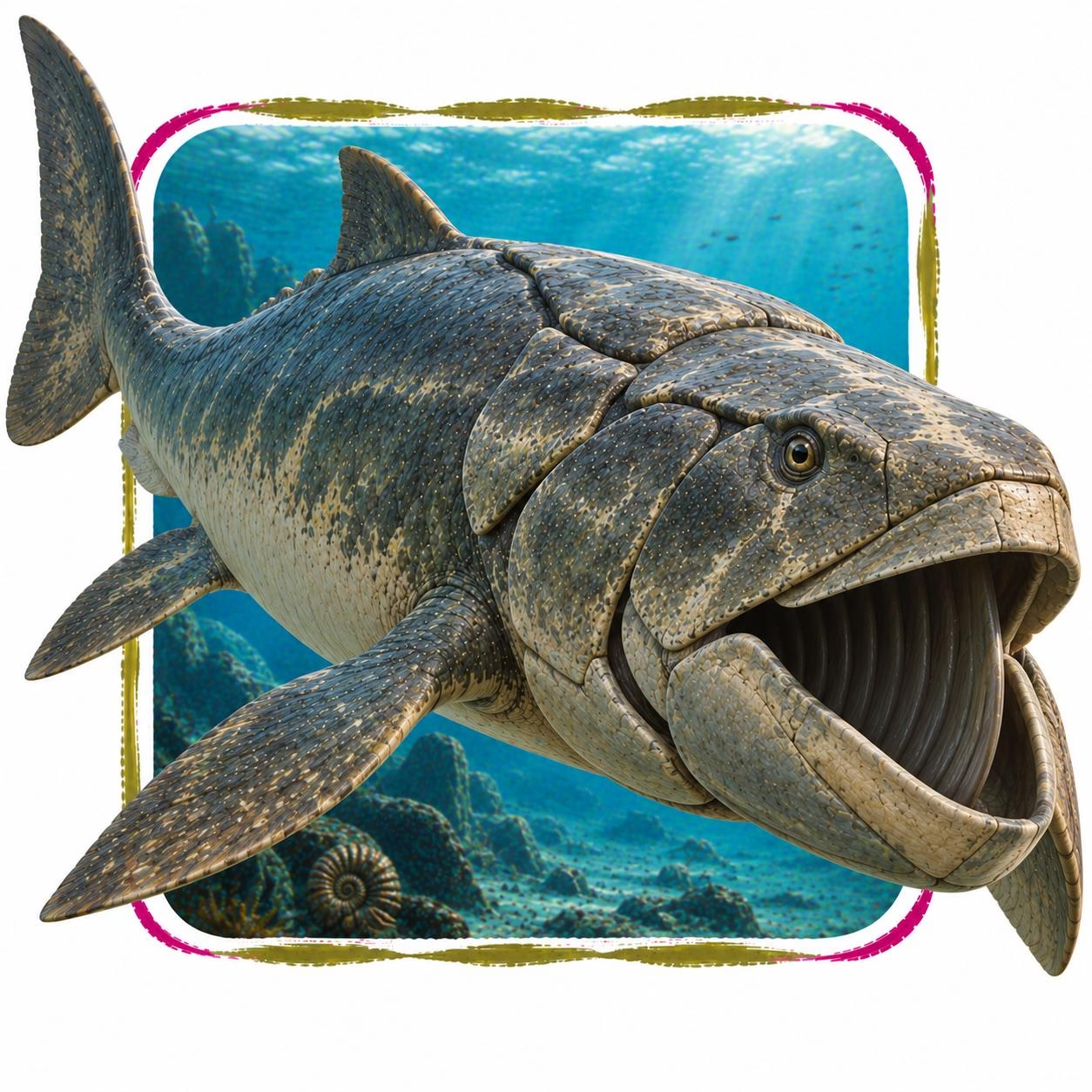
Titanichthys in its natural Late Devonian shallow seas, offshore marine waters, continental shelves, reef margins, oxygen-poor basins, and pelagic feeding grounds habitat