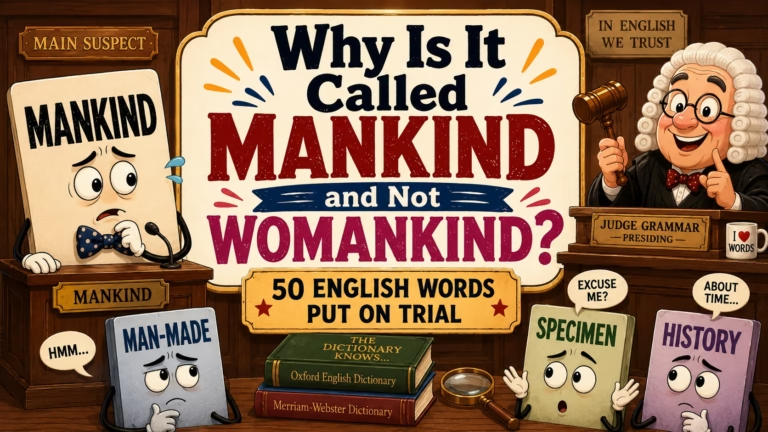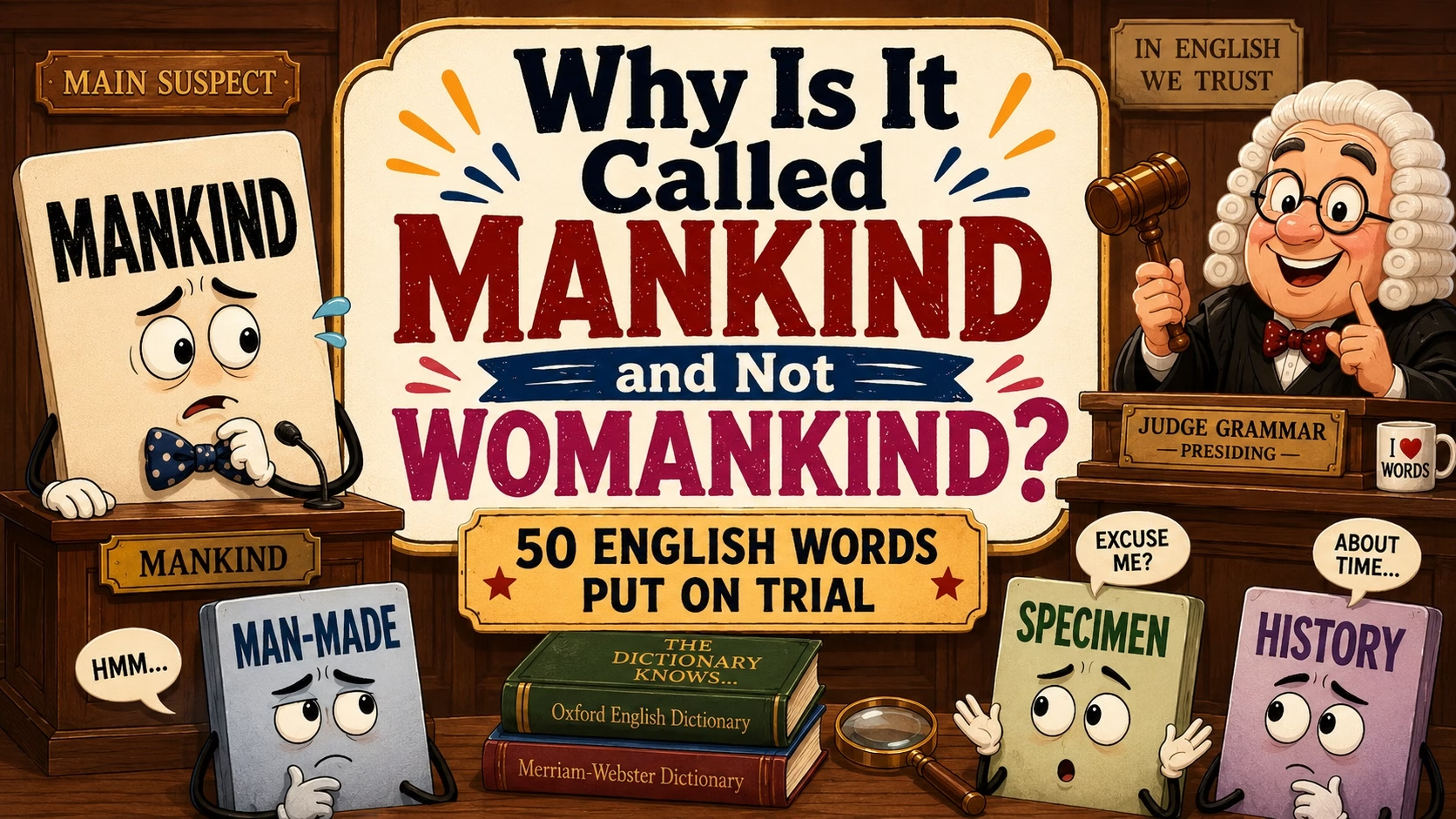
Why Is It Called Mankind and Not Womankind? 50 Funny English Word Questions
Why is it called mankind and not womankind? That is the main question of this funny English word trial. Once you notice mankind, your brain starts asking about man-made, manpower, specimen, history, human, and a whole courtroom full of suspicious words.
This post is not here to shout at the dictionary. It is here to laugh at English, explain a few word origins, and decide which words are actually outdated, which are innocent, and which only look guilty because spelling is a tiny circus.
What Are We Doing in This Word Trial?
This article uses the question why is it called mankind and not womankind as a funny starting point. Each word below gets a quick trial: the suspicious question, a short explanation, and a verdict.
Some words really come from old “man as human” language. Some words come from Latin, Greek, French, or other roots and have nothing to do with men. Some are just too funny to leave alone.
| Word Type | Examples | What Happens Here |
|---|---|---|
| Actually outdated | Mankind, manpower, chairman | We explain the old usage and suggest clearer modern words. |
| Better word exists | Man-made, fireman, policeman | We point to words like human-made, firefighter, and police officer. |
| False alarm | Specimen, human, manual | We explain why the word only looks suspicious. |
| Pure wordplay | Speciwomen, huwoman, womanual | We enjoy the joke, then gently remove the fake moustache. |
1. Why is it called mankind and not womankind?
Main suspect
Mankind comes from older English where man could mean human or person. But today, “man” usually sounds male, which is why the phrase why is it called mankind and not womankind feels so natural to ask.
Verdict: Historically explainable, but “humankind” is clearer now.
2. Why is it called man-made and not woman-made?
Needs update
Man-made means made by humans instead of made by nature. It was not meant to erase women, but it does sound like English handed the toolbox to only one half of the species.
Verdict: Use “human-made” when you want the sentence to behave.
3. Why is it called manpower and not womanpower?
Old workplace language
Manpower means available workers or labor. The word comes from older work language where men were treated as the default public workers.
Verdict: “Workforce” is cleaner, modern, and less caveman-coded.
4. Why is it called chairman and not chairwoman?
Old job title
Chairman came from a time when many leadership roles were held by men. The chair itself has no gender and would like to be excused from this meeting.
Verdict: “Chair” or “chairperson” solves it neatly.
5. Why is it called freshman and not freshwoman?
School word
Freshman means a first-year student or beginner. Freshwoman exists, but English gave freshman the big school locker and left freshwoman in the lost-and-found box.
Verdict: “First-year student” is clearer and less odd.
6. Why is it called fireman and not firewoman?
Easy modern fix
Fireman came from a time when firefighting was mostly treated as men’s work. Fire does not care who brings the hose.
Verdict: “Firefighter” is the better word. Stronger too.
7. Why is it called policeman and not policewoman?
Easy modern fix
Policeman is another old title built around the male default. The job is being an officer, not being a man with paperwork.
Verdict: “Police officer” wins.
8. Why is it called mailman and not mailwoman?
Easy modern fix
Mailman sounds cozy and old-fashioned, but letters do not check gender at the mailbox. The person delivering mail is carrying mail, not performing male magic.
Verdict: “Mail carrier” or “postal worker” delivers better.
9. Why is it called spokesman and not spokeswoman?
Better neutral word
Spokesman means someone who speaks for a group. Spokeswoman exists too, but spokesperson avoids the tiny argument before the press conference starts.
Verdict: Spokesperson has entered the chat.
10. Why is it called businessman and not businesswoman?
Default setting problem
Businessman and businesswoman both exist. But if gender does not matter, businessperson, founder, owner, or entrepreneur is sharper.
Verdict: Use the role. Business already has enough drama.
11. Why is it called salesman and not saleswoman?
Better neutral word
Salesman sounds like it came with a hat, a handshake, and a catalog. The modern word is salesperson, because selling is a skill, not a chromosome.
Verdict: Upsold into neutrality.
12. Why is it called sportsmanship and not sportswomanship?
Old virtue word
Sportsmanship means fair play and good behavior in sports. Great value, strange outfit, because anyone can lose gracefully without blaming the referee, the shoes, and the moon.
Verdict: Good idea, outdated jersey.
13. Why is it called middleman and not middlewoman?
Role word
A middleman stands between two sides in a deal or process. Intermediary, agent, or broker says the same thing without adding a tiny moustache.
Verdict: Suspiciously standing in the middle.
14. Why is it called right-hand man and not right-hand woman?
Old phrase
A right-hand man is a trusted helper. Right-hand woman exists, but right-hand person or trusted aide works when gender is not the point.
Verdict: Useful phrase, uneven handshake.
15. Why is it called man of the hour and not woman of the hour?
Praise phrase
Man of the hour means the person getting attention or praise right now. Woman of the hour exists, but the older phrase shows how often praise language defaulted male.
Verdict: The hour needs better HR.
16. Why is it called a one-man show and not a one-woman show?
Performance phrase
A one-man show means one person carries the performance or project. One-woman show and one-person show also exist, and the last one avoids the whole side quest.
Verdict: “Solo show” is the clean escape hatch.
17. Why is it called man up and not woman up?
Cultural phrase
Man up means be brave or take responsibility, but it wraps courage in macho packaging. Bravery is not stored in a beard.
Verdict: “Step up” is better and less emotionally stiff.
18. Why is it called founding fathers and not founding mothers?
History spotlight
Founding fathers usually refers to specific men credited with founding a nation or institution. But history often leaves women’s work in the margins, quietly holding the ladder while someone else gets the statue.
Verdict: Accurate in some contexts, incomplete in spirit.
19. Why is it called forefathers and not foremothers?
Ancestor word
Forefathers means ancestors, but it makes the family tree look suspiciously beard-heavy. Ancestors includes everyone who came before.
Verdict: Ancestry wearing a fake beard.
20. Why is it called brotherhood and not sisterhood?
Unity word
Brotherhood means unity, loyalty, or shared purpose. Sisterhood exists too, but brotherhood often got used as the grand universal version.
Verdict: Nice feeling, uneven guest list.
21. Why is it called gentleman and not gentlewoman?
Both exist
Gentleman became a common polite term for a man. Gentlewoman exists, but it sounds like someone in a candlelit novel deciding whether to marry a duke.
Verdict: Both are real. One got louder publicity.
22. Why is it called layman and not laywoman?
Better neutral word
Layman means a non-expert or ordinary person. Layperson is better because confusion belongs to everyone equally.
Verdict: “Layperson” is the clean fix.
23. Why is it called everyman and not everywoman?
Symbol word
Everyman means an ordinary person representing many people. Everywoman exists too, but ordinary person or everyday person avoids the default-man wobble.
Verdict: Symbolic, but still wearing old shoes.
24. Why is it called workmanlike and not workwomanlike?
Old craft word
Workmanlike means competent, skillful, or neatly done. It comes from old craft language, but today it sounds like quality control with a beard.
Verdict: “Skilled,” “competent,” or “well-made” works better.
25. Why is it called workmanship and not workwomanship?
Old craft word
Workmanship means the quality of work or craft. The idea is useful, but the word sounds like only men can sand a table correctly.
Verdict: “Craftsmanship” is common, but “quality of work” is clearer.
26. Why is it called manhole and not womanhole?
Awkward utility word
A manhole is an access opening for a person to enter a sewer or utility space. The word is practical, but modern ears hear it and immediately start giggling in the back row.
Verdict: “Utility hole” or “maintenance hole” sounds less cursed.
27. Why is it called manhunt and not womanhunt?
Old broad “man”
Manhunt means a search for a person, usually a suspect. The “man” here is closer to the older broad sense of human, but it still sounds like a crime drama with narrow casting.
Verdict: “Search for a suspect” is clearer.
28. Why is it called manslaughter and not womanslaughter?
Serious word
Manslaughter is a legal term involving unlawful killing without the same intent as murder in many legal systems. The “man” here comes from an older sense of human being, not male person.
Verdict: Grim old legal word. Handle carefully.
29. Why is it called specimen and not speciwomen?
False alarm
Specimen looks guilty because it ends in “men,” standing there in a lab coat. But it comes from Latin roots about looking, evidence, examples, or samples.
Verdict: Innocent, but permanently funny.
30. Why is it called human and not huwoman?
False alarm
Human is not built from “hu” plus “man.” It comes through French and Latin roots connected to human beings.
Verdict: False alarm. Good pun, bad etymology.
31. Why is it called history and not herstory?
False origin, useful wordplay
History does not mean “his story.” It comes from Greek roots about inquiry and knowledge, but herstory became useful wordplay for highlighting women’s stories.
Verdict: Etymologically innocent, culturally spicy.
32. Why is it called female and not fe-male?
Spelling trap
Female is not “male with a prefix.” It comes from Old French and Latin roots related to woman or female, but the spelling later moved closer to male.
Verdict: Not guilty, but the spelling is acting weird.
33. Why does woman have man inside it?
Old English roots
Woman comes from older roots often explained as wif plus man, where man could mean person. So it meant something like female person, not “man with extra letters.”
Verdict: Looks suspicious, has old receipts.
34. Why is it called manual and not womanual?
Latin hand word
Manual comes from Latin manus, meaning hand. So manual labor is hand work, not man work.
Verdict: The hands did it.
35. Why is it called manuscript and not womanscript?
Latin hand word
Manuscript also comes from hand-related Latin roots. It means something written by hand, not something written by a man.
Verdict: Handwritten, not man-written.
36. Why is it called manufacture and not womanufacture?
Latin hand word
Manufacture is linked to Latin manus, meaning hand, and making. The root idea points to making by hand.
Verdict: Not male-made. Hand-made at the root.
37. Why is it called manicure and not womanicure?
Latin hand word
Manicure comes from Latin roots meaning hand and care. So it is hand-care, not man-care.
Verdict: The nails are innocent.
38. Why is it called manager and not womanager?
False alarm
Manager is not about men. It is connected to handling, directing, and controlling things, which explains why managers handle meetings until everyone loses sparkle.
Verdict: Not guilty, but please reduce meetings.
39. Why is it called manifest and not womanifest?
False alarm
Manifest means clear, obvious, or made visible. It is not made from “man,” but womanifest sounds like a vision board with legal powers.
Verdict: Manifestly innocent.
40. Why is it called mandate and not womandate?
False alarm
Mandate comes from Latin roots about commanding or entrusting. It has nothing to do with men, women, or awkward dinner plans.
Verdict: Paperwork word, not a dating scandal.
41. Why is it called manipulate and not womanipulate?
Latin hand word
Manipulate is connected to handling with the hands. Its sneaky modern meaning came later, after the hands apparently hired a morally questionable publicist.
Verdict: Caught red-handed, not male-handed.
42. Why is it called manner and not womanner?
False alarm
Manner means way, style, or behavior. It only looks suspicious because English lets unrelated words wear matching coats.
Verdict: Innocent. Please continue having manners.
43. Why is it called mansion and not womansion?
False alarm
Mansion comes through older roots about staying or dwelling. It is not a man’s house, though many historical mansions did come with portraits of men looking much too pleased.
Verdict: Large house, small suspicion.
44. Why is it called mango and not womango?
Fruit acquitted
Mango is not a “man” word. Its name came into English through South Asian language roots and Portuguese routes.
Verdict: Fruit cleared. Still sticky.
45. Why is it called manatee and not womanatee?
Animal acquitted
Manatee is not a man in the sea. The animal is just floating around like a sofa with feelings, minding its aquatic business.
Verdict: Sea cow innocent.
46. Why is it called mandarin and not womandarin?
Traveling word
Mandarin can mean a language, an official, or a small orange fruit. It is not built from the English word man, no matter how suspiciously it starts.
Verdict: International word with passport stamps.
47. Why is it called man cave and not woman cave?
Modern phrase
Man cave is modern lifestyle language for a private hobby room. Women also need private space, but marketing decided one version needed a cave and probably a neon sign.
Verdict: Gendered décor crime.
48. Why is it called man bun and not woman bun?
Modern phrase
Women had buns for ages and English just called them buns. Then men wore one and the hairstyle got a press release.
Verdict: Hair with a publicist.
49. Why is it called masterpiece and not mistresspiece?
Craft word
Masterpiece is connected to the work of a master craftsperson. It does not mean a piece made by a man, but mistresspiece deserves a comedy trophy.
Verdict: Art history wearing a monocle.
50. Why is it called old wives’ tale and not old husbands’ tale?
Actually spicy
Old wives’ tale means a traditional belief, often dismissed as silly or unscientific. The phrase is suspicious because old husbands have also said nonsense near cars, grills, maps, and hardware stores for centuries.
Verdict: Sexist little antique. Use “folk belief” or “myth” when needed.
Best Modern Replacements for Gendered English Words
If you came here asking why is it called mankind and not womankind, the useful answer is not just “English is weird.” The useful answer is that many old words have better modern replacements.
| Older Word | Cleaner Option |
|---|---|
| Mankind | Humankind, humanity, people |
| Man-made | Human-made, artificial, manufactured |
| Manpower | Workforce, staffing, labor |
| Chairman | Chair, chairperson |
| Fireman | Firefighter |
| Policeman | Police officer |
| Mailman | Mail carrier, postal worker |
| Spokesman | Spokesperson |
| Forefathers | Ancestors |
| Old wives’ tale | Folk belief, myth, superstition |
Final Thought
So, why is it called mankind and not womankind? Mostly because English is old, messy, and full of words that once sounded normal but now arrive with suspicious paperwork.
Some words need replacing. Some only need explaining. And some, like speciwomen, are not real words but deserve a tiny comedy trophy anyway.
FAQ
Why is it called mankind and not womankind?
Mankind comes from older English where man could mean human or person. Today, humankind or humanity usually sounds clearer.
Is mankind a sexist word?
It depends on context. It historically meant humans, but many modern readers hear it as male-centered.
What can I say instead of mankind?
You can say humankind, humanity, people, or human beings.
Does specimen mean speci-men?
No. Specimen comes from Latin roots about examples, samples, evidence, or looking. It is not related to men.
Is history really his story?
No. History comes from Greek roots about inquiry and knowledge. Herstory is modern wordplay.
Why do so many English words have man in them?
Some use old man meaning human. Some come from Latin manus, meaning hand. Some just look suspicious by accident.