
Cobra vs Rattlesnake: True-Cobra-to-Rattlesnake Venomous-Snake Comparison
Cobras and rattlesnakes are venomous snakes with very different warning systems and family histories. In this page, cobra means the true Naja cobras of Africa and Asia; rattlesnake means Crotalus and Sistrurus pit vipers of the Americas. A cobra can raise its front body and spread long neck ribs into a hood. A rattlesnake can vibrate interlocking tail segments into a buzz and detect warm animals with facial pits. Cobras lay eggs and have short fixed fangs; rattlesnakes give birth to live young and have long hinged fangs. Neither group should be approached, handled, or judged safe by whether it displays its warning.
About Cobra
- Type Reptile
- Diet Carnivore eating rodents, shrews, frogs, toads, lizards, birds, eggs, fish, and other snakes depending on species, body size, habitat, and opportunity; prey is subdued with venom and swallowed whole
- Group Here cobra means the true cobras of genus Naja in family Elapidae, a diverse group of hood-forming venomous snakes from Africa and Asia; several other snakes carry “cobra” in their common names, but the king cobra belongs to genus Ophiophagus and is not included in the size comparison
- Known for A usually slender-to-moderately robust snake with a rounded head, round pupils, short fixed front fangs, smooth-looking scales, and long movable neck ribs that spread loose skin into a hood; Naja species range from compact cobras under a meter to forest cobras reported near 3 meters, with colors and hood markings varying widely
- Special skill Long flexible neck ribs can swing outward to build a broad warning hood. Short permanently erect front fangs deliver venom, while independently evolved spitting species have modified fang openings that project defensive venom toward a threatening face. Cobra venom composition and medical effects differ greatly among species and regions
About Rattlesnake
- Type Reptile
- Diet Carnivore eating mice, rats, ground squirrels, rabbits, birds, eggs, lizards, frogs, and other small vertebrates depending on species and size; many wait beside prey routes, strike, release, and follow the chemical trail of an envenomed animal
- Group The New World pit vipers of genera Crotalus and Sistrurus in family Viperidae; the group includes diamondbacks, timber, prairie, sidewinder, pygmy, massasauga, and many tropical rattlesnakes, so no one color, body size, venom recipe, or habitat describes every species
- Known for A generally stout snake with keeled scales, a broad neck-set head, vertical pupils in bright light, a heat-sensing pit between each eye and nostril, long hinged front fangs, and a tail rattle built from interlocking keratin segments; species range from small pygmy rattlesnakes to eastern diamondbacks over 2 meters
- Special skill Paired facial pits detect thermal radiation and combine with sight and smell to locate warm prey. Long hollow fangs rotate forward during a strike and fold against the roof of the mouth afterward. The rattle provides an acoustic warning, but a rattlesnake may remain silent and a damaged tail may lack a complete rattle
Cobra vs Rattlesnake: Quick Answer
A true cobra is an African or Asian elapid in genus Naja with short fixed front fangs and expandable neck ribs that form a hood. A rattlesnake is an American pit viper in Crotalus or Sistrurus with long hinged fangs, heat-sensing facial pits, and interlocking keratin tail segments that can buzz. Cobras lay eggs; rattlesnakes give birth to live young. Both are venomous, but species-level venom and danger cannot be ranked with one universal winner.
Where Do They Fit?
Follow the branches to see how Cobra and Rattlesnake are classified and related.
Cobra vs Rattlesnake: Quick Comparison
| Feature | True Cobra | Rattlesnake |
|---|---|---|
| Scientific scope | Genus Naja, family Elapidae | Genera Crotalus and Sistrurus, family Viperidae |
| Native region | Africa and Asia, extending into the Middle East and island Southeast Asia | The Americas, from southern Canada into South America |
| Main warning | Raises forebody, spreads a rib-supported hood, and hisses | May shake a segmented tail rattle, coil, or remain motionless |
| Venom fangs | Relatively short and fixed at the front of the upper jaw | Long and hinged, folding back when the mouth closes |
| Special sense | No rattlesnake-like facial heat pits; relies on sight, chemical sensing, vibration, and other snake senses | Paired loreal pits detect thermal radiation from warm objects |
| Reproduction | Egg-laying; parental attendance varies by species | Live-bearing; mothers in many species remain with neonates briefly |
| Body pattern | Highly variable; hood marks occur in some species but are not universal | Highly variable; diamonds, blotches, bands, speckles, or muted patterns depending on species |
| Hunting style | Active searching or ambush depending on species and prey | Often ambushes from a prey route, though behavior varies |
| Defensive venom spray | Some Naja species spit; many true cobras do not | Does not have the specialized forward-spraying system of a spitting cobra |
| Safe identification rule | Never approach to check for a hood | Never approach to wait for a rattle; it may stay silent |
How Are Cobras and Rattlesnakes Alike?
- Both are limbless squamate reptiles with scales, forked tongues, flexible skull connections, hundreds of ribs, and ectothermic bodies that depend on environmental heat.
- Both are venomous front-fanged snakes that evolved venom-delivery systems for subduing prey and defense, but venom chemistry and medical effects vary among species, populations, ages, and individual bites.
- Both use chemical information collected by the tongue and processed through the vomeronasal system, feel ground vibration, swallow prey whole, and replace damaged teeth throughout life.
- Both may hunt rodents and other small vertebrates, helping move energy through food webs and sometimes reducing populations of animals that damage crops or carry disease.
- Both usually avoid unnecessary contact with people and use warning or concealment before biting, yet either can bite without first hooding, rattling, or giving a visible display.
How Are Cobras and Rattlesnakes Different?
- True cobras belong to elapid genus Naja and are native to Africa and Asia; rattlesnakes belong to viper genera Crotalus and Sistrurus and are native only to the Americas.
- A cobra’s warning hood is loose neck skin spread by elongated movable ribs. A rattlesnake’s warning buzz comes from hollow keratin tail segments knocking rapidly against one another.
- Cobras carry relatively short fangs fixed upright near the front of the upper jaw; rattlesnakes rotate much longer fangs forward from a hinged position when opening the mouth.
- Rattlesnakes have loreal pits that sense thermal radiation between the eyes and nostrils. True cobras lack those paired pit-viper organs.
- True cobras lay eggs. Rattlesnake embryos develop inside the mother, and she gives birth to live neonates; in many species she remains nearby until their first shed.
- Some true cobras independently evolved the ability to project defensive venom toward a threat’s face. Rattlesnakes inject venom with a bite and do not use the cobra-style specialized spray.
Cobra vs Rattlesnake Adaptation Showdown
Hooded elapid versus rattling pit-viper showdown: Cobra receives a cautious size win because the longest true Naja species can approach about 3 meters, exceeding the longest well-documented rattlesnake examples, but the groups contain many overlapping small and medium species and the king cobra is excluded. Speed is a tie because no standardized genus-wide race exists. Strength is also a tie: body force, fang mechanics, venom yield, and venom chemistry answer different questions and vary too widely for one honest universal result. Rattlesnake wins stealth for cryptic patterns, ambush hunting, and thermal sensing that works without a conspicuous display. It wins social behavior for documented maternal attendance, communal dens, and female-centered association networks in studied species; this does not make every rattlesnake social. Swimming is a tie because members of both groups can cross water but neither entire group is aquatic. Rattlesnake wins strangest adaptation for turning shed-derived keratin buttons into a rapidly adjustable warning instrument. These fields compare adaptations, not a fight, venom contest, or advice for identifying a snake up close.
Fun Cobra vs Rattlesnake Facts
A Cobra Hood Is Opened by Ribs
A true cobra has several unusually long ribs near the front of its body. Muscles rotate those ribs outward, stretching loose neck skin sideways into a broad hood while the snake raises its forebody. The hood is a warning silhouette rather than a permanent flap, and patterns such as the Indian cobra’s spectacle mark occur in some species but not all.
A Rattle Is a Keratin Instrument, Not an Age Counter
Each time a rattlesnake sheds, a new hollow keratin segment can join the loose chain at its tail tip. Shaking specialized tail muscles makes neighboring segments strike one another and produce the buzz. Segments break off, babies begin without a working chain, and snakes may shed more than once per year, so counting buttons cannot reveal exact age.
Only Some Cobras Can Spit Venom
Spitting evolved in several African and Asian Naja lineages, and modified fang openings project a defensive spray toward the moving face of a threat. Experiments show that spitting cobras track head movement and spread venom over the facial area, increasing the chance of reaching an eye. Many true cobras cannot spit, and the behavior is defense rather than long-distance hunting.
Rattlesnake Mothers Can Stay With Their Babies
Rattlesnakes give birth to live young, and mothers of many studied species remain near the neonates until their first skin shed, sometimes sharing a rookery or shelter with other females. Western diamondback research has revealed changing social networks centered on reproductive females. The pattern varies, but it overturns the old idea that every snake abandons young immediately.
The King Cobra Is Not a True Naja Cobra
The famous king cobra belongs to genus Ophiophagus, not Naja. It has a hood and a cobra common name, but it forms a separate elapid branch and is excluded when this page compares the size of true cobras. Likewise, “rattlesnake” includes two genera, Crotalus and Sistrurus, rather than one species wearing a single standard pattern.
Cobra vs Rattlesnake Quiz
- What body structures spread a cobra’s hood? Answer: Elongated movable neck ribs.
- What material forms a rattlesnake’s rattle? Answer: Keratin, the material also found in hair and fingernails.
- Where are true Naja cobras native? Answer: Africa and Asia.
- Which snake has heat-sensing loreal pits? Answer: The rattlesnake.
- Do all cobras spit and all rattlesnakes rattle before a bite? Answer: No. Only some cobras spit, and a rattlesnake may remain silent.
Cobra vs Rattlesnake FAQ
Which is more venomous, a cobra or a rattlesnake?
There is no single scientific winner. Cobra and rattlesnake venoms contain changing mixtures of toxins, and potency measured in a laboratory is not the same as venom yield, fang delivery, bite location, victim size, or real clinical outcome. Species and geography matter. Any suspected bite from either group is a medical emergency.
Can a rattlesnake spread a hood?
Not the true cobra-style rib-supported hood. A threatened rattlesnake may flatten or coil its body, raise the head, hiss, or rattle. A cobra can spread its neck into a hood but has no segmented tail rattle.
Are baby rattlesnakes more dangerous than adults?
The popular claim that babies cannot control venom and are therefore always more dangerous is misleading. Adults can usually deliver much more venom because they have larger glands and fangs, while any age can cause a serious bite. Never use size, rattle length, or age to judge safety.
Does every rattlesnake rattle before biting?
No. A rattlesnake may remain motionless and silent, its rattle may be damaged, or a neonate may not yet have enough segments to buzz. The safe response is to stop, move away slowly, give the snake an escape route, and never try to touch, move, photograph closely, or identify it by provoking a warning.
What should someone do after a suspected venomous-snake bite?
Move away from the snake, keep the person still and calm, and contact local emergency medical services immediately. Do not try to catch or kill the snake, and do not cut, suck, ice, or tourniquet the bite. Regional medical professionals and poison services should guide treatment.
Animal Words to Know
- Elapid: A member of the front-fixed-fanged snake family Elapidae, which includes true cobras, mambas, kraits, coral snakes, and sea snakes.
- Pit viper: A viper with a heat-sensing loreal pit on each side of the face, including rattlesnakes.
- Hood: Loose cobra neck skin spread sideways by elongated ribs during a warning display.
- Rattle: A chain of hollow keratin tail segments that strike one another when vibrated.
- Envenomation: The injection or deposition of venom into tissue or, for a spitting cobra, onto a vulnerable surface such as the eye.
Cobra and Rattlesnake Safety Activity
Cobra and Rattlesnake Safety Activity
Using photographs as references, draw an Indian cobra and western diamondback rattlesnake at the same scale. Give the cobra a slender body, spread hood, round pupil, and short fixed fangs; add an egg clutch. Give the rattlesnake a stocky patterned body, heat-sensing facial pits, long hinged fangs, and a tail rattle; add live young. Label hood, pit, fixed fang, hinged fang, eggs, and live young. Never approach or handle a wild snake.
Meet Each Animal
Want the full fact file? Here are quick highlights from each animal’s own facts page.
Cobra Fact Highlight
From the full animal facts page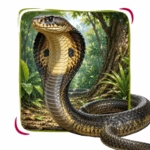
Rattlesnake Fact Highlight
From the full animal facts page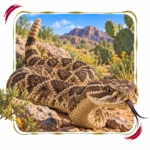
More Animal Comparisons
Pick another animal matchup and keep exploring. Compare appearances, habitats, diets, abilities, and surprising differences.




Make an Animal Story
Turn this cobra vs rattlesnake comparison into a hood-and-rattle habitat mystery with our free Animal Story Generator.
Source notes: References used for this comparison. See more See less
Try Another Matchup
Explore this comparison →