
Earthworm vs Leech: Segmented Worm Comparison
Earthworms and leeches are relatives in the segmented-worm phylum Annelida, and both belong to the clitellate branch that produces egg cocoons. Their equipment reveals different lifestyles. An earthworm is usually cylindrical and grips soil with tiny bristles while burrowing. A true leech is usually flatter, lacks bristles, and uses a rear sucker and usually a front sucker to attach, crawl, or feed. Many leeches hunt small animals, so the familiar blood-feeding lifestyle does not describe every species.
About Earthworm
- Type Invertebrate
- Diet Mostly decaying plant material, microorganisms, and organic particles swallowed with soil or litter
- Group Segmented Worm (Annelida)
- Known for A cylindrical segmented body, tiny anchoring bristles called setae or chaetae, a permanent adult clitellum, moist-skin breathing, strong burrowing muscles, soil mixing, and cocoon production
- Special skill Burrowing by alternating muscle waves while tiny bristles anchor body segments
About Leech
- Type Invertebrate
- Diet Predatory or fluid-feeding: small invertebrates, snails, insect larvae, worms, or blood and other body fluids depending on species
- Group Segmented Worm (Annelida; Hirudinea)
- Known for A flexible usually flattened body, rear and usually front suckers, powerful muscles, few visible true segments, a seasonal clitellum, no bristles in most true leeches, looping or swimming movement, and varied feeding
- Special skill Attaching and moving with muscular suckers; many aquatic species also swim by undulating
Earthworm vs Leech: Quick Answer
An earthworm is a cylindrical segmented worm that lives mainly in soil or litter and anchors itself with tiny bristles called setae. A leech is a related segmented worm with a rear sucker and usually a front sucker; most live in freshwater, though land and marine species also exist. Leeches may hunt small invertebrates or feed on blood and other body fluids depending on species.
Where Do They Fit?
Follow the branches to see how Earthworm and Leech are classified and related.
Earthworm vs Leech: Quick Comparison
| Feature | Earthworm | Leech |
|---|---|---|
| Animal type | Segmented worm, or annelid | Segmented worm, or annelid |
| Typical body shape | Long and cylindrical | Usually flattened and able to stretch or contract greatly |
| Segments | Many ringlike segments are easy to see | True internal segments are masked by extra surface rings |
| Grip | Tiny setae or chaetae anchor most body segments | Rear and usually front suckers attach to surfaces |
| Bristles | Present in tiny numbers on most segments | Absent in true leeches, with a small primitive exception |
| Main habitat | Moist soil, litter, compost, and sometimes freshwater mud | Mostly freshwater, plus damp land and marine habitats |
| Food | Decay, microbes, and organic particles in soil or litter | Small prey, blood, or other body fluids depending on species |
| Movement | Muscle waves push through soil as setae anchor the body | Suckers make a looping crawl; many aquatic species undulate to swim |
| Clitellum | Visible in mature adults and used to form cocoons | Usually visible only during breeding season and used to form cocoons |
| Breathing | Mainly gas exchange across moist skin | Mainly gas exchange across the body surface; details vary by species |
How Are Earthworms and Leeches Alike?
- Both are invertebrates in the segmented-worm phylum Annelida.
- Both belong to the clitellate branch and use a clitellum to help form an egg cocoon.
- Both have flexible muscular bodies that lengthen and shorten for movement.
- Both are hermaphrodites, meaning one adult has both male and female reproductive systems.
- Both need moisture for normal body function and exchange gases mainly across the body surface.
How Are Earthworms and Leeches Different?
- Earthworms are usually cylindrical soil burrowers, while leeches are often flattened and most species live in freshwater.
- Earthworms grip with tiny bristles called setae or chaetae, while true leeches lack those bristles and use suckers.
- Earthworm segments are visibly ringed, while a leech’s outer rings do not line up neatly with its true internal segments.
- Earthworms mostly swallow decaying material and soil rich in microbes, while leeches may hunt small invertebrates or feed on body fluids.
- A mature earthworm’s clitellum is normally visible, while a leech’s clitellum usually becomes noticeable only during breeding.
Earthworm vs Leech Showdown
Segmented-worm showdown: The earthworm wins size because giant species can reach extraordinary lengths, strength for pushing through packed soil, and stealth for spending much of life underground. The leech wins speed and swimming with sucker-powered looping and, in many aquatic species, graceful body undulations. Social behavior is a tie because both are mainly solitary. The leech wins our weirdest-fact prize for combining hidden true segments with extra surface rings and turning both ends of its flexible body into gripping equipment.
Fun Earthworm vs Leech Facts
Both Belong to the Clitellate Branch
Earthworms and leeches are annelids and members of Clitellata. Adults have reproductive tissue called a clitellum, which secretes material that becomes an egg cocoon. The band stays visible on a mature earthworm but usually appears on a leech only during breeding season.
Earthworm Bristles Work Like Tiny Anchors
An earthworm extends its front end, presses tiny setae into the soil, and contracts muscles to pull the rest of its body forward. The bristles are short and hard to see, but they give each movement traction and help the worm resist being pulled from its burrow.
A Leech Walks on Two Suckers
A typical true leech attaches its rear sucker, stretches forward, grips with the sucker around its mouth, releases the rear, and pulls it ahead. This creates a looping crawl. Many freshwater leeches can also flatten their bodies and swim with side-to-side waves.
Not Every Leech Drinks Blood
Leech diets differ among groups. Many species are predators that swallow small worms, insect larvae, snails, or other invertebrates. Blood- or fluid-feeding species attach to a chosen host, and some produce anticoagulant compounds that keep the meal flowing, but those feeding tools are not universal to every leech.
Earthworms Are Powerful Soil Mixers
As an earthworm burrows and swallows mineral particles mixed with decaying material and microbes, it moves material between soil layers and leaves digested castings. These actions can change drainage, air spaces, and nutrient movement, although effects differ by species and ecosystem and introduced earthworms can disrupt some forests.
Earthworm vs Leech Quiz
- What animal phylum contains earthworms and leeches? Answer: Annelida.
- What tiny structures help an earthworm grip soil? Answer: Setae or chaetae.
- What structures help a typical leech attach and crawl? Answer: Suckers.
- Do all leeches drink blood? Answer: No; many hunt small invertebrates.
- What cocoon-forming reproductive structure do both animals have? Answer: A clitellum.
Earthworm vs Leech FAQ
What is the main difference between an earthworm and a leech?
An earthworm is usually a cylindrical soil burrower with tiny gripping bristles. A leech is usually flatter and uses a rear sucker and normally a front sucker to attach and move.
Are leeches earthworms?
No, but they are relatives. Both are segmented worms in Annelida and both belong to Clitellata, yet they occupy different branches with different anatomy.
Do all leeches suck blood?
No. Some feed on blood or other body fluids, while many are predators that eat small invertebrates such as worms, snails, and insect larvae.
Can earthworms swim like leeches?
Earthworms can wriggle through water for a time, but they are mainly crawlers and burrowers. Many aquatic leeches are specialized swimmers that undulate their flattened bodies.
Why must earthworms stay moist?
They exchange oxygen and carbon dioxide through moist skin. If the surface dries too much, gas exchange cannot work normally.
Animal Words to Know
- Annelid: A member of the segmented-worm phylum Annelida.
- Seta: One tiny bristle used by an earthworm for grip; the plural is setae.
- Sucker: A muscular attachment disc used by a leech for gripping, movement, or feeding.
- Clitellum: Reproductive tissue that secretes material for an egg cocoon.
- Anticoagulant: A substance that slows blood clotting; some fluid-feeding leeches produce one.
Earthworm and Leech Movement Activity
Earthworm and Leech Movement Activity
Draw an earthworm tunneling through damp soil beside a freshwater leech moving over a stone. Add close-up circles showing tiny bristles on the earthworm and a sucker at each end of the leech. Use arrows to show the earthworm stretching and gripping the soil and the leech looping between its two suckers. Label annelid, segment, bristles, front sucker, rear sucker, and movement.
Meet Each Animal
Want the full fact file? Here are quick highlights from each animal’s own facts page.
Earthworm Fact Highlight
From the full animal facts page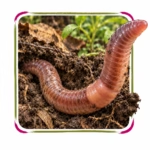
Leech Fact Highlight
From the full animal facts page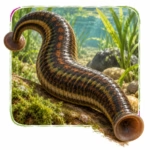
More Animal Comparisons
Pick another animal matchup and keep exploring. Compare appearances, habitats, diets, abilities, and surprising differences.




Make an Animal Story
Turn this earthworm vs leech comparison into a muddy pond-edge adventure with our free Animal Story Generator.
Source notes: References used for this comparison. See more See less
Try Another Matchup
Explore this comparison →