
Terrapin vs Turtle: Chelonian Group Comparison
A terrapin is a turtle, not a completely separate reptile group. The informal word usually describes a freshwater or brackish-water turtle that spends time both in water and on land. “Turtle” is the broader name and may include terrapins, sea turtles, freshwater turtles, and even tortoises, especially in scientific and North American usage.
About Terrapin
- Type Reptile
- Diet Omnivore
- Group Freshwater or Brackish-water Turtle
- Known for Semiaquatic life, webbed feet, basking, patterned shells, and living near ponds, rivers, marshes, or estuaries
- Special skill Moving between land and water and tolerating brackish conditions in specialized species
About Turtle
- Type Reptile
- Diet Varies by species
- Group Chelonian
- Known for Protective shells, aquatic movement, egg laying, long evolutionary history, and species ranging from ponds to open oceans
- Special skill Swimming, diving, navigating long migrations, hiding in the shell, or surviving on land depending on species
Terrapin vs Turtle: Quick Answer
Every terrapin is a turtle, but not every turtle is called a terrapin. Terrapins usually live in or beside fresh or brackish water and commonly have webbed feet for swimming plus claws for moving on land. The broader turtle group also includes ocean-going sea turtles with flippers, other freshwater species, and land-dwelling tortoises.
Where Do They Fit?
Follow the branches to see how Terrapin and Turtle are classified and related.
Terrapin vs Turtle: Quick Comparison
| Feature | Terrapin | Other Turtles |
|---|---|---|
| Animal type | Reptile | Reptile |
| Animal group | An informal name for certain freshwater or brackish-water turtles | The broad shelled-reptile group Testudines |
| Known for | Semiaquatic life, webbed feet, basking, and patterned shells | Enormous variety from pond turtles to ocean-crossing sea turtles |
| Main habitat | Ponds, rivers, marshes, swamps, estuaries, and nearby land | Fresh water, oceans, coasts, wetlands, and land depending on species |
| Name meaning | A common name whose use changes by country | A broad scientific and everyday group name |
| Feet | Usually webbed toes with claws | May have webbed feet, flippers, or sturdy land feet |
| Shell | Often moderately domed and streamlined for semiaquatic movement | May be flat, streamlined, leathery, soft, or highly domed |
| Diet | Often omnivorous, eating plants and small animals | Herbivorous, omnivorous, or carnivorous depending on species |
| Baby name | Hatchling | Hatchling |
| Special skill | Moving between water and land; salt balance in some brackish species | Diving, migration, swimming, burrowing, or shell defense depending on species |
How Are Terrapins and Other Turtles Alike?
- Terrapins are turtles, so both belong to the reptile order Testudines.
- Both have a shell joined to the ribs and spine rather than a removable outer house.
- Both breathe air with lungs and regulate body temperature using their surroundings.
- Both have toothless beaks and lay eggs on land.
- Both have a top shell called a carapace and a lower shell called a plastron.
How Are Terrapins and Other Turtles Different?
- Terrapin is an informal habitat-based name, while turtle can name the entire shelled-reptile group.
- Terrapins usually live in fresh or brackish water, while other turtles may live in oceans, rivers, ponds, or on land.
- Terrapins commonly have webbed clawed feet, while sea turtles have long flippers and tortoises have sturdy unwebbed feet.
- Terrapins regularly bask and travel on banks or marsh ground, while adult sea turtles spend nearly all their lives in the ocean.
- The exact meaning of terrapin changes by region; in North America it often points especially to the diamondback terrapin.
Terrapin vs Turtle Showdown
Chelonian showdown: The broader turtle group wins size, speed, strength, and swimming because it includes giant leatherbacks and streamlined sea turtles built for powerful ocean travel. The terrapin takes stealth because marsh patterns and a low profile help many disappear among reeds, mud, and rippling water. Social life is a tie because most are mainly solitary but may gather to bask or nest. The terrapin wins our weirdest-fact prize because the diamondback terrapin can manage salty brackish water using special salt-removing glands near its eyes.
Fun Terrapin vs Turtle Facts
A Terrapin Is Already a Turtle
Terrapin is a common name applied to certain semiaquatic turtles rather than a separate scientific branch containing every animal called a terrapin. Scientists place terrapins inside the same order, Testudines, as sea turtles, freshwater turtles, and tortoises.
The Name Changes Across Maps
In the United States, “terrapin” most strongly refers to the diamondback terrapin of coastal marshes. In Britain and some other regions, people may use the word more broadly for several freshwater or semiaquatic turtles.
Webbed Claws vs Many Foot Designs
Terrapins commonly have webbing for paddling and claws for climbing onto logs, banks, or nesting ground. Other turtles may have similar feet, broad ocean flippers, soft-bottom walking limbs, or thick land-adapted legs.
Brackish Water Is a Special Middle Zone
Brackish water forms where fresh river water mixes with salty seawater. Diamondback terrapins are unusual North American turtles adapted to tidal marshes and estuaries, while many freshwater turtles cannot remain healthy in such salty conditions.
Some Terrapins Carry Built-in Salt Filters
Diamondback terrapins have glands near the eyes that help remove extra salt from the body. They still seek fresh water when available, but this adaptation helps them survive in coastal water saltier than a pond and less salty than the open ocean.
Terrapin vs Turtle Quiz
- Is a terrapin a type of turtle? Answer: Yes.
- What kind of water do many terrapins inhabit? Answer: Fresh or brackish water.
- What is the upper part of a turtle shell called? Answer: The carapace.
- Which turtles have long paddle-like flippers? Answer: Sea turtles.
- Why can the word terrapin be confusing? Answer: Its meaning changes by country and region.
Terrapin vs Turtle FAQ
What is the main difference between a terrapin and a turtle?
A terrapin is a turtle associated with fresh or brackish water and nearby land. Turtle is the broader word and can include terrapins, sea turtles, freshwater turtles, and tortoises.
Is every freshwater turtle a terrapin?
No. Terrapin is an informal common name used differently by region, and many freshwater turtle species are never commonly called terrapins.
Can terrapins live in the sea?
Terrapins are not open-ocean turtles. Some, especially diamondback terrapins, live in brackish estuaries and coastal marshes where fresh and salt water mix.
Can terrapins walk on land?
Yes. They leave the water to bask, move between wetlands, and lay eggs, but their webbed feet and bodies remain adapted for swimming.
Do terrapins have teeth?
No. Like other living turtles, they have hard beak-like jaw edges for biting, cutting, or crushing food.
Animal Words to Know
- Chelonian: A turtle, terrapin, or tortoise belonging to the shelled-reptile order Testudines.
- Brackish: Slightly salty water formed where fresh water mixes with seawater.
- Carapace: The upper part of a turtle’s shell.
- Plastron: The lower part of a turtle’s shell.
- Scute: A hard keratin plate covering part of the shell in many turtle species.
Terrapin and Turtle Naming Activity
Terrapin and Turtle Naming Activity
Draw a diamondback terrapin in a brackish marsh beside a sea turtle in the ocean. Give the terrapin webbed clawed feet and the sea turtle long flippers. Add a large bracket around both labeled “turtles.” Explain in one short note that terrapin is a common name used for certain freshwater or brackish-water turtles, not a separate scientific group. Label terrapin, turtle, webbed feet, flippers, marsh, and ocean.
Meet Each Animal
Want the full fact file? Here are quick highlights from each animal’s own facts page.
Terrapin Fact Highlight
From the full animal facts page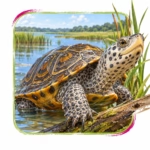
Turtle Fact Highlight
From the full animal facts page
More Animal Comparisons
Pick another animal matchup and keep exploring. Compare appearances, habitats, diets, abilities, and surprising differences.



Make an Animal Story
Turn this terrapin vs turtle comparison into a shell-powered wetland adventure with our free Animal Story Generator.
Source notes: References used for this comparison. See more See less
Try Another Matchup
Explore this comparison →