
Aysheaia Facts for Kids
Aysheaia was a small soft-bodied lobopodian that walked across the Cambrian seafloor about 505 million years ago. Its worm-like body carried ten pairs of short unjointed legs, many with curved claws, while finger-like structures surrounded the mouth. Aysheaia resembled modern velvet worms, but it belonged to an extinct early panarthropod branch and was not simply a living velvet worm copied into stone.
Quick Aysheaia Facts
- Animal Type: Extinct soft-bodied invertebrate
- Group: Lobopodian panarthropod
- Known For: Ten pairs of soft legs, curved claws, frontal grasping appendages, six mouth papillae, and association with sponges
- Lived During: Middle Cambrian, about 505 million years ago
- Diet: Uncertain; possibly sponge tissue and other small organic food
What You’ll Learn
Learn 10 strange aysheaia facts for kids about soft legs, clawed feet, worm-like bodies, sponge habitats, and Cambrian life, plus a quiz, glossary, and activity
These simple facts are written for kids, parents, teachers, and curious young minds.
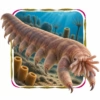
10 Fun Aysheaia Facts for Kids
1. Aysheaia Was a Lobopodian
Aysheaia belonged to the lobopodians, worm-shaped animals with paired soft legs called lobopods.
Kid Decode: It looked like a walking worm assembled before hard jointed legs became the standard.
2. It Grew From One to Six Centimetres
Known Aysheaia pedunculata specimens range from roughly 1 to 6 centimetres long.
Kid Decode: A large one was still shorter than many crayons.
3. It Had Ten Pairs of Soft Legs
Ten body regions each carried a pair of short annulated lobopods rather than the rigid jointed limbs of true arthropods.
Kid Decode: Twenty squishy legs gave this Cambrian crawler plenty of feet to organise.
4. Its Legs Carried Curved Claws
Most lobopods bore several curved claws near their tips, which could help the animal grip surfaces or climb over other organisms.
Kid Decode: Each soft leg ended with a tiny climbing kit.
5. It Had Two Grasping Front Appendages
A pair of specialised appendages near the front carried spines and may have helped Aysheaia handle food.
Kid Decode: The front pair stopped walking and took a job in the food department.
6. Six Papillae Surrounded Its Mouth
The terminal mouth was ringed by six short finger-like projections, but no hard jaw apparatus has been found.
Kid Decode: Its face looked like a tiny soft crown wrapped around a mouth.
7. No Clear Eyes or Antennae Are Known
Fossils do not preserve confirmed eyes or the long sensory antennae seen in modern velvet worms.
Kid Decode: It explored a busy seafloor without leaving an obvious pair of fossil goggles.
8. It Often Occurs With Sponges
Several specimens were preserved beside sponges, suggesting that Aysheaia may have climbed on them for food, shelter, or both.
Kid Decode: The sponge garden may have been restaurant, climbing frame, and hiding place in one.
9. It Resembled Velvet Worms
Its soft lobopods and worm-like body resemble modern onychophorans, but Aysheaia is usually treated as an extinct lobopodian near the early panarthropod branches.
Kid Decode: It was velvet-worm-like without being issued a modern velvet-worm name badge.
10. Only One True Species Remains
A fossil once called Aysheaia prolata was later shown to be a detached frontal appendage from the radiodont Stanleycaris, leaving Aysheaia pedunculata as the valid species.
Kid Decode: One supposed cousin turned out to be somebody else’s loose arm.
The Weirdest Aysheaia Fact
A fossil once named as a second Aysheaia species was eventually reidentified as the detached feeding appendage of an entirely different Cambrian predator.
Try This Aysheaia Activity
Aysheaia Drawing Activity
Draw Aysheaia climbing across a Cambrian sponge. Add a worm-like annulated body, ten pairs of soft lobopods, several curved claws on each leg, two spiny frontal appendages, six short papillae around the mouth, no obvious eyes, muddy seafloor, and a small Stanleycaris appendage labelled “not Aysheaia.”
Quick Aysheaia Quiz
- Was Aysheaia a dinosaur? Answer: No, it was a lobopodian invertebrate.
- How many pairs of soft legs did it have? Answer: Ten pairs.
- What occurred near the tips of many legs? Answer: Curved claws.
- Which modern animals did it resemble? Answer: Velvet worms.
- What was Aysheaia prolata later shown to be? Answer: A radiodont frontal appendage.
Mini Glossary
- Lobopodian: A worm-shaped animal with paired soft, unjointed legs.
- Panarthropod: A member of the broad group containing arthropods, velvet worms, water bears, and extinct relatives.
- Onychophoran: A modern velvet worm.
- Papilla: A small finger-like or bump-like projection.
- Annulated: Marked by repeated ring-like folds.
 Sloth Facts for Kids
 Addax Facts for Kids
 Insect Facts for Kids
 Borophagus Facts for Kids
More Animal Facts for Kids
Visit the full animal facts library or explore a focused animal group.
More Extinct Animal Facts for Kids
Discover dinosaurs, Ice Age giants, prehistoric sea creatures, recently extinct species, and other animals from the past.
Fact check note: Fact checked with Whittington’s 1978 anatomical monograph, Liu and Dunlop’s 2014 lobopodian review, Pates and colleagues’ 2017 reidentification of Aysheaia prolata, and Burgess Shale palaeoecology records.

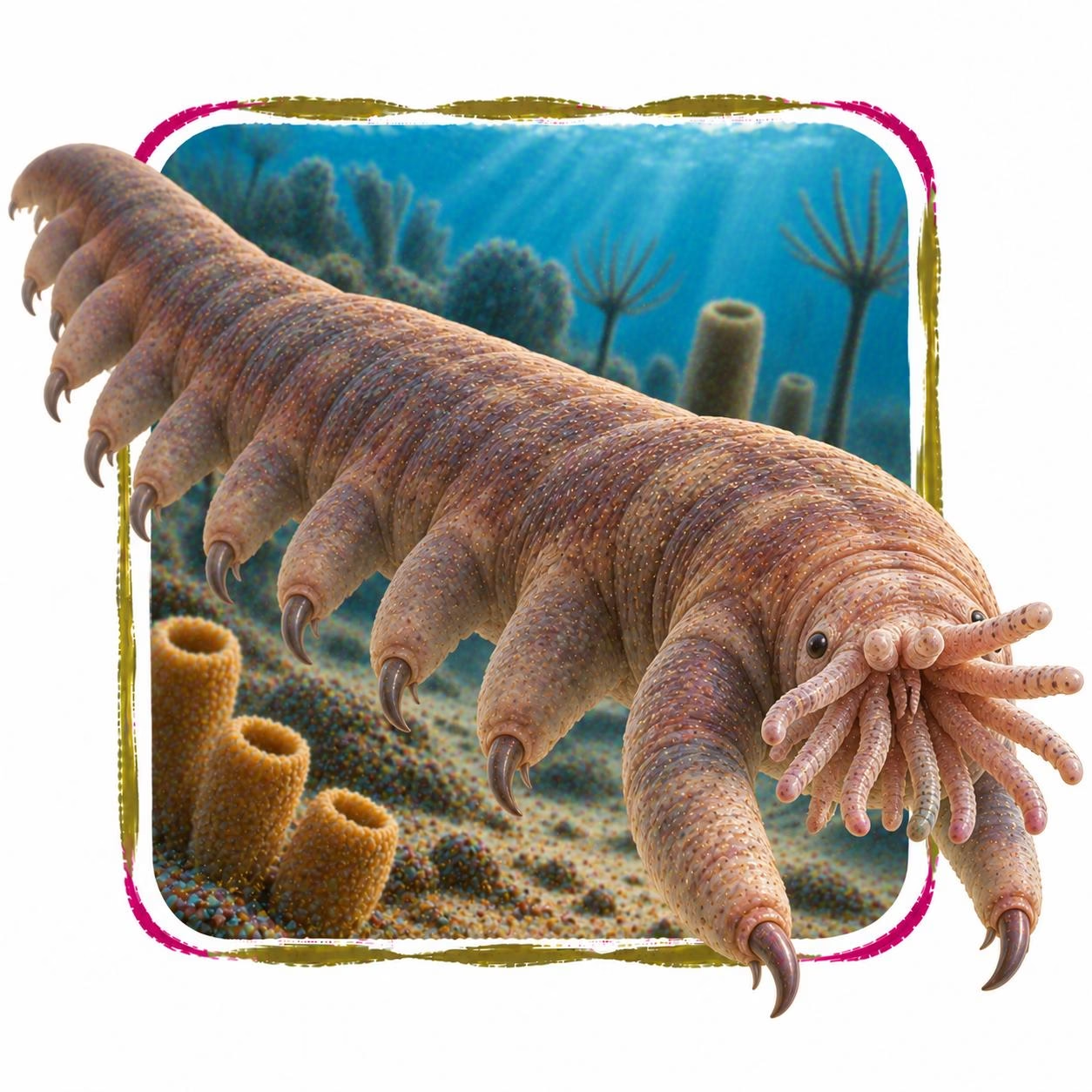
Aysheaia in its natural Middle Cambrian muddy seafloors, sponge communities, soft offshore sediment, low crawling zones, and quiet continental shelf habitats habitat