
Cotylorhynchus Facts for Kids
Cotylorhynchus was a large plant-eating caseid synapsid from the Early Permian of North America. It was not a dinosaur and was more closely related to mammals than to reptiles such as lizards. Its tiny head, enormous barrel-shaped trunk, short powerful limbs, and specialised teeth formed one of the strangest herbivore body plans of the Paleozoic Era.
Quick Cotylorhynchus Facts
- Animal Type: Extinct herbivorous synapsid
- Group: Caseid synapsid
- Known For: Tiny head, huge barrel-shaped body, large nostrils, three-cusped teeth, strong claws, and high-fibre plant diet
- Lived During: Early Permian, roughly 280 million years ago
- Diet: Tough terrestrial plants
What You’ll Learn
Explore 10 giant cotylorhynchus facts for kids about its huge barrel-shaped body, tiny head, plant diet, strong legs, and Permian habitats, plus a quiz, glossary, and activity
These easy facts are made for kids, parents, teachers, and curious young learners.
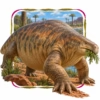
10 Fun Cotylorhynchus Facts for Kids
1. Cotylorhynchus Was a Synapsid
Cotylorhynchus belonged to Synapsida, the broad evolutionary group that includes mammals and their extinct relatives.
Kid Decode: It was a distant mammal-line relative wearing one of evolution’s strangest herbivore shapes.
2. It Was Not a Dinosaur
Cotylorhynchus lived tens of millions of years before the first dinosaurs appeared.
Kid Decode: The dinosaur age had not started, but the barrel-body experiment was already underway.
3. It Could Reach About 4.5 Metres
Cotylorhynchus romeri has been estimated at up to about 4.5 metres long and roughly 330 kilograms.
Kid Decode: It stretched longer than a car while carrying a head that looked almost comically small.
4. Its Head Was Tiny
The skull was very small compared with the enormous trunk, a common feature among large caseid herbivores.
Kid Decode: Evolution spent most of the building budget on the stomach department.
5. Its Body Was Barrel-Shaped
Long curved ribs enclosed a huge body cavity that probably housed an extensive digestive system for breaking down fibrous plants.
Kid Decode: Its belly was less lunchbox and more full-scale fermentation factory.
6. It Had Large Nostrils
The skull carried extremely large nasal openings, though their exact biological role is still debated.
Kid Decode: The nose openings looked enormous even on a head famous for being tiny.
7. Its Teeth Had Three Small Cusps
Many marginal teeth ended in three small points that helped crop or slice plant material.
Kid Decode: Each tooth carried a miniature three-pronged gardening tool.
8. It Also Had Teeth on Its Palate
Teeth on the roof of the mouth may have worked with a powerful tongue to puncture plant food before it entered the gut.
Kid Decode: Its tongue may have pressed salad against a ceiling full of tiny spikes.
9. Its Limbs Were Short and Strong
Broad hands, feet, strong limb bones, and large curved claws supported its heavy terrestrial body.
Kid Decode: Those claws belonged to a plant eater built like a living wheelbarrow.
10. It Was a Land Animal
Articulated skeletons and terrestrial Hennessey Formation deposits support Cotylorhynchus as a land-dwelling herbivore, despite an earlier aquatic proposal.
Kid Decode: The giant barrel stayed on land rather than paddling around like a swollen manatee.
The Weirdest Cotylorhynchus Fact
Cotylorhynchus combined a head much smaller than expected with an enormous gut-filled trunk designed to process mountains of low-quality vegetation.
Try This Cotylorhynchus Activity
Cotylorhynchus Drawing Activity
Draw Cotylorhynchus walking across an Early Permian Oklahoma floodplain. Add a very small head, huge barrel-shaped trunk, long curved ribs, short strong limbs, broad feet, large claws, giant nostrils, three-cusped teeth in a cutaway bubble, and piles of tough plants.
Quick Cotylorhynchus Quiz
- Was Cotylorhynchus a dinosaur? Answer: No, it was a caseid synapsid.
- How long could Cotylorhynchus romeri grow? Answer: About 4.5 metres.
- Why was its body so barrel-shaped? Answer: It probably contained a huge digestive system for fibrous plants.
- How many small cusps occurred on many teeth? Answer: Three.
- Did current evidence support a mainly aquatic life? Answer: No, it is best interpreted as terrestrial.
Mini Glossary
- Synapsid: A member of the vertebrate branch containing mammals and their extinct relatives.
- Caseid: A member of a mostly plant-eating family of early synapsids.
- Tricuspid Tooth: A tooth ending in three small points or cusps.
- Palatal Tooth: A tooth growing from a bone in the roof of the mouth.
- Fermentation: Microbial breakdown that helps digest tough plant material.
 Dung Beetle Facts for Kids
 Llama Facts for Kids
 Anglerfish Facts for Kids
 Caspian Tiger Facts for Kids
More Animal Facts for Kids
Visit the full animal facts library or explore a focused animal group.
More Extinct Animal Facts for Kids
Discover dinosaurs, Ice Age giants, prehistoric sea creatures, recently extinct species, and other animals from the past.
Fact check note: Fact checked with Reisz, Scott and Modesto’s 2022 cranial study of Cotylorhynchus romeri, classic postcranial measurements, and Hennessey Formation taphonomic evidence.

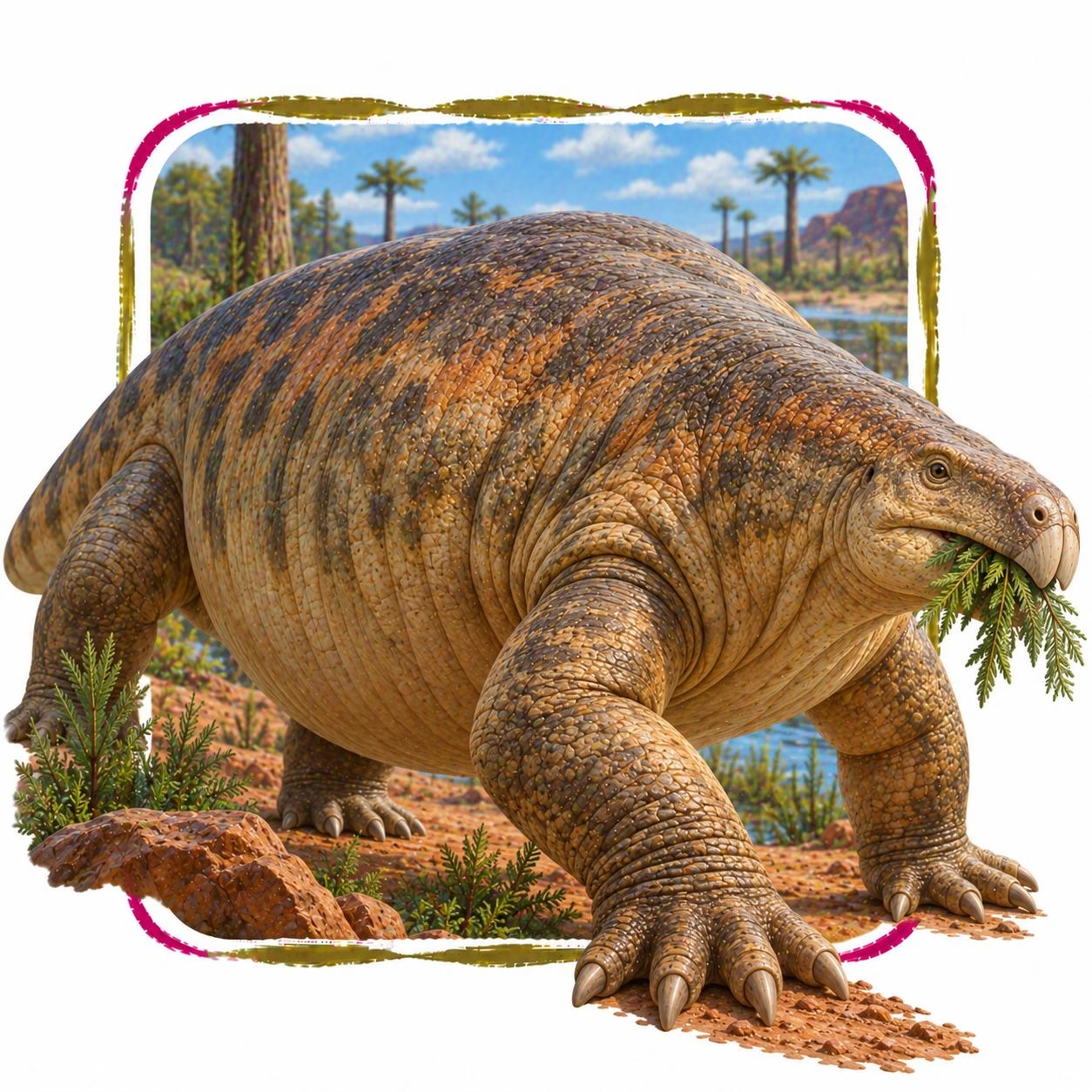
Cotylorhynchus in its natural Early Permian dry lowlands, monsoonal floodplains, seasonal wetlands, red-mud plains, scrubby terrestrial habitats, and upland environments of Oklahoma and Texas habitat